

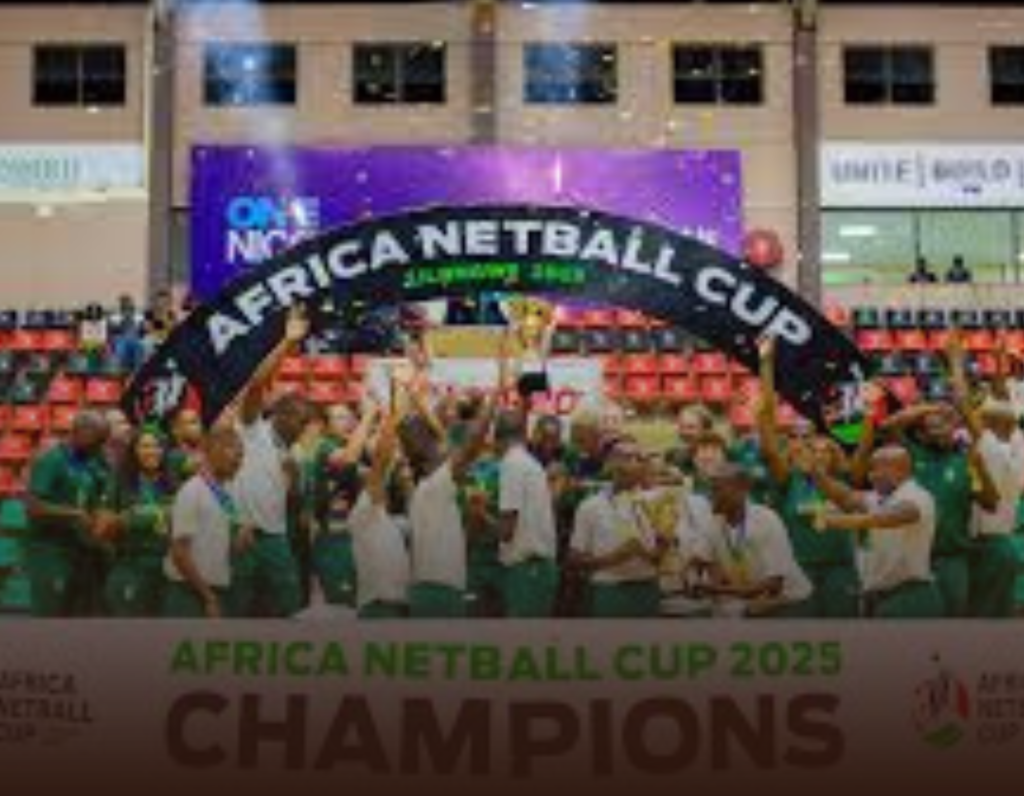
As the 2025 African Netball Cup wrapped up in Lilongwe on December 14, the spotlight wasn’t just on the teams, it was on the Griffin Saenda Sports Complex, a modern facility built by a Chinese contractor that elevated Malawi’s ability to host a major continental championship. The complex, commissioned in 2022 and constructed by China Railway 20th Bureau Group, spans about 20,000 m² and stands as Malawi’s largest integrated indoor and outdoor sports venue, complete with seating for approximately 4,000 spectators.
Athletes, coaches, and officials from across Africa applauded the high-quality infrastructure. Mubiru Rashid, head coach of Uganda’s national netball team, noted that previous tournaments in Malawi were played outdoors – a contrast to the international-grade setting provided by the Griffin Saenda facility.
South Africa’s head coach, Jenny van Dyk, said the complex reflects a growing commitment to sports infrastructure in the region and underscores how purpose-built venues can boost competition standards and attract more high-level events. Peace Kalua, head coach of the Malawi national netball team, added that the facility helped raise fan interest and could drive broader development of local sport.
The success of the African Netball Cup at this venue underscores China-Malawi cooperation on public-goods infrastructure that goes beyond athletics. China’s role in building sports facilities in Africa is part of broader “stadium diplomacy” – a pattern that has seen Chinese partners support stadiums, arenas, and complexes across the continent to foster cultural exchange, public engagement, and economic activity. Malawi’s Bingu National Stadium, a $70 million Chinese-financed facility opened in 2017, stands as another example of this partnership in action.
China’s involvement in Malawi extends well past sport. Earlier in 2025, both countries signed an US$80 million agreement for a new judicial complex in Lilongwe, a project aimed at strengthening Malawi’s legal infrastructure and institutional capacity. The project – financed following Malawi’s participation at the 2024 FOCAC summit in Beijing – exhibits how China’s engagement embraces governance alongside economic and social support.
Moreover, China has supported Malawi’s agricultural sector through multiple phases of machinery, training, and infrastructure assistance that aim to modernise production and improve rural livelihoods. This multi-sector cooperation aligns with Malawi’s Vision 2063 framework, a long-term development blueprint that emphasises industrialisation, poverty reduction, and inclusive growth.
As Malawi continues to host regional tournaments and strengthen its sporting profile, the Chinese-built Griffin Saenda Sports Complex will likely serve as a hub for future events, boosting not just athletics but tourism, community engagement, and national pride. In doing so, it exemplifies how China-Africa partnership can deliver tangible, people-centered outcomes that resonate far beyond the construction site.