

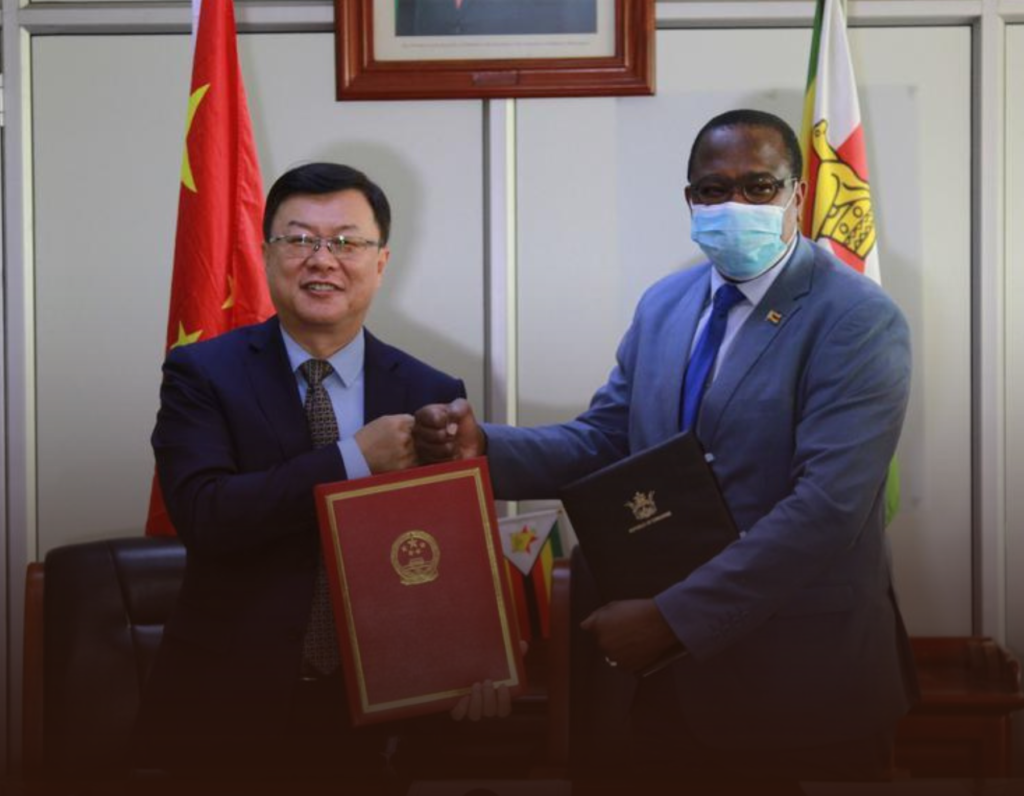
In a landmark development for agriculture and rural resilience, China and Zimbabwe have signed a comprehensive cooperation agreement to upgrade irrigation facilities across the southern African nation, a move expected to enhance food security, boost agricultural productivity, and fortify long-term economic growth. The signing ceremony took place in Harare on December 18, 2025, bringing together senior officials, agricultural experts and representatives of key implementing bodies from both governments.
Under the new agreement, China will provide technical expertise, modern irrigation technology, and financial support to rehabilitate and expand irrigation systems – especially in drought-prone regions, strengthening Zimbabwe’s capacity to produce crops year-round. The initiative is part of a coordinated effort to modernise agricultural infrastructure, increase yields for smallholder and commercial farmers alike, and reduce dependence on rain-fed cultivation.
Zimbabwe’s Minister of Lands, Agriculture, Fisheries, Water and Rural Development celebrated the agreement as a “crucial step toward building climate-resilient agriculture,” noting that improved irrigation can significantly reduce vulnerability to climate shocks like drought, while enabling farmers to diversify into high-value crops. According to local agricultural analysts, more reliable water access will directly support maize, horticulture, and livestock sectors – all mainstays of Zimbabwe’s economy and food supply.
China’s Ambassador to Zimbabwe highlighted the cooperation as emblematic of an evolving partnership rooted in mutual benefit and long-term planning. Beyond irrigation hardware, the Chinese side will help Zimbabwe build local operational capacity through training programmes, systems maintenance support, and knowledge transfer – a pattern consistent with China’s broader agricultural cooperation across Africa.
This irrigation agreement builds on decades of agricultural engagement between Harare and Beijing, where the focus has ranged from basic support to strategic, productivity-enhancing programmes. In the early 2010s, China supplied tractors, irrigation pumps, and farm implements to Zimbabwean farmers as part of rural development initiatives – laying early groundwork for larger modernisation efforts.
Over the years, Zimbabwean agricultural students and extension officers have benefited from training exchanges in China, gaining knowledge in crop science, mechanisation, and water management – now crucial to scaling up irrigation programmes. Collaborative research on drought-tolerant crop varieties and soil conservation has taken place under bilateral and multilateral frameworks, including South-South cooperation platforms.
China’s agricultural diplomacy in Africa aligns with broader continental initiatives such as the Comprehensive Africa Agriculture Development Programme (CAADP), which emphasises irrigation infrastructure, climate adaptation, and technology adoption as pillars of food security and economic transformation. Zimbabwe’s renewed focus on irrigation fits squarely within these continental priorities, positioning it to both feed its population more reliably and contribute to regional food markets.
Zimbabwe’s agriculture sector remains a cornerstone of its economy, engaging millions of smallholder farmers and contributing significantly to GDP, exports, and employment.