


Chinese appliance giant Haier has formally introduced its brand to the South African market with a major launch event in Johannesburg – a move that underscores growing China-South Africa industrial cooperation and a strategic push toward local manufacturing. The company said it plans to establish assembly operations in South Africa, create jobs, and tailor products for domestic consumer needs.
At the launch, Haier executives explained that initial product lines will include refrigerators, washing machines, and smart home appliances – all designed to meet the preferences and power-usage realities of South African households. By pledging future assembly facilities, Haier aims to shorten supply chains, improve affordability, and build a localised industrial base, aligning with South Africa’s broader industrialisation strategy.
South Africa has long sought to diversify its manufacturing sector and reduce reliance on imported consumer goods. Industry experts note that Chinese firms, from tech enterprises like Xiaomi to automakers like Jetour – have increasingly targeted the South African market over the past few years, reflecting confidence in the country’s economic potential and consumer demand. Haier’s entry follows similar moves by Chinese brands eager to embed themselves within Africa’s most industrialized economy, which remains pivotal for trade across the Southern African Development Community (SADC).
China and South Africa enjoy a Comprehensive Strategic Partnership, first established in 1998 and regularly reaffirmed through annual dialogue mechanisms. Under frameworks such as the Forum on China-Africa Cooperation (FOCAC) and joint industrial policy forums, Beijing and Pretoria have intensified cooperation in areas ranging from infrastructure and energy to technology and skills development. In recent years, South Africa has been a key destination for Chinese investment in ICT, renewable energy, and advanced manufacturing, while Chinese construction firms have been involved in major infrastructure projects, including transportation and logistics upgrades.
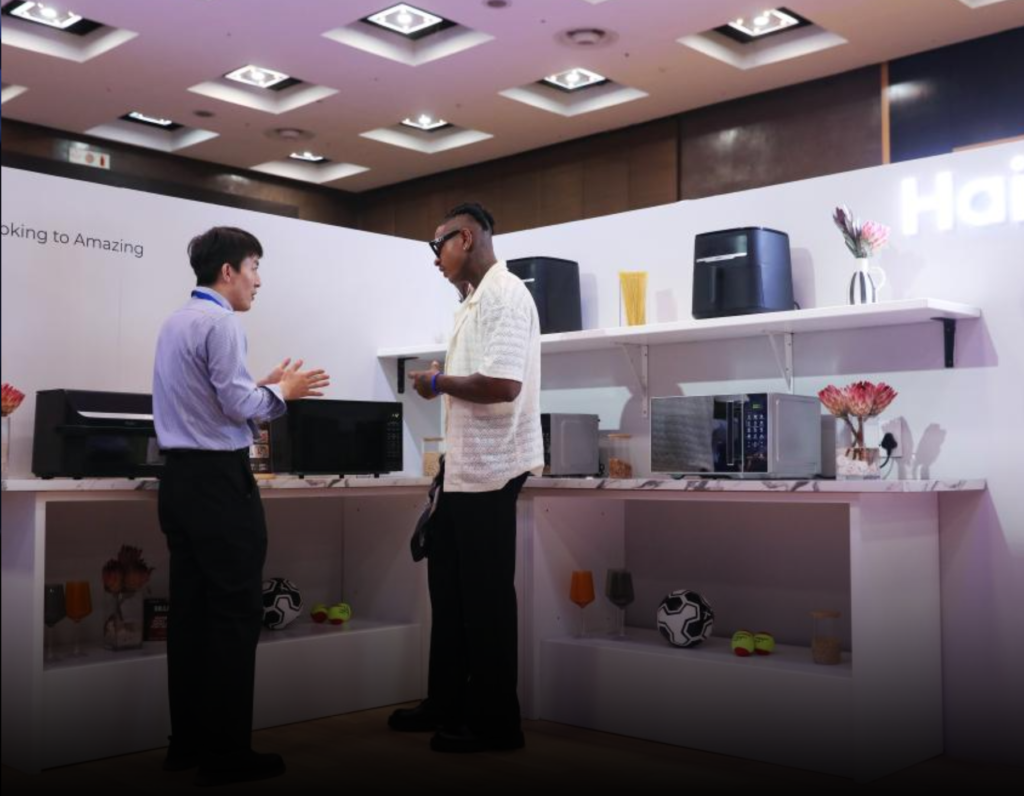
Haier’s commitment to explore domestic assembly and future production is seen as a noteworthy development in the China–Africa economic landscape. Local assembly would not only create employment opportunities but also enable technology transfer, build local supply chains, and enhance skills in sectors such as precision engineering and smart appliances. South Africa’s National Development Plan has repeatedly underscored the importance of value-added manufacturing and export competitiveness – goals that align with Haier’s strategic orientation.
Economic commentators highlight that successful localisation will depend on supportive industrial policies, incentives for foreign direct investment, and collaboration between government, industry and academia to cultivate relevant technical expertise. Should assembly operations materialise, they could position South Africa as a regional hub for Haier products destined for neighboring markets.
Haier’s entry complements broader Sino–South African trade relations. China is South Africa’s largest trading partner, with bilateral trade ranging in the tens of billions of U.S. dollars annually and encompassing machinery, vehicles, minerals, and agricultural products. Meanwhile, South African firms have sought access to China’s massive consumer market, especially in sectors like wine exports, automotive parts and agribusiness – a mutually beneficial dynamic that continues to evolve.
Chinese engagement in South Africa also includes education and research collaborations, scholarships for African students, and cultural exchange initiatives that deepen people-to-people ties. These multidimensional linkages create an environment where industrial and consumer-sector partnerships – like Haier’s, can flourish.
As Haier officially plants roots in South Africa, its journey from importer to potential local manufacturer signals a shift in China-Africa economic engagement – one that moves beyond assembly line imports toward localized production, technology sharing, and joint industrial growth. For South Africa, this offers a chance to expand its manufacturing base and integrate more deeply into global value chains; for China, it exemplifies long-term economic cooperation grounded in mutual benefit, employment growth, and sustainable industry partnerships.