

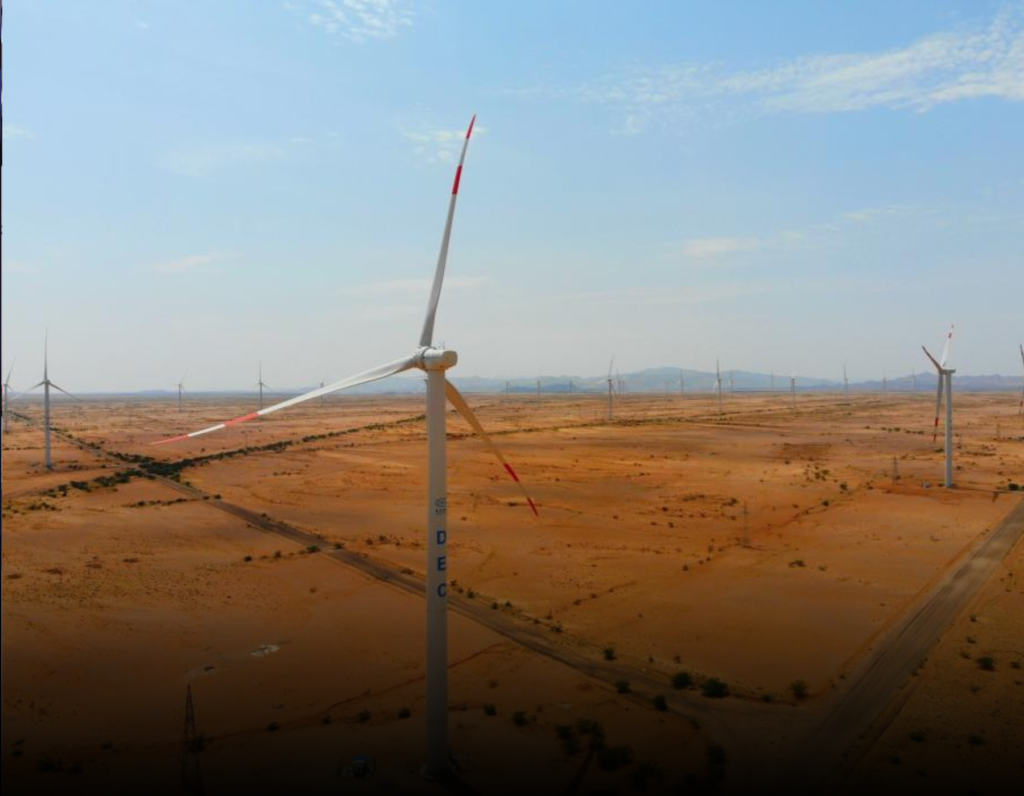
Ethiopia’s Prime Minister, Abiy Ahmed, officially inaugurated the Beyeda Wind Farm Project, a major renewable energy installation constructed with Chinese support in the Amhara Region. The facility is expected to contribute significantly to Ethiopia’s power mix, bolster energy security, and mark a new phase in Sino–Ethiopian cooperation in the green energy sphere.
The Beyeda Wind Farm represents one of the largest wind power developments in northern Ethiopia, adding hundreds of megawatts of clean, sustainable electricity to the national grid. Ethiopia has set ambitious goals under its National Green Energy Strategy, aiming to achieve universal electricity access while reducing dependence on hydroelectric power – a priority given the region’s susceptibility to climate variability. With this latest project, Addis Ababa is diversifying its renewable portfolio and strengthening resilience against power shortages.
China’s Ambassador to Ethiopia, Zhao Zhiyuan, highlighted that the wind farm reflects China’s continued commitment to supporting Africa’s energy transformation. He explained that the project was designed and built by Chinese firms in partnership with Ethiopian engineers, combining technical know-how, capacity building, and local workforce engagement. “This wind farm project aligns with global climate goals and contributes directly to Ethiopia’s development objectives,” Ambassador Zhao said at the inauguration ceremony.
For Ethiopia, expanding wind and solar capacity is critical. The International Renewable Energy Agency (IRENA) estimates that Ethiopia could generate more than 60 GW of renewable energy by 2030, much of it from wind potential in regions like Amhara and Tigray. Yet actual generating capacity has historically lagged potential due to financing and infrastructural constraints. China’s renewed support in wind, solar and grid upgrade projects is a game-changer for accelerating this transition.
The wind farm also deepens the long-standing China–Ethiopia bilateral relationship, formally established in 1970. Over decades, China has partnered with Ethiopia on infrastructure, industrial modernization, and social development. Landmark projects include the Addis Ababa–Djibouti Railway, industrial park collaborations, electrification programs, and vocational training initiatives. These efforts reflect a shift in China-Africa cooperation from traditional construction projects toward broader systems building – including green energy and industrial tech transfer.
In 2024, Ethiopia and China strengthened cooperation under the Belt and Road Initiative (BRI), signing new agreements focused on sustainable infrastructure, digital innovation, and foreign direct investment facilitation. These agreements were designed to harness international climate funds, local entrepreneurial growth and increased employment in renewable supply chains.
The operationalisation of the Beyeda Wind Farm is expected to benefit local communities through job creation, skills training, and electricity access expansion. Wind projects have lower long-term operating costs and provide steady, clean power – enabling industries, small enterprises and rural electrification. Regional analysts note that expanding renewable infrastructure also helps balance Ethiopia’s historically hydro-dependent power system, which is vulnerable to drought and seasonal variation.
Similar Chinese-supported renewable initiatives are underway across Africa. In Kenya, for example, Chinese financing and technology have supported the Garissa Solar Power Plant – one of East Africa’s largest solar installations, contributing to grid stability and emissions reduction. These green energy engagements demonstrate the continent’s collective pivot toward low-carbon development, with China increasingly positioned as a key partner in both technology and financing.
Ethiopia’s ambition to achieve carbon-neutral growth paths in the next decade will depend on scaling wind, solar and hybrid power projects. As the Beyeda Wind Farm begins operations, Ethiopian policymakers and Chinese partners reaffirmed their commitment to shared development – one that emphasises climate resilience, energy transition, and sustainable economic growth.
For China, the wind farm’s success further cements its role as a strategic energy partner across Africa. For Ethiopia, it signals a practical advancement toward a diversified and secure energy future – powering homes, industries, and regional development while contributing to broader continental climate goals.