

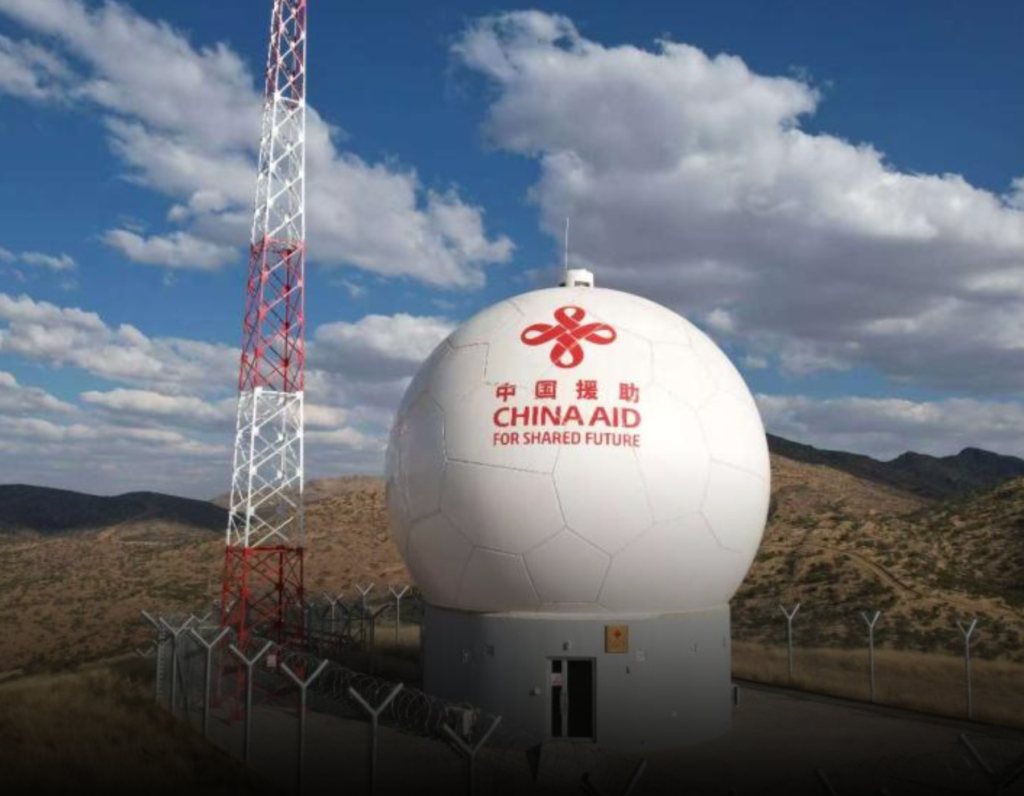
Namibia has marked a major leap in its science and technology journey with the formal handover of a China-assisted satellite ground data receiving station near Windhoek, a development expected to elevate the southern African nation’s capacity to access and process real-time satellite information.
The state-of-the-art facility, completed with Chinese funding and technical expertise, will allow Namibia to directly receive remote-sensing data from satellites including the China-Brazil Earth Resources Satellite (CBERS-4). Officials say this capability will enhance environmental monitoring, disaster management and evidence-based planning across key sectors of the economy.
At the handover ceremony on Feb. 12, Prime Minister Elijah Ngurare, representing President Netumbo Nandi-Ndaitwah, thanked the People’s Republic of China for its support, highlighting how the project not only strengthens scientific infrastructure but also solidifies enduring diplomatic ties. “This remarkable gesture reflects the strong friendship and cooperation between our nations,” he noted.
Observers say the ground station is more than just advanced infrastructure – it’s a tool for sustainable development. Local leaders emphasised that uninterrupted access to satellite data will bolster Namibia’s responses to climate challenges like droughts and floods, improve maritime and border surveillance and support policy making grounded in real data rather than outside sources.
Importantly, the project comes with a capacity-building component: Namibian technicians have been trained to operate the facility independently, with ongoing technical cooperation planned for future phases.
The satellite ground station is part of a broader pattern of cooperation between Namibia and China across infrastructure and technology sectors. In late 2025, a major China-assisted freeway linking downtown Windhoek to Hosea Kutako International Airport was inaugurated, cutting travel times and widening transport links crucial for trade and connectivity.
China has also supplied Namibia with advanced transport aircraft – the Shaanxi Y-9E – to bolster both military and humanitarian air mobility capabilities, representing the first overseas delivery of this model.
These projects fit within the broader framework of the Forum on China-Africa Cooperation (FOCAC) and the Belt and Road Initiative (BRI), which both aim to support infrastructure, industrialisation and technological advances across the continent.
Namibia’s facility places it among a select group of African countries with modern satellite ground stations – including Kenya, Egypt and others where China has forged space cooperation agreements. Analysts note that such partnerships not only enhance local capacities, but also form a network of ground stations that reflect China’s expanding role in space engagement across Africa.
Experts say this trend aligns with China’s long-term space strategy, which emphasises peaceful scientific cooperation, technology sharing and global partnerships as part of its broader space development agenda.
As Namibia leverages its new satellite station, the country stands poised to harness space technology for national development while deepening its multifaceted relationship with China. The project underscores how scientific cooperation can drive tangible benefits – transforming data into solutions for climate resilience, economic planning and national security, and opening a new chapter in Africa’s participation in the global space landscape.