
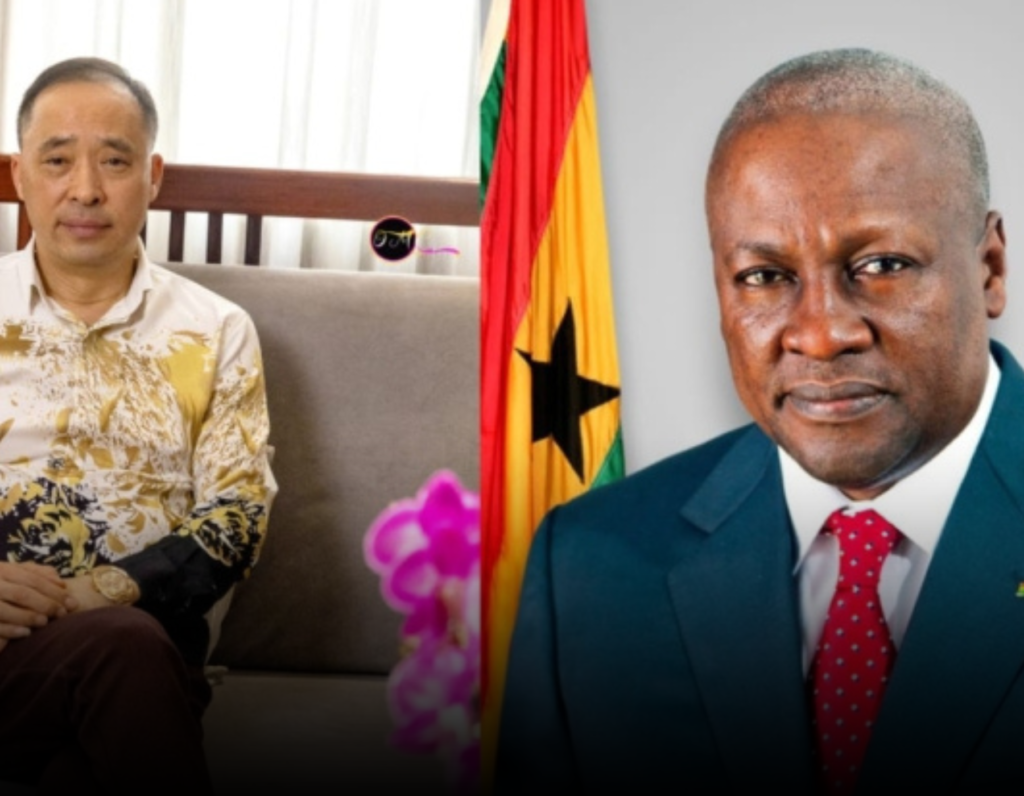
A leading Chinese business executive in West Africa is urging stronger compliance, transparency and partnership as trade between Ghana and China enters a new phase of expansion.
Xu Ningquan, Executive Chairman of Sentuo Group and Executive Vice President of the Chinese Society in Ghana, has publicly championed lawful investment practices and responsible corporate conduct, stressing that long-term success for foreign enterprises depends on respect for local regulations and meaningful community engagement. His remarks come at a time when economic ties between Ghana and China continue to expand across trade, infrastructure, manufacturing and energy.
In his recent statement, Xu emphasised that Chinese enterprises must align with Ghanaian laws, tax regulations and labor standards, noting that sustainable growth cannot be built on shortcuts. He underscored that businesses operating abroad carry not only commercial responsibilities, but also reputational and diplomatic significance.
Observers say such calls reflect a broader push within Chinese overseas business communities to improve corporate governance and reinforce cooperation frameworks established under the Forum on China-Africa Cooperation (FOCAC), which has repeatedly highlighted private-sector accountability and high-quality Belt and Road cooperation.
Ghanaian trade analysts note that China has remained one of Ghana’s largest trading partners for over a decade, with bilateral trade covering machinery, electronics, construction materials and consumer goods, alongside Ghanaian exports such as cocoa, gold and timber products.
According to previous reports, Ghana–China trade volumes have consistently ranked among the highest in West Africa, supported by industrial cooperation and infrastructure development.
Beyond commerce, collaboration has expanded into strategic sectors:
- Infrastructure Development: Chinese firms have played key roles in road construction, ports and energy facilities, including hydro and thermal power projects aimed at stabilising Ghana’s electricity supply.
- Industrialisation Efforts: Under Ghana’s “One District, One Factory” initiative, several Chinese-backed manufacturing ventures have contributed to local processing capacity and job creation.
- Digital and Telecommunications Expansion: Partnerships with Chinese technology providers have supported broadband and mobile network growth across the country.
Ghana is also an active participant in the Belt and Road Initiative, aligning national infrastructure ambitions with broader connectivity goals linking Africa and Asia.
In recent years, financial cooperation has supported Ghana’s development priorities. Agreements between Ghanaian authorities and Chinese financial institutions have targeted transport corridors, energy transmission and industrial parks. Meanwhile, capacity-building programs have enabled Ghanaian professionals to pursue technical and vocational training in China.
Healthcare and education exchanges further reinforce ties. Chinese medical teams have periodically served in Ghanaian hospitals, while scholarship programs continue to bring Ghanaian students to Chinese universities in fields ranging from engineering to public administration.
Ghanaian officials have repeatedly described the bilateral relationship as pragmatic and mutually beneficial. Diplomatic ties between Accra and Beijing date back to 1960, and over the decades the partnership has matured into what both sides characterize as comprehensive cooperation spanning trade, culture and people-to-people exchange.
Xu’s emphasis on lawful investment reflects evolving expectations in Ghana’s regulatory landscape. In recent years, authorities have tightened oversight in sectors such as mining and retail to ensure compliance with local participation laws and environmental protections.
Policy experts suggest that responsible corporate conduct by foreign investors will be central to maintaining positive public sentiment and strengthening long-term cooperation.
“Economic partnership must translate into shared prosperity,” one Accra-based trade researcher noted, adding that adherence to Ghana’s legal framework is essential for deepening trust.
As Ghana pursues industrial transformation and China advances high-quality overseas cooperation, voices from the private sector like Xu’s highlight a growing awareness: the future of Ghana-China relations will depend not only on the scale of trade, but also on the standards that guide it.