

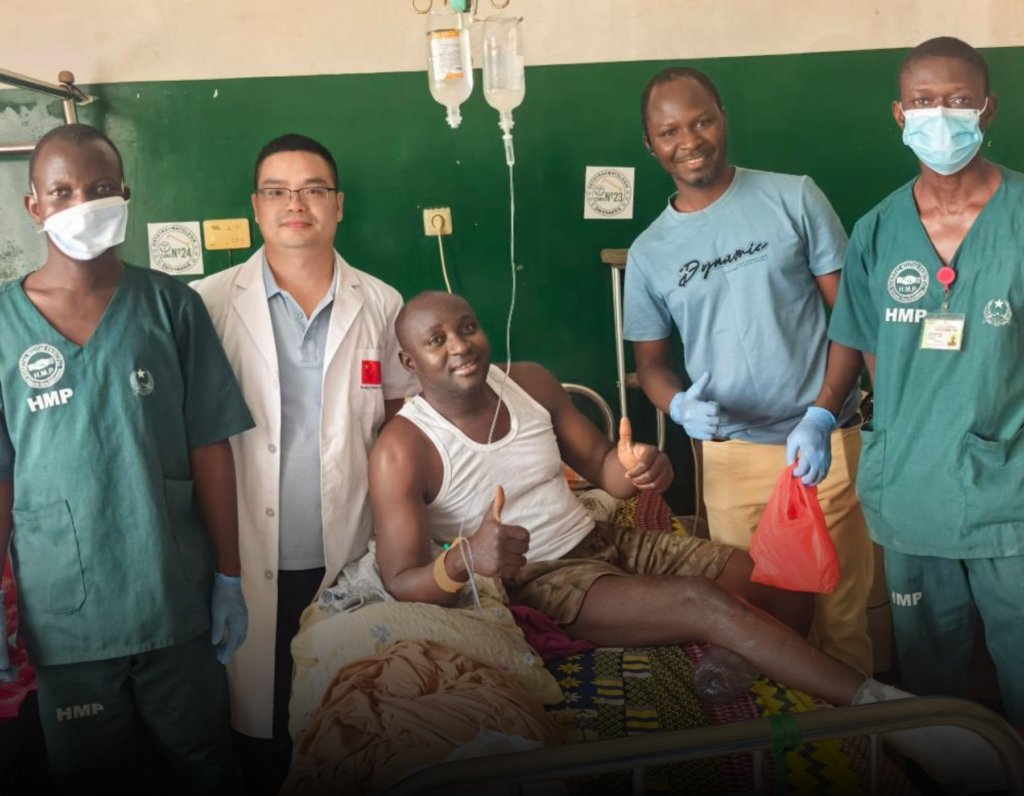
A life-changing surgical intervention by a Chinese medical team in Guinea-Bissau is drawing renewed attention to the expanding scope of China-Africa healthcare cooperation, as physicians successfully treated a complex and high-risk ankle fracture at a major friendship hospital in the West African nation.
The procedure, carried out by the 21st Chinese medical team stationed in the country, involved a 45-year-old patient suffering from a severe open trimalleolar ankle fracture complicated by infection and soft-tissue damage. According to medical staff, the operation required coordinated planning, advanced orthopedic techniques, and close collaboration with local surgeons.
After approximately three hours, the surgical team completed fracture reduction and internal fixation while stabilising the joint and addressing infection risks – an outcome that local doctors described as both technically demanding and educational.
A senior Guinean surgeon involved in the operation noted that the procedure introduced new approaches to managing infected open fractures, particularly the use of bone cement following wound debridement. The patient is reportedly recovering well, underscoring the success of the intervention.
Beyond the immediate clinical success, the operation served as a live training platform. Chinese doctors provided step-by-step guidance to local staff during the surgery, explaining standardised trauma treatment protocols and joint repair techniques.
This emphasis on skills transfer has become a hallmark of China’s medical missions across Africa. As noted in broader reporting on China-Africa health engagement, Chinese teams not only deliver care but also “share experience” and build local capacity through hands-on collaboration and technical exchanges.
China’s medical presence in Guinea-Bissau dates back nearly five decades, with teams being dispatched regularly since 1976. The current group includes specialists across multiple disciplines – from orthopedics and surgery to pediatrics and traditional Chinese medicine, reflecting a comprehensive approach to healthcare support.
This sustained engagement aligns with a broader continental effort. Over the decades, tens of thousands of Chinese medical professionals have worked across Africa, treating millions of patients and contributing to the development of local health systems.
The surgery took place at the China–Guinea-Bissau Friendship Hospital, itself a symbol of bilateral cooperation. Such facilities, often built or supported by Chinese partners, form the backbone of long-term health collaboration, combining infrastructure development with ongoing clinical service delivery.
Beyond healthcare, China and Guinea-Bissau maintain growing ties in economic cooperation, capacity building, and multilateral engagement through platforms such as the Forum for Economic and Trade Cooperation between China and Portuguese-speaking Countries These frameworks facilitate not only trade but also technical exchanges and training programs that complement medical assistance.
Analysts say the latest successful surgery reflects a broader model of South-South cooperation – one that integrates immediate humanitarian assistance with sustainable development goals.
From pandemic response to specialised surgical care, Chinese medical teams have become a consistent presence across African health systems. Their work, often conducted in partnership with local professionals, has helped introduce new techniques, expand treatment options, and strengthen resilience in under-resourced settings.
As the recovering patient expressed gratitude for the care received, the operation stands as more than a single medical achievement. It is a testament to an evolving partnership – one where shared expertise and mutual support continue to redefine healthcare delivery across continents.