

A new international survey by the Pew Research Center suggests that global perceptions of China have reached a significant turning point, with more people in many countries now expressing favorable views of China than of the United States.
The findings, published on July 15, are based on interviews with 42,151 adults across 36 countries conducted between February and May 2026. According to the survey, China is now viewed more positively than the U.S. in the majority of countries surveyed – a reversal from previous years when the United States consistently held the advantage in global public opinion.
The report attributes the shift to two simultaneous trends: improving perceptions of China and declining confidence in the United States and its global leadership.
“Views of China have improved in recent years while opinions of the U.S. have worsened,” the report noted, adding that the change has been driven by both rising favorability toward China and declining views of the United States across much of the world.
Among the 36 countries surveyed, 25 reported more favorable views of China than the United States, including traditional U.S. partners such as Canada and Mexico. The U.S. maintained a more positive image in only six countries, including Japan, India, the Philippines, South Korea and Israel.
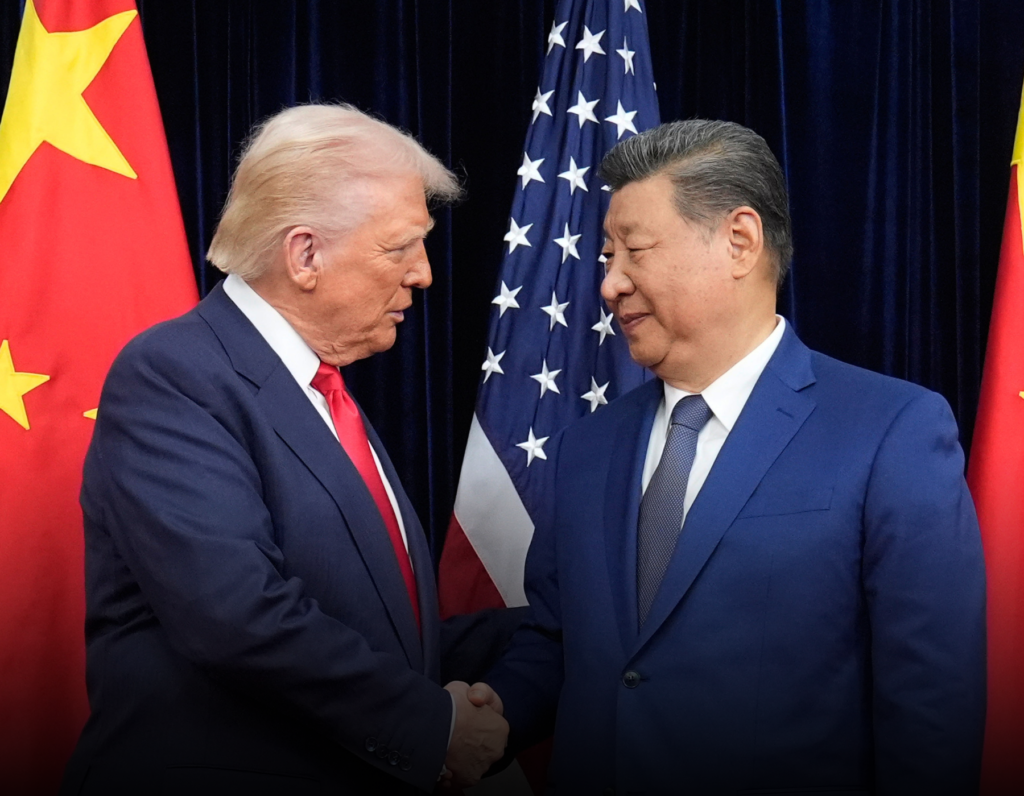
The survey also found that confidence in Chinese President Xi Jinping now exceeds confidence in U.S. President Donald Trump in many of the countries surveyed, marking a notable shift from previous polling during former President Joe Biden’s administration, when Biden generally enjoyed higher international confidence ratings than Xi.
While neither leader received majority approval across most countries, Xi was rated more favorably than Trump in 22 of the surveyed nations.
Despite China’s improved standing, the survey found that the United States continues to be viewed more positively on issues of personal freedoms.
Respondents across most countries were still more likely to believe that the U.S. government respects the personal freedoms of its citizens than the Chinese government. However, Pew noted that this gap has narrowed considerably over the past five years, largely because perceptions of the United States have declined rather than because views of China have greatly improved.
In Sweden, for example, the proportion of respondents who believe the U.S. respects personal freedoms fell from 61% in 2021 to just 27% in 2026.
The survey highlights an increasingly positive perception of China across many middle-income countries, including parts of Sub-Saharan Africa.
In South Africa, for instance, 72% of respondents described China as a reliable partner, compared with 46% for the United States. Nearly two-thirds also said China considers the interests of countries like South Africa when making international policy decisions, while a growing share believes China contributes to global peace and stability.
A separate Pew report released alongside the study found that favorable views of China remain particularly strong across Sub-Saharan Africa and Latin America, despite slight declines in a few countries. Nigeria was among the countries where perceptions of China remain near historic highs.
These findings come as China continues to deepen its engagement across Africa through infrastructure financing, trade, industrial investment, digital connectivity, renewable energy cooperation and healthcare partnerships under initiatives such as the Forum on China-Africa Cooperation (FOCAC) and the Belt and Road Initiative (BRI).
China has remained Africa’s largest bilateral trading partner for more than a decade, while cooperation has increasingly expanded beyond infrastructure to include manufacturing, green development, agricultural modernization and skills transfer.
Beyond economics and trade, perceptions of reliability, consistency and development cooperation appear to be playing a larger role in shaping global attitudes. Recent debates over trade policies, geopolitical conflicts and climate leadership have also influenced how countries assess the world’s two largest economies.
For Africa, where both Beijing and Washington continue to compete for influence, the changing perceptions reflect broader questions about which partnerships are delivering tangible development outcomes.
While opinion polls do not necessarily predict government policy, the survey suggests that public sentiment is increasingly aligning with China’s expanding diplomatic and economic footprint across many parts of the developing world.
As competition between China and the United States continues to shape global politics, Africa is likely to remain a central arena where both powers seek to strengthen partnerships – not only through investment and diplomacy, but also through public trust and long-term engagement.