

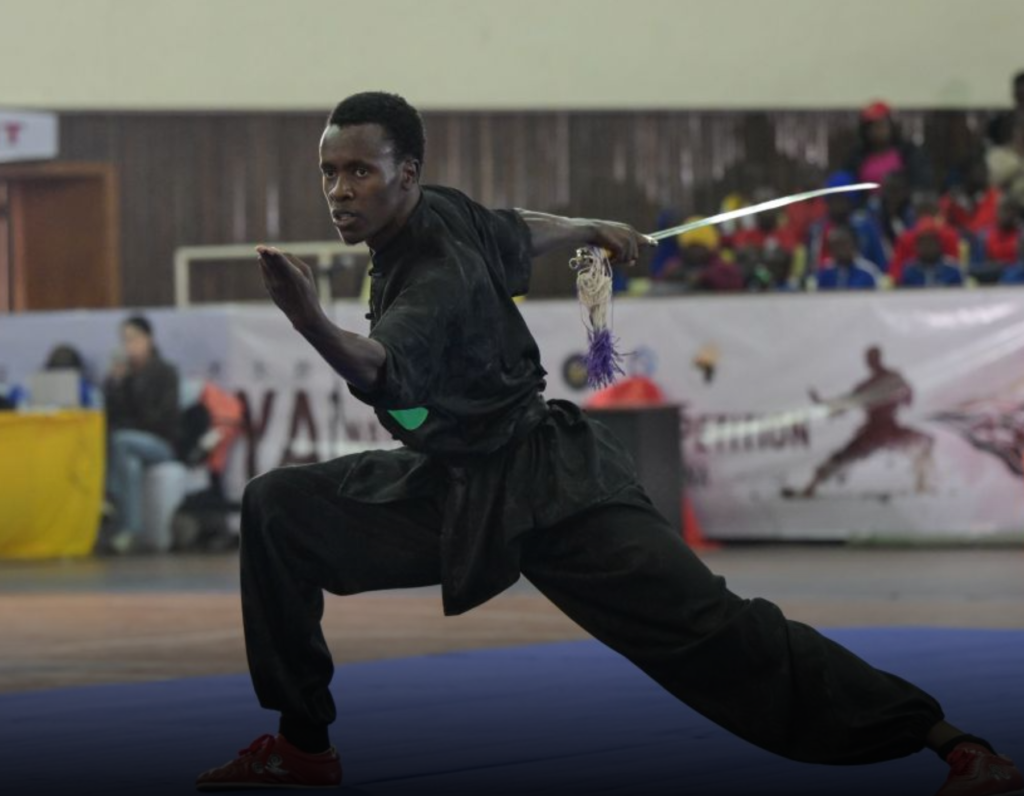
Kenya has successfully staged its inaugural national Wushu competition. Marking a significant milestone in the country’s embrace of the Chinese martial art. Highlighting deepening cultural exchanges between Kenya and China.
The event, held in Nairobi, brought together dozens of athletes from across the country to compete in both taolu (forms) and sanda (combat) disciplines. Organizers described the championship as a breakthrough moment for Wushu’s development in Kenya, offering a national platform for athletes to showcase their skills and gain competitive experience. Officials from the Kenya Wushu Federation said the competition reflects growing local interest in the sport. Particularly among young people. “This is an important step in nurturing talent and building a strong foundation for Wushu in Kenya,” a federation representative noted.
Wushu, a modern competitive sport derived from traditional Chinese martial arts. Has been steadily gaining popularity in Kenya over recent years. Training programs have expanded in schools, universities and community centers. Supported in part by cultural exchange initiatives and coaching partnerships. Experts say the sport’s appeal lies in its blend of athleticism, discipline and cultural expression. “Wushu is not just about competition. It also promotes fitness, focus and cross-cultural understanding,” said a local coach attending the event.
The championship also underscores the broader cultural relationship between China and Kenya. Through platforms such as the Confucius Institute and bilateral exchange programs. Chinese language, arts, and sports have become more visible across Kenya. Chinese coaches and instructors have played a role in training Kenyan athletes. While local practitioners have increasingly participated in regional and international competitions.
Sports cooperation has emerged as an important pillar of people-to-people ties, complementing partnerships in infrastructure, trade and education. China remains one of Kenya’s key development partners. With collaboration spanning major projects such as transport networks, energy facilities and digital innovation. Organizers say the national championship will serve as a stepping stone for Kenyan athletes aiming to compete on the continental and global stage. With structured competitions now in place. The Kenya Wushu Federation plans to strengthen talent identification and prepare athletes for the African Wushu Championships and future global tournaments.
“This competition is just the beginning,” an official said. “Our goal is to see Kenyan athletes excel internationally and represent the country with pride.” Beyond the sporting arena. The event reflects the growing importance of cultural diplomacy in China-Africa relations. Initiatives that promote shared experiences, whether through sports, education or the arts. Helping to build mutual understanding and long-term partnerships. As Kenya continues to diversify its sporting landscape. Wushu’s rise offers a unique example of how cultural exchange can translate into local development and international opportunity.
With enthusiasm building and institutional support increasing. The future of Wushu in Kenya looks promising. Signaling not only the growth of a sport, but also the strengthening of ties between two nations connected by cooperation and cultural exchange.