

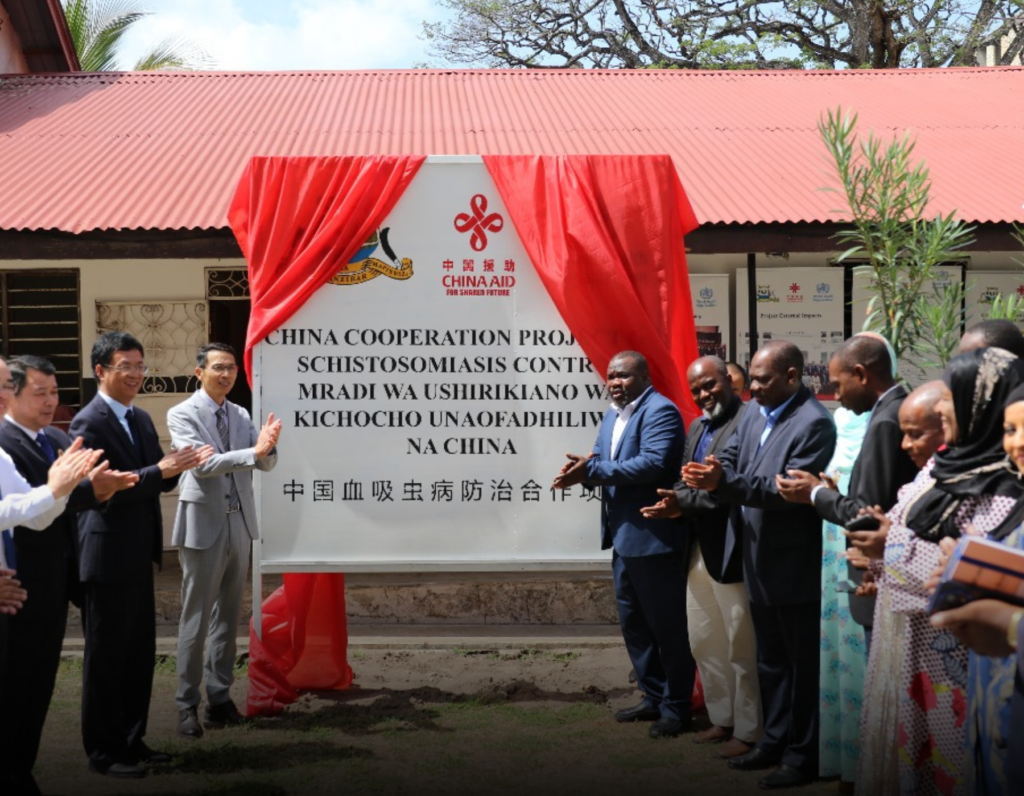
A China-assisted public health initiative is helping raise awareness of schistosomiasis among schoolchildren in Tanzania’s Zanzibar region. Marking another step forward in China-Tanzania cooperation in disease prevention and community health education.
The program, implemented with support from Chinese health experts and local authorities. Targets students in endemic areas with the aim of improving knowledge about schistosomiasis. A parasitic disease linked to freshwater exposure that remains a public health concern in parts of East Africa. Health officials involved in the initiative said the project focuses on education, early prevention and behavioral change. Through interactive sessions, students are taught how the disease spreads, its symptoms and practical ways to reduce infection risks. Such as avoiding contaminated water and maintaining proper hygiene.
“This effort is about empowering young people with knowledge so they can protect themselves and their communities,” a representative from the Zanzibar Ministry of Health noted during an outreach session. The awareness campaign forms part of broader collaboration between Tanzania and China in tackling tropical diseases. Chinese medical teams and public health specialists have been working alongside local institutions to share expertise in disease control, diagnostics and treatment strategies.
Schistosomiasis, also known as bilharzia, affects millions globally. Particularly in sub-Saharan Africa. Experts say that school-based education programs are among the most effective ways to curb transmission. Especially in high-risk communities. Chinese health professionals participating in the project emphasized the importance of integrating education with ongoing treatment campaigns. “Prevention and awareness are critical complements to medical intervention,” one expert said. Highlighting the need for sustained community engagement.
The initiative reflects a long-standing health partnership between the two countries. China has supported Tanzania’s healthcare system for decades. Including sending medical teams, building health facilities and contributing to disease control programs. Institutions such as the Chinese Center for Disease Control and Prevention have collaborated with Tanzanian counterparts. Engaging in research and capacity-building projects, particularly in the control of infectious diseases.
In Zanzibar, where schistosomiasis remains endemic in some areas, authorities have welcomed the additional support. The program complements national efforts to eliminate the disease. Through mass drug administration and improved sanitation infrastructure. Teachers and students involved in the campaign say the initiative has already made a difference. By incorporating health education into school activities, the program is helping children become ambassadors of change within their families and communities.
“Now we understand how the disease spreads and how to stay safe,” said one student participant. Reflecting the program’s grassroots impact.
Beyond its immediate health benefits, the project highlights the growing role of people-centered cooperation in China-Africa relations. Public health collaboration has become a cornerstone of bilateral engagement. Especially following joint efforts during outbreaks such as COVID-19 and Ebola. As China and Tanzania continue to deepen ties across sectors. Including infrastructure, trade and education. Health initiatives like this one demonstrate how targeted cooperation can deliver tangible benefits at the community level.
With continued support and expanded outreach, stakeholders hope the program will contribute to long-term reductions in schistosomiasis cases. While reinforcing the value of international partnerships in addressing shared public health challenges.