

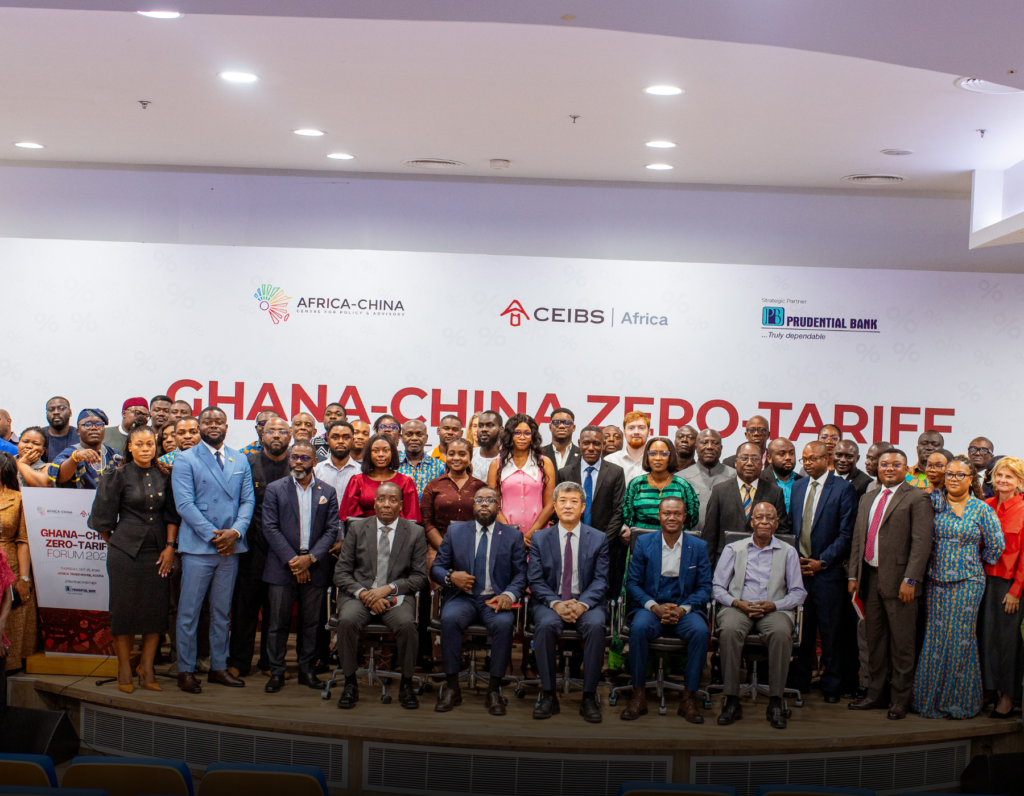
The Africa-China Centre for Policy and Advisory (ACCPA) has held its maiden high-level Ghana-China Zero-Tariff Forum, bringing together stakeholders to examine how Ghanaian businesses can take advantage of China’s zero-tariff policy and translate improved market access into export growth.
The forum focused on the practical steps Ghanaian exporters must take to enter the Chinese market, including securing reliable business partners, accessing trade finance, meeting product certification requirements and strengthening supply-chain capacity.
Speaking at the event, Executive Director of ACCPA, Paul Frimpong, cautioned that the removal of tariffs alone would not guarantee success for Ghanaian businesses seeking to export to China.
He said companies needed to prepare strategically and understand the systems required to compete in the Chinese market.
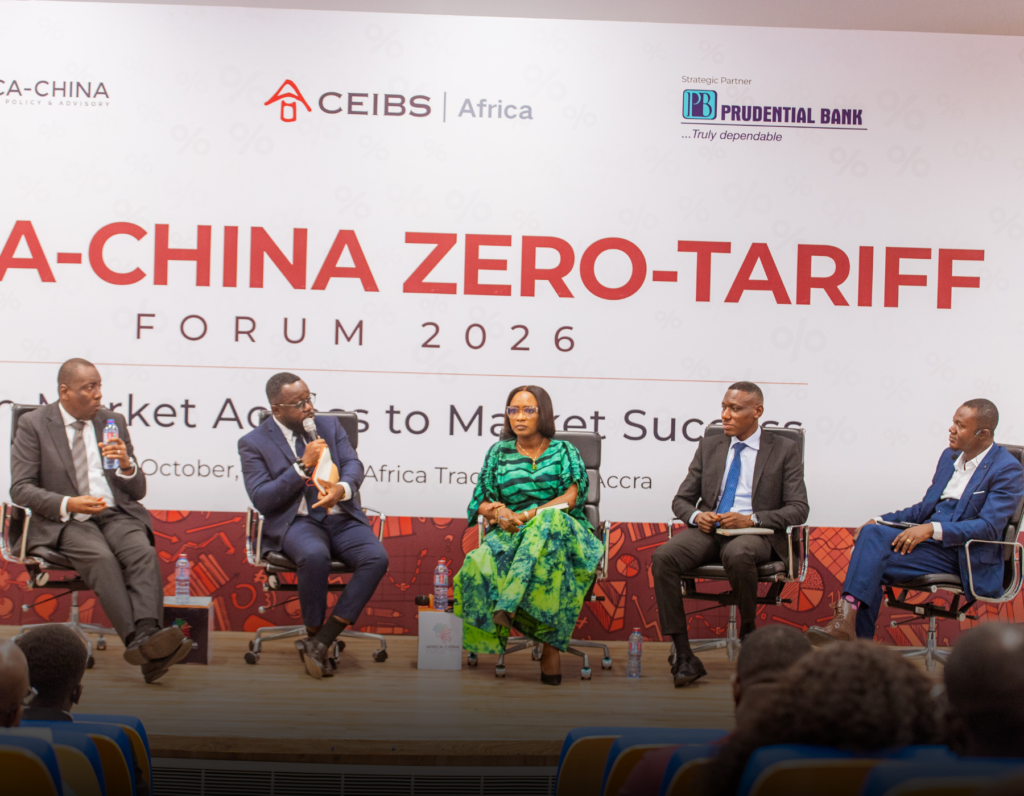
Mr Frimpong illustrated the point with an example of two Ghanaian companies producing high-quality goods for export. While both were excited by the zero-tariff opportunity, one began preparing without a clear strategy and, six months later, had still not shipped any products.
The other company, he explained, took a more deliberate approach by identifying reliable Chinese partners, securing financial support and understanding the relevant standards and certification requirements.
Mr Frimpong said the example demonstrated the need for Ghanaian businesses to move “from market access to market success” by building the capacity to meet the demands of international trade.
“China has done its part by opening the door. What happens next really is up to all of us,” he said.
China’s zero-tariff policy opens new opportunities
The forum comes as China implements its policy to extend zero-tariff treatment to eligible products from 53 African countries with which it has diplomatic relations, effective May 1, 2026.
Addressing the forum, Chinese Ambassador to Ghana, H.E. Cong Song, said the initiative was intended to expand African access to the Chinese market and support trade, investment and industrial development.
The Ambassador said the policy was designed to provide African countries with opportunities to increase exports to China without the tariff barriers previously applied to eligible products.
He identified Ghanaian products such as cocoa and cocoa products, cashew nuts, shea butter, textiles and handicrafts as potential beneficiaries of the expanded market access.
He also said the initiative could encourage investment in Africa’s manufacturing and processing sectors by creating incentives for businesses to add value to local raw materials before exporting them.
According to the Ambassador, China-Africa trade reached US$348 billion in 2025, representing a 17.7 per cent increase over the previous year. He further indicated that, by the end of September 2026, China’s imports from Africa had increased by 23.3 per cent year-on-year, while its exports to Africa had risen by 23.9 per cent.
He called for stronger economic cooperation and urged Ghana to create an enabling business environment that would allow local and Chinese companies to deepen trade and investment relations.
Export readiness remains critical
Despite the opportunities presented by the policy, the Ambassador acknowledged that businesses needed to address practical challenges to benefit fully.
These include identifying priority export products, improving institutional coordination and ensuring that Ghanaian producers can meet Chinese market standards and supply requirements.
The concerns reflect ACCPA’s call for businesses to approach the policy with a clear export strategy rather than assume that duty-free access would automatically generate orders and revenue.
For Ghanaian exporters, success will depend on their ability to identify suitable buyers, maintain consistent product quality, meet applicable regulatory requirements and deliver goods competitively.
The forum also highlighted plans for a six-month China-Africa supply-chain and zero-tariff export-management programme aimed at building the capacity of exporters, importers, trade advisers, supply-chain professionals and regulatory officers.
The proposed programme is expected to cover China’s zero-tariff framework, product certification, sourcing, logistics, value addition, manufacturing models and cross-cultural business negotiations. It is also expected to include an immersion component in China.
A representative of SEAPS Africa also emphasised the importance of ensuring that industrialisation and investment create employment opportunities for Africans, noting the need to balance automation with job creation.

Participants included representatives from business, academia and the banking sector, among them Abu Quason, Acting Managing Director of Potential Bank Limited, identified at the forum as a strategic partner.
From opportunity to measurable results
The maiden forum underscored the need for stronger collaboration among government institutions, financial institutions, businesses and trade-support organisations to help Ghanaian companies take advantage of the opportunities presented by China’s zero-tariff policy.
While the policy offers improved tariff access for eligible products, businesses must still navigate standards, financing, logistics, market demand and other requirements involved in exporting to China.
For Ghana, the ultimate test will be whether the initiative leads to increased exports, stronger local processing, investment in productive sectors and sustainable employment.
ACCPA is a policy think tank that focuses on Africa-China relations, providing policy research, analysis and advisory support to promote informed engagement and cooperation between African countries and China.
[/ihc-hide-content]