

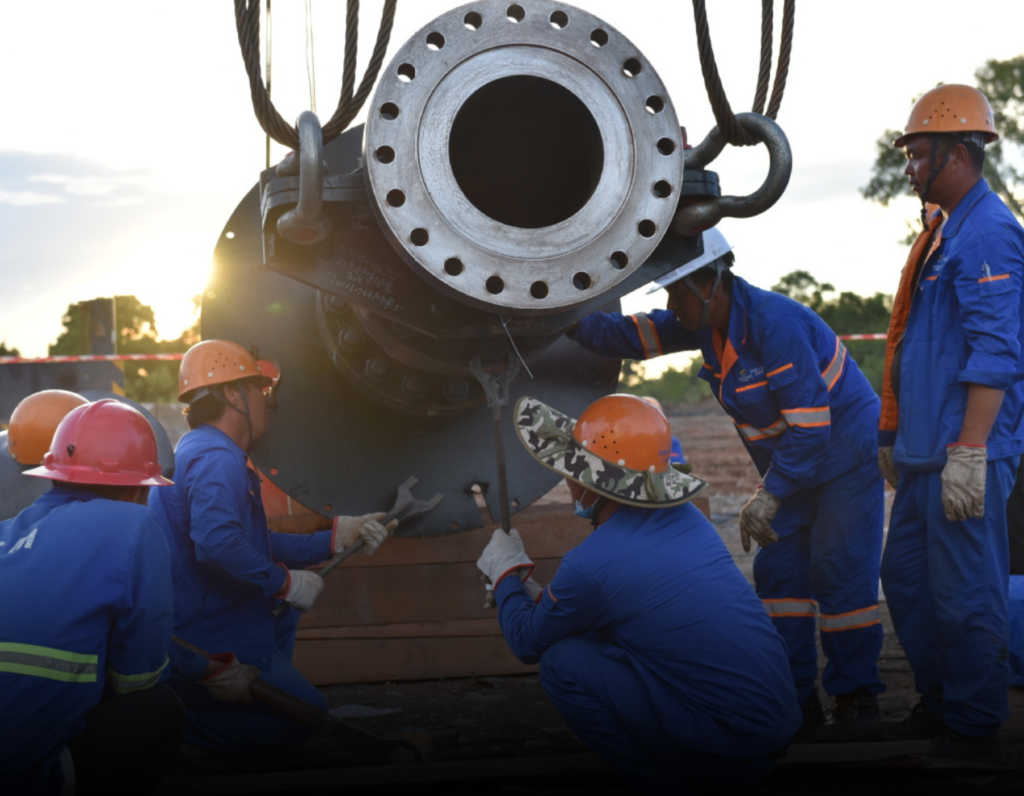
Zambia’s Copperbelt has reached another critical turning point as a Chinese engineering firm completes the key dewatering phase at the flooded Luanshya Copper Mine – an operation widely seen as essential to restoring one of the country’s most historically significant mining assets and stabilising copper output at a time of strong global demand.
The successful dewatering marks the clearance of millions of cubic meters of water that had rendered underground sections of the mine inaccessible for years. With the site now technically secured, full rehabilitation and phased resumption of mining operations can proceed, according to industry observers.
Luanshya, once a flagship operation in Zambia’s copper industry, suffered prolonged disruptions after flooding halted production and placed thousands of jobs at risk. The involvement of a Chinese firm, bringing specialized pumping systems, underground safety expertise, and project financing, has been widely credited with accelerating recovery timelines that local operators struggled to meet on their own.
Mining analysts note that the project is not just about water removal. Dewatering allows geological assessments, shaft rehabilitation, and equipment installation to restart, laying the groundwork for renewed copper extraction in a region that remains central to Zambia’s economy.
The Luanshya milestone comes amid renewed global attention on copper as a critical mineral for energy transition technologies, electric vehicles, and power grids. Zambia, Africa’s second-largest copper producer, has positioned China as a key partner in sustaining and expanding output.
Chinese firms are deeply embedded across Zambia’s mining value chain, from exploration and extraction to smelting and logistics. Recent reports highlight that Chinese-operated mines in Zambia have begun paying certain taxes and royalties in renminbi, reflecting the depth of financial and institutional cooperation between the two countries.
Beyond Luanshya, China’s footprint is visible in major Copperbelt operations, infrastructure upgrades, and skills transfer programs that support local employment and technical capacity.
Mining cooperation is only one pillar of the Zambia-China relationship. The two countries have collaborated on transport corridors, power generation, and industrial parks aimed at strengthening Zambia’s export competitiveness. Textile manufacturing, energy projects, and road rehabilitation initiatives have all featured prominently in bilateral engagements over the past decade.
Economists also point to China’s support for regional logistics links such as rail and road networks connecting Zambia to ports in Tanzania and Angola, as vital complements to mining recovery, reducing export bottlenecks and lowering costs for copper producers.
For Zambia, the completion of the dewatering phase sends a strong signal to investors that long-stalled assets can be revived through international partnerships. For China, it reinforces its role as a long-term stakeholder in Africa’s resource development, one that combines engineering capacity with financing and operational follow-through.
As global copper prices remain elevated and demand projections strengthen, the revival of Luanshya could contribute meaningfully to Zambia’s production targets while anchoring local jobs and downstream opportunities.
In the broader picture, the project underscores a defining feature of China-Africa engagement: pragmatic cooperation focused on restoring productive capacity, securing supply chains, and aligning development priorities with global market realities.