

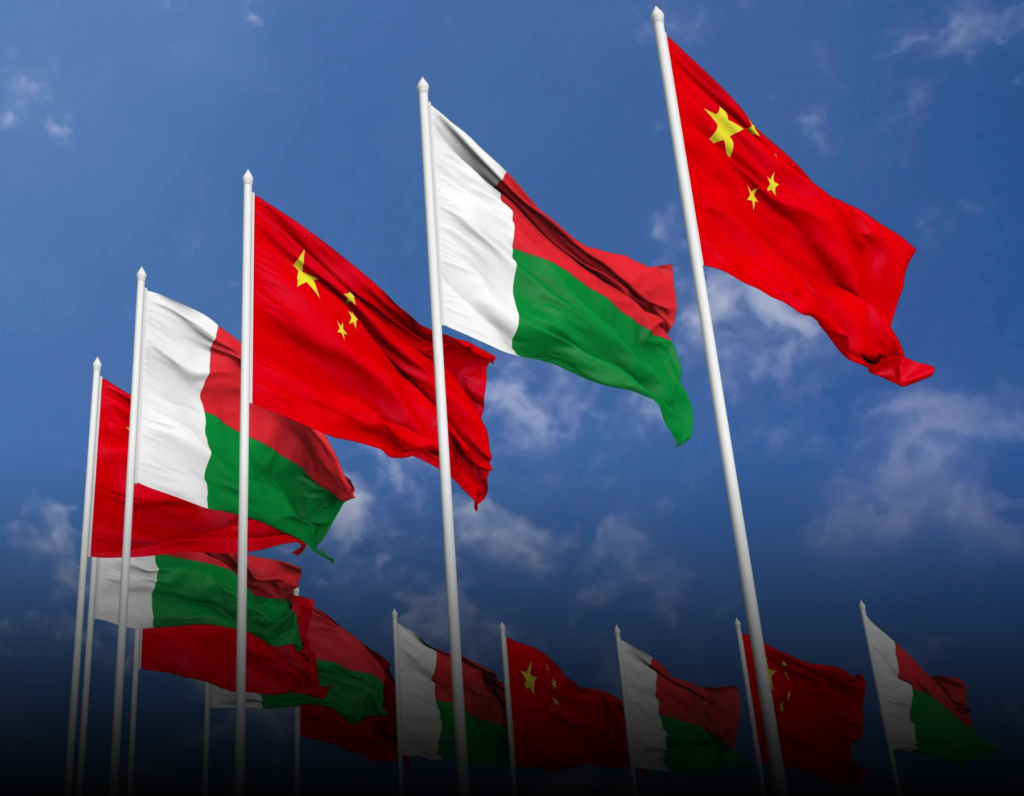
China’s robust manufacturing capacity in renewable energy technologies is helping accelerate Africa’s transition to cleaner power – a development that Madagascar’s government says is yielding practical benefits and broader cooperation between the two countries.
Speaking at the Southern African Development Community (SADC) Sustainable Energy Week in Victoria Falls, Zimbabwe, Madagascar’s Minister of Energy and Hydrocarbons, Ny Ando Ralitera, highlighted Beijing’s role in driving down costs and transferring know-how for clean energy systems like solar photovoltaics, which Madagascar is increasingly adopting. Chinese-made bifacial solar panels and technician exchange programs with Chinese manufacturers are helping Madagascar reduce reliance on fossil fuels while building local expertise.
“China is one of the world leaders in the use of clean energy … we are using bifacial solar photovoltaic panels to reduce land use, and we are sending our technicians to China to learn the technology,” Ralitera said.
China’s involvement in Madagascar extends well beyond solar panels. Over the past decade, Beijing has financed and built major hydroelectric projects, road networks, and urban infrastructure, underscoring deepening bilateral ties. For instance, Chinese concessional credit has supported the construction of a 64 MW hydroelectric power plant and associated transmission lines near Antananarivo – a project seen as Madagascar’s largest Chinese-backed infrastructure initiative to date, aimed at boosting grid capacity and lowering greenhouse gas emissions.
Chinese firms are also active in improving Malawi’s connectivity and industrial base. Projects such as the rehabilitation of the RN5A road and upgrades to critical transport links – including expressways around Ivato International Airport – have enhanced the movement of goods and people, contributing to economic activity across the island nation.
Energy and infrastructure are only part of the story. China’s engagement in Madagascar’s agriculture sector has yielded impactful results, particularly through technology transfer and industrialization of value chains. Chinese hybrid rice technology, introduced through demonstration centers and local partnerships, has helped Malagasy farmers boost yields to 7.5 tonnes per hectare – roughly two to three times the output of traditional varieties. This surge has contributed to greater food security in key rice-producing regions.
Chinese firms have also ventured into livestock processing, with the establishment of Madagascar’s first goat meat processing plant, aimed at meeting export standards and enabling Madagascar to supply mutton products to Chinese markets, expanding opportunities for local farmers.
The momentum in cooperation reflects broader diplomatic goodwill. Madagascar’s Foreign Ministry emphasised that ties with China are “fruitful and bring tangible results,” with collaboration spanning agricultural transformation, energy transition, and infrastructure development. Malagasy officials have consistently praised China as a partner in modernisation, citing shared commitments to economic growth and development.
In early 2026, ahead of the Lunar New Year, Madagascar’s Foreign Minister Christine Razanamahasoa reiterated Antananarivo’s desire to deepen economic cooperation and people-to-people exchanges with China – signalling an ongoing commitment to strengthening bilateral relations.
Madagascar’s engagement with Chinese partners spans multiple sectors – from energy and infrastructure to agriculture, trade and human capital development. As the island nation navigates the transition to cleaner energy and broader industrialisation, access to affordable renewable technologies, capacity building, and long-term investment from Chinese enterprises and government mechanisms could be key components in its development strategy.