

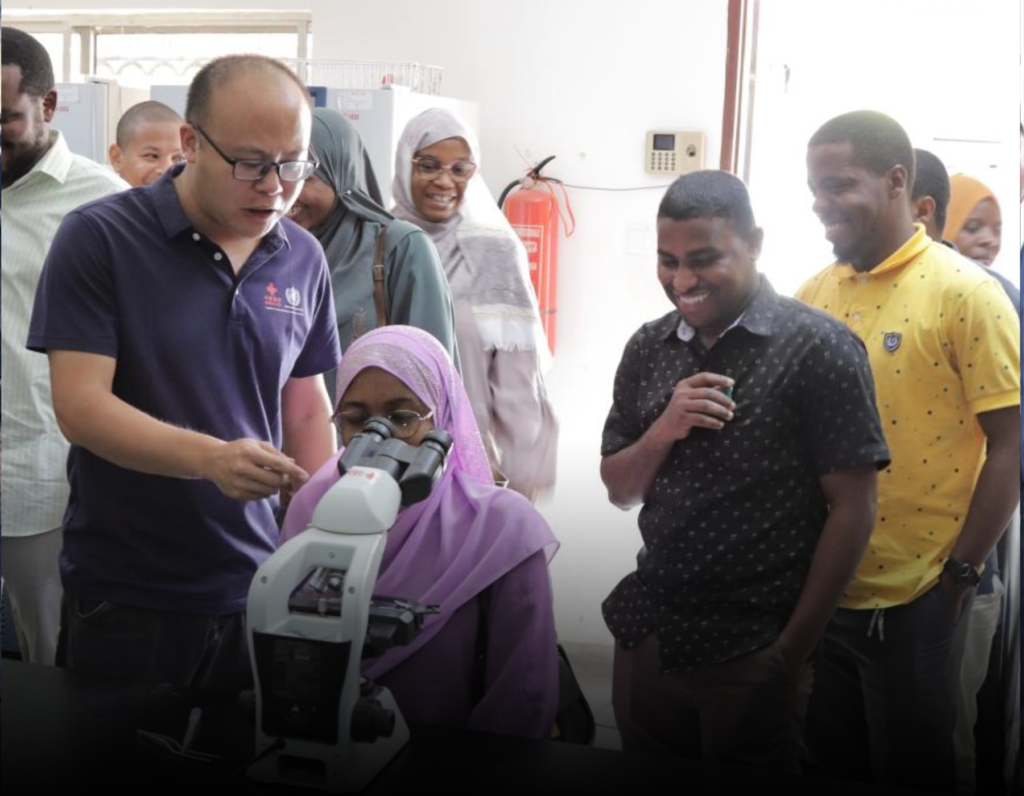
China’s technical support for health systems in Africa took centre stage on January 29, 2026, as a team of Chinese specialists conducted a targeted tropical disease awareness and diagnostic training event in Zanzibar to mark World Neglected Tropical Diseases (NTD) Day. The initiative draws from an ongoing China-aided schistosomiasis prevention and control project on Pemba Island, bringing practical expertise and expanded disease-fighting capacity to local health professionals.
More than 200 participants, including local health officials, water and sanitation representatives, agriculture and education sector stakeholders, grassroots healthcare workers and residents attended the training, which combined community health education with hands-on instruction on detecting Schistosoma haematobium, the parasitic worm responsible for urogenital schistosomiasis.
Wang Wei, leader of the Chinese expert team, emphasised the importance of community engagement, early detection and diagnostic accuracy as essential to reducing disease transmission. He highlighted that improving access to safe water, sanitation and environmental hygiene is critical to advancing disease control, echoing global priorities established for World NTD Day, which aims to mobilise political will and multi-sectoral efforts against neglected tropical diseases worldwide.
Zanzibar’s Assistant Health Coordinator on Pemba Island, Masoud Sleiman, praised the long-term technical assistance provided by China, noting that previous phases of cooperation had strengthened disease surveillance, laboratory diagnostics and prevention strategies within local healthcare systems – capacities that now help frontline workers respond more effectively to endemic health challenges.
This event builds on decades of China-Zanzibar public health cooperation, a partnership that has delivered continuous medical support since the 1960s and includes routine medical missions, clinical services and training programmes. Chinese medical teams have historically offered free clinics across Zanzibar – including multi-specialty services ranging from ophthalmology and dermatology to traditional Chinese medicine – significantly expanding health access for rural and urban communities.
Zanzibar’s efforts to overcome schistosomiasis have also benefited from earlier Chinese-led technical trainings that introduced diagnostic standardisation, nucleic acid detection techniques and surveillance protocols, reinforcing scientific approaches to disease elimination. This emphasis on standardised procedures reflects China’s commitment to sharing practical methodologies that support sustainable public health outcomes.
The broader China-Tanzania health relationship extends beyond technical training into cooperative strategies that link public health initiatives with infrastructure and socio-economic improvements. China has been a major investor in the Zanzibari healthcare landscape, contributing to hospital upgrades, vaccine donations and the deployment of medical personnel that have treated hundreds of thousands of patients over the years.
Neglected tropical diseases like schistosomiasis disproportionately affect rural and underserved populations in tropical climates, including many communities across East Africa. According to the World Health Organization (WHO), these diseases account for significant morbidity and disability – often trapping families in cycles of poverty and poor health if left unchecked. Global initiatives such as World NTD Day aim to strengthen partnerships, share innovations and mobilise resources for elimination strategies.
China’s engagement in Zanzibar aligns with wider China-Africa health cooperation frameworks endorsed under platforms like the Forum on China-Africa Cooperation (FOCAC), which emphasise joint action against infectious diseases, capacity building and people-centred health interventions across the continent. Recent follow-up actions to the 2023 FOCAC Summit have included dispatching hundreds of medical aid personnel to various African countries, offering treatment, training and public health support to millions of patients.
Among the tangible benefits of these collaborations is the strengthened coordination between local health systems and international technical partners. Chinese experts often work side by side with local clinicians – combining field demonstrations, laboratory training and community awareness campaigns – to not only treat disease but also empower health workers with durable skills long after missions conclude.
As Zanzibar and China mark World NTD Day with this focused training, the event underscores a shared commitment to universal health coverage, disease prevention and community resilience. By reinforcing diagnostic capacity and promoting multisectoral engagement, this initiative contributes to Zanzibar’s broader goal of eliminating schistosomiasis as a public health threat. While showcasing the evolving depth of China’s health cooperation in Africa, this partnership blends technical transfer, human capacity building and mutual advancement in public health outcomes.