
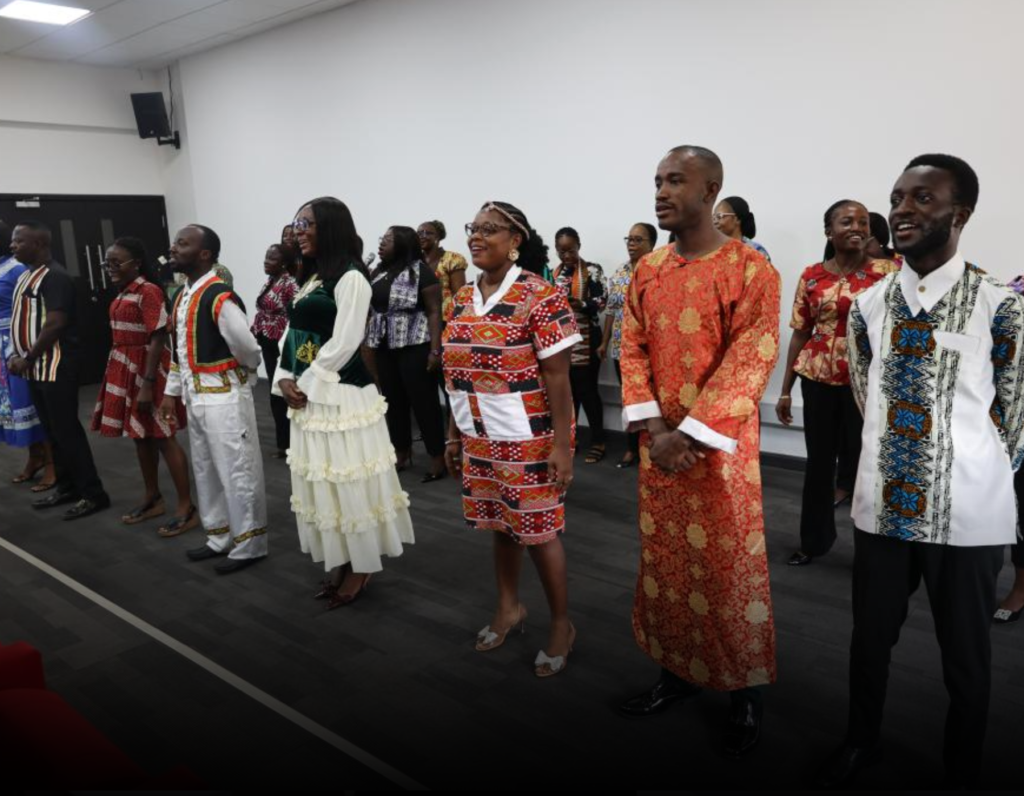
A new cohort of Ghanaian public sector professionals has completed an intensive Chinese language training program in Accra, underscoring the growing importance of linguistic and cultural exchange in strengthening Ghana-China relations.
At least 81 public servants from Ghana’s Ministry of Foreign Affairs and other government agencies graduated from an 11-week Chinese language proficiency course organised through a partnership between the Confucius Institute at the University of Ghana and the Foreign Service Institute.
Officials say the initiative is designed to equip civil servants with language skills that will enhance diplomacy, international engagement and cross-cultural communication as Ghana deepens cooperation with China.
Perpetua Dufu, coordinating director of the Foreign Service Institute, emphasised the strategic role of language in international relations, noting that communication skills help build trust and mutual understanding between countries.
The training program, introduced in 2025, aims to strengthen the professional capacity of Ghanaian public officials working in diplomacy, trade and international partnerships.
Participants received instruction in basic Mandarin language skills, cultural understanding and communication techniques that could support Ghana’s engagement with Chinese institutions and businesses.
Diplomatic observers say such programs reflect the growing importance of China in Ghana’s foreign policy and economic strategy. According to officials at the Ministry of Foreign Affairs, Ghana-China cooperation has expanded significantly across sectors including trade, investment, infrastructure development, education and cultural exchange.
The Confucius Institute at the University of Ghana, which provides the training, has become a key hub for Chinese language education and cultural exchange in West Africa. Established through a partnership between the University of Ghana and Zhejiang University of Technology, the institute operates numerous teaching centers and has trained tens of thousands of students in Chinese language and culture.
The increasing participation of Ghanaian professionals in Chinese language programs reflects a wider trend across the country’s education system.
Ghana recently introduced plans to incorporate Chinese language studies into basic schools nationwide, a move aimed at equipping students with skills relevant to trade, diplomacy and international cooperation.
Educational experts say the initiative signals Ghana’s recognition of China’s global economic role and the opportunities it presents for young professionals.
Language training programs have also expanded at universities and technical institutions. For example, the Confucius Institute at the University of Cape Coast offers courses ranging from beginner Mandarin to business Chinese, along with cultural programs such as calligraphy, martial arts and Chinese music.
The emphasis on language education is rooted in a long history of cooperation between the two countries. Ghana and China established diplomatic relations in 1960, making Ghana one of the first African nations to recognise the People’s Republic of China.
Since then, the relationship has evolved into a broad partnership encompassing trade, infrastructure development, education and technical cooperation.
China has become one of Ghana’s major economic partners, with investments spanning construction, manufacturing, telecommunications and services. Chinese companies have participated in major infrastructure projects, while technical training programs have enabled hundreds of Ghanaian professionals to study and gain skills in China.
Education and cultural exchange remain a central pillar of the partnership. Scholarship programs, academic exchanges and language training initiatives have enabled thousands of Ghanaian students and professionals to engage with Chinese institutions.
Beyond economics and diplomacy, language programs are strengthening people-to-people connections between the two nations.
Participants in the recent training program said learning Mandarin not only improved their communication skills but also provided insight into Chinese culture and history.
As Ghana and China continue to expand cooperation in areas such as trade, technology and infrastructure, officials believe language education will play an increasingly important role in facilitating collaboration.
With new cohorts of civil servants gaining Chinese language skills each year, the initiative is expected to support Ghana’s diplomatic engagement and help build stronger bridges between Accra and Beijing in the decades ahead.