

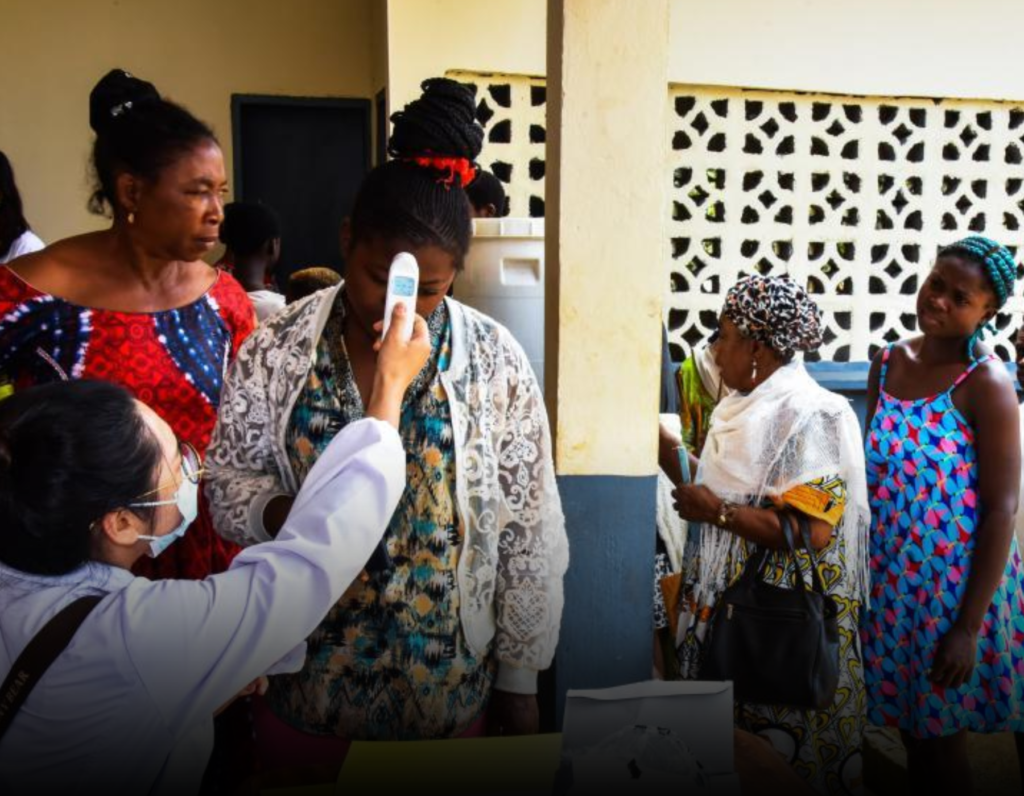
A Chinese medical outreach initiative in Cape Verde transformed International Women’s Day celebrations into a day of practical healthcare support, as volunteer doctors offered free consultations and screenings to women in the capital city of Praia.
The activity, organized by the 22nd Chinese medical team working in the island nation, took place at a local secondary school where classrooms were temporarily converted into consultation spaces. Medical professionals set up stations for gynecology, internal medicine and traditional Chinese medicine, providing checkups, health advice and early screening for common conditions affecting women.
Residents began arriving early in the morning, forming long queues as doctors conducted blood-pressure checks, health consultations and basic examinations. The outreach clinic aimed to improve health awareness while helping women identify potential medical issues early and seek further treatment when necessary.
According to Chen Feng, head of the Chinese medical team in Cape Verde, the community outreach clinic reflected the broader mission of China’s overseas medical aid programs: bringing essential healthcare services closer to communities that may otherwise have limited access. He noted that identifying health risks early and guiding patients to follow-up treatment is a key part of the team’s work at the grassroots level.
Local health workers and residents welcomed the initiative, saying free consultations from visiting specialists are particularly valuable for families with limited access to preventive healthcare. One community health participant said the visits demonstrate how international cooperation can make a tangible difference for local communities by expanding access to medical expertise.
The outreach effort reflects a long tradition of health cooperation between China and Cape Verde. Chinese medical teams have been dispatched to the West African island nation since the mid-1980s under a bilateral medical cooperation agreement, with teams typically serving two-year rotations in local hospitals and clinics.
Over the years, these teams have treated thousands of patients and provided training for local medical professionals. For example, the 21st Chinese medical team treated more than 17,000 patients in about 18 months, highlighting the scale of services delivered through the partnership.
Health cooperation has also expanded beyond clinical services. China has supported hospital infrastructure development, equipment donations and specialist training programs for Cape Verdean medical professionals. A recently built maternity unit at Baptista de Sousa Hospital, developed through bilateral cooperation, provides modern obstetrics, pediatric care and emergency services for mothers and children.
Analysts note that healthcare collaboration remains one of the oldest pillars of China-Cape Verde relations, with both countries marking decades of cooperation in medical services, professional training and hospital development.
China and Cape Verde established diplomatic relations in 1976, shortly after the island nation gained independence. Since then, cooperation has expanded across infrastructure, trade, culture and public health.
Chinese-supported projects in the country include major public infrastructure such as the National Stadium in Praia and other development initiatives aimed at supporting tourism, sports and public services.
Cape Verde also participates in multilateral initiatives linking China with Portuguese-speaking countries through the Forum for Economic and Trade Cooperation between China and Portuguese-Speaking Countries, commonly known as Forum Macao. The platform promotes cooperation in trade, investment, agriculture, and health among its member states.
Observers say initiatives like the Women’s Day outreach clinic highlight the human dimension of China–Africa cooperation. While large-scale infrastructure and trade agreements often dominate headlines, community programs in health and education demonstrate how bilateral partnerships can deliver direct benefits to ordinary citizens.
For many women who attended the outreach event in Praia, the day served not only as a celebration of International Women’s Day but also as a reminder that access to healthcare and international cooperation can play a meaningful role in improving everyday life.