

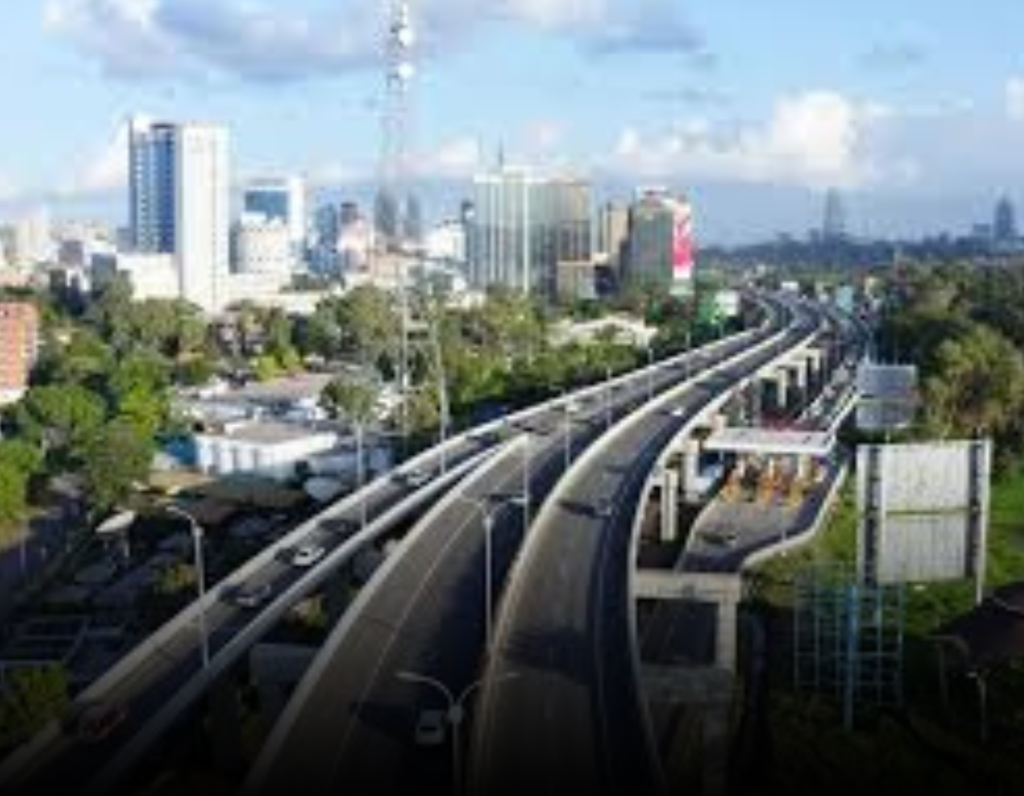
Severe flooding that paralyzed parts of Kenya’s capital recently prompted a swift response from the operator of the Nairobi Expressway, offering motorists temporary free access to the elevated toll road to help them navigate the city’s waterlogged streets.
The operator, a Chinese-backed concessionaire, opened the highway at no cost for several hours after intense rainfall caused widespread flooding along major roads in Nairobi, including the busy Mombasa Road corridor. The move was aimed at easing traffic congestion and helping stranded commuters reach safer routes and return home.
Heavy downpours that began on March 6 overwhelmed drainage systems across the Kenyan capital, leaving vehicles submerged and traffic grinding to a halt in several areas. In response, the expressway operator announced that motorists could access the road toll-free during the emergency window.
“In light of the current flooding situation, and with public safety as our highest priority, the Nairobi Expressway will be free of charge,” the company said in a public notice, urging drivers to proceed cautiously due to changing road conditions.
For many commuters, the gesture proved crucial. Some motorists reported being stuck in gridlock for hours before the elevated roadway offered a faster escape route above flooded streets. One driver told local media that without the expressway opening, he would likely have been stranded overnight because the lower road network had become impassable.
The emergency came amid a broader weather disaster affecting parts of Kenya. Flash floods triggered by heavy rainfall across the country in early March disrupted transport networks and caused significant damage in Nairobi and other counties.
Reports indicate that dozens of people have died in flood-related incidents, including drowning and electrocution, while more than 100 vehicles were damaged as roads were submerged and traffic stalled. Flights at Jomo Kenyatta International Airport were also disrupted as rescue teams and emergency responders worked to assist stranded residents.
The floods highlighted the importance of elevated infrastructure such as the Nairobi Expressway, which runs approximately 27 kilometers from the airport area to Nairobi’s Westlands district, offering a high-speed alternative route through the city.
The expressway itself is a landmark product of China–Kenya infrastructure cooperation. Built under a public-private partnership by the Chinese state-owned construction firm China Road and Bridge Corporation, the project connects Nairobi’s central business district to the airport and western suburbs, easing congestion on one of East Africa’s busiest transport corridors.
Since its completion in 2022, the project has significantly reduced travel times between the airport and the city center, demonstrating how large-scale infrastructure investment can reshape urban mobility. The operator is allowed to collect tolls during the concession period before transferring the highway back to the Kenyan government.
The temporary toll waiver during the flooding crisis underscores how such infrastructure can also play a role in emergency response by providing resilient transport alternatives when ground-level roads become unusable.
Beyond the Nairobi Expressway, China and Kenya maintain extensive cooperation in infrastructure, trade, and economic development. Among the most prominent projects is the Mombasa–Nairobi Standard Gauge Railway, a multi-billion-dollar rail line financed largely by Chinese loans and built by Chinese contractors, which has transformed cargo and passenger transport between the port of Mombasa and the capital.
Chinese firms have also been involved in major road networks, bypass highways and upcoming transport corridors aimed at boosting regional connectivity and trade. Kenyan leaders have repeatedly described the partnership as central to modernising the country’s infrastructure and strengthening links along the East African trade routes.
As climate-related weather events increasingly test urban infrastructure across Africa, projects like the Nairobi Expressway demonstrate how international cooperation in transport development can provide not only long-term economic benefits but also immediate relief during emergencies.
The temporary opening of the highway during Nairobi’s floods, while a short-term measure, offered a visible example of how infrastructure partnerships between China and Kenya continue to shape daily life in the region – sometimes in unexpected ways when crises strike.