

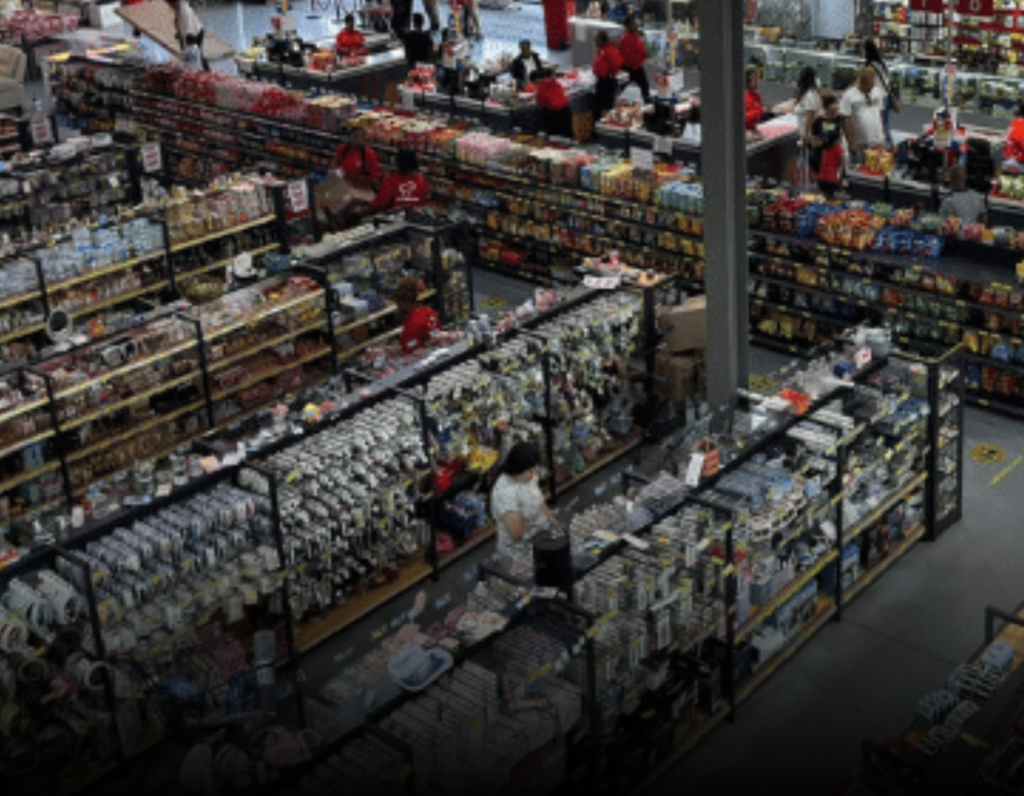
Chinese-run wholesale markets in South Africa are increasingly becoming vital employment hubs for young people, reflecting the growing economic interdependence between China and Africa’s most industrialised economy.
In commercial districts of Johannesburg, Chinese-owned trading centers have developed into bustling supply points where small retailers, entrepreneurs, and job seekers converge to buy and distribute affordable goods ranging from clothing and electronics to cosmetics and household products. These markets, often run by Chinese entrepreneurs, form part of a wider network of small and medium-sized trading businesses that are helping to address South Africa’s persistent unemployment challenge.
South Africa’s official unemployment rate stood at 31.4 percent in the fourth quarter of 2025, highlighting the urgency of job creation initiatives across the country. Against this backdrop, wholesale trading clusters have become a lifeline for many young South Africans seeking entry-level work or opportunities to launch their own retail ventures.
One of the best-known trading centers is Dragon City in Fordsburg, a major wholesale complex with hundreds of shops supplying affordable goods to local resellers and township businesses. According to traders operating in the area, the hub functions as a “reseller’s paradise,” providing both direct employment and supply chains that sustain thousands of informal retailers across Gauteng and neighboring provinces.
Many young employees work in roles such as shop assistants, logistics handlers, sales staff, and online retail coordinators. Others purchase goods wholesale to sell in townships, informal markets, or via social media platforms, effectively building micro-enterprises with minimal start-up capital.
Economic analysts say this form of trade-driven employment plays an important role in a country where youth unemployment remains among the highest in the world. Organisations such as the Harambee Youth Employment Accelerator have long emphasised the need for private-sector partnerships to expand access to first-time jobs and entrepreneurial opportunities for young South Africans.
The rise of Chinese wholesale hubs reflects broader economic relations between the two countries. China has been South Africa’s largest trading partner for more than a decade, while South Africa is China’s biggest trading partner in Africa. Investment flows between the two countries have also grown significantly, with Chinese enterprises involved in sectors ranging from mining and finance to manufacturing and telecommunications.
Industry reports indicate that more than 200 Chinese enterprises operate in South Africa, collectively investing billions of dollars and supporting employment across multiple sectors. These investments are part of a wider pattern of cooperation that includes infrastructure development, industrial capacity projects, and technology partnerships.
Beyond formal investments, people-to-people commercial exchanges have also expanded. African traders frequently travel to Chinese commercial centers such as Yiwu – home to one of the world’s largest wholesale markets – to source goods for resale in African markets. The city has become a magnet for international traders, including many from Africa, helping to facilitate cross-border supply chains for small commodities and consumer products.
The commercial activity unfolding in Johannesburg’s wholesale districts also reflects broader diplomatic and cultural engagement between the two countries. Organisations such as the SA-China People’s Friendship Association promote exchanges between Chinese and South African communities, supporting initiatives aimed at strengthening economic cooperation and cultural understanding.
Observers say these grassroot trade relationships complement large-scale bilateral cooperation frameworks. While Chinese companies continue to participate in infrastructure, energy, and manufacturing projects, small trading businesses are simultaneously shaping everyday economic interactions between Chinese entrepreneurs and African consumers.
Despite their economic contribution, Chinese wholesale hubs occasionally face scrutiny from local traders concerned about competition and pricing pressures. Similar debates have occurred in several African countries where Chinese retail networks operate. However, many local entrepreneurs acknowledge that these trading centers also expand access to affordable goods and open pathways for new businesses.
For many young South Africans, the markets represent more than just shopping destinations – they are gateways into commerce.
A young reseller in Johannesburg recently described the opportunity in simple terms: by purchasing goods wholesale and selling them in local communities, “you can start a business with very little capital,” turning small-scale trading into a stepping stone toward financial independence.
As economic cooperation between China and South Africa continues to evolve, analysts say the role of small traders and wholesale markets should not be overlooked. While government-led infrastructure projects often dominate headlines, grassroots commerce – driven by entrepreneurs, retailers, and youth employment – forms the everyday foundation of the China-Africa economic partnership.
In the busy aisles of Johannesburg’s Chinese wholesale markets, that partnership is visible not only in the goods on display but also in the livelihoods they help create.