

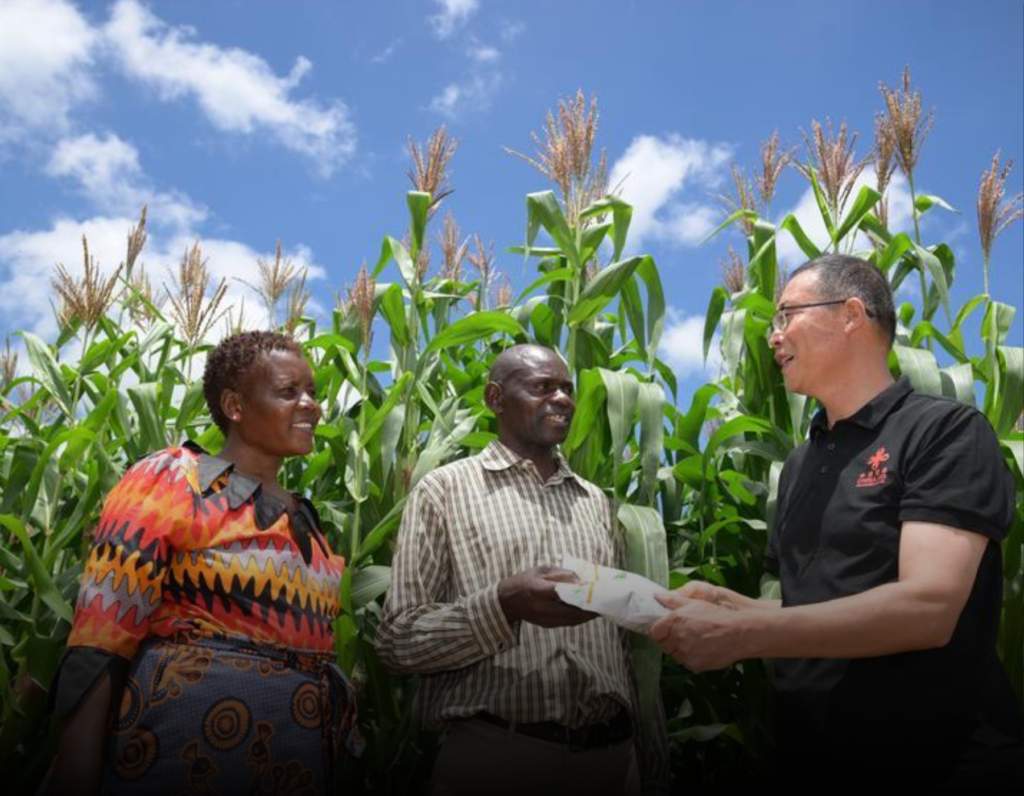
In Zindi Village, nestled in the fertile yet historically drought-prone lands of Mashonaland Central Province, a quiet revolution is taking place. Once scorched earth and water-scarce farms are now teeming with maize, vegetables and sweet potatoes – a testament to the growing agricultural cooperation between Zimbabwe and China that is helping revive rural communities and strengthen food security.
For years, villagers here battled chronic water shortages and unpredictable crops. Frequent droughts hindered productivity and livelihoods, forcing many families into subsistence farming with little surplus to sell. But since the launch of a China-supported agricultural demonstration village project in 2024, local fields have been transformed by solar-powered irrigation systems, boreholes and technical guidance from teams of Chinese agricultural experts.
“We struggled to harvest anything during dry seasons,” recalls village head Weveson Zindi. “Now with reliable water and better farming methods, we can grow staple crops, peppers, sesame and other vegetables, earning income and paying school fees.”
Chinese agronomists have introduced modern farming practices, including scientific use of organic fertilizers, mechanisation and water management techniques. These measures have enabled farmers to convert sandy soils into fertile fields, while training programs ensure that knowledge stays within local communities.
These demonstration sites are part of a broader initiative between the two nations. A second China-aided agricultural demonstration village was formally launched in Shamva District in 2025, extending benefits to dozens more households with irrigation infrastructure, drought-resistant seeds and precision farming support.

Beyond Zindi and Shamva, Zimbabwe has seen sustained support from China in technological and capacity-building efforts. China has helped drill over 1,300 boreholes nationwide, improving water access for communities and boosting resilience against climate change. Joint China-FAO South-South Cooperation projects now focus on sustainable soil and water management to bolster long-term agricultural productivity.
Agricultural cooperation is just one pillar in a wide-ranging Zimbabwe–China partnership. In recent years, the two countries have signed agreements to upgrade irrigation facilities across multiple provinces, enhancing water security and contributing to rural industrialisation strategies.
Trade links are also expanding. In a breakthrough deal in 2025, Zimbabwe secured an agreement to begin blueberry exports to China, opening new markets for Zimbabwean produce and diversifying export earnings.
This multifaceted engagement reflects the deepening economic and strategic ties between Harare and Beijing. Agriculture, infrastructure, trade and technology cooperation form the backbone of a relationship shaped by shared development goals and South-South solidarity – a model that speaks to mutual benefit and long-term resilience.
As harvests improve and farmers see tangible gains from the partnerships, the transformation in places like Zindi Village serves as a powerful example of how targeted cooperation – blending local knowledge with global expertise can turn drought into hope.