

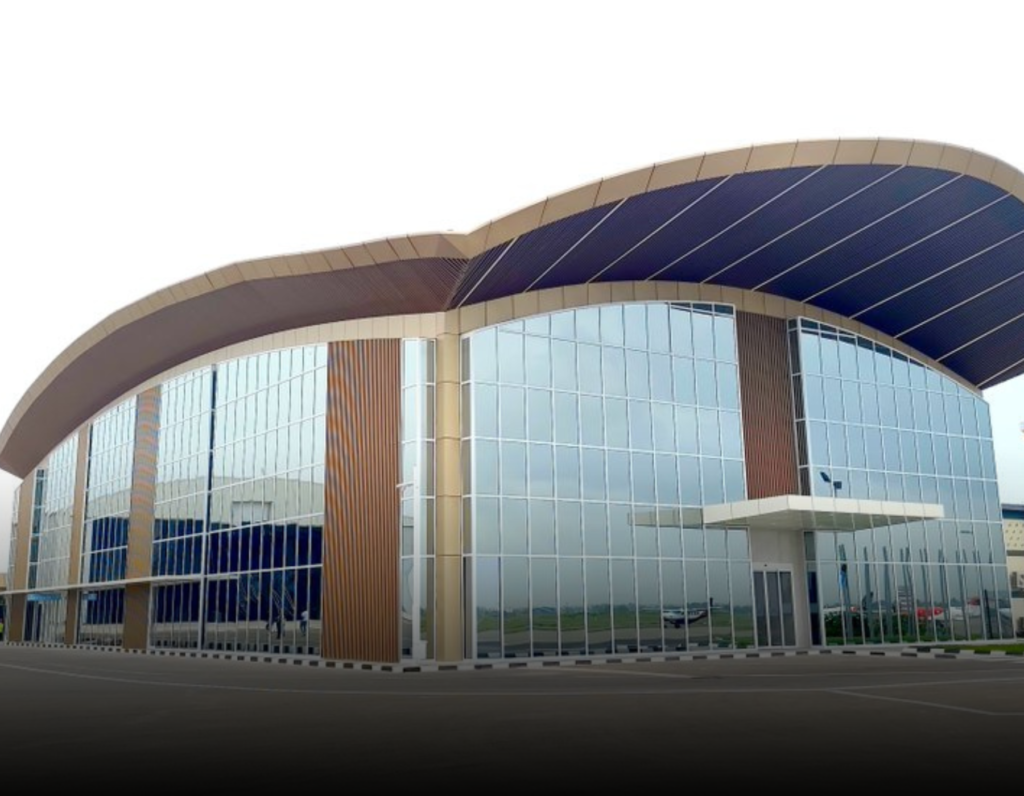
In a clear signal of deepening China-Tanzania infrastructure cooperation, a new VIP guesthouse constructed by a Chinese firm has officially opened its doors at Julius Nyerere International Airport (JNIA) in Dar es Salaam. The state-of-the-art facility – inaugurated on January 17, 2026, underscores the expanding footprint of Chinese engineering in East Africa and supports Tanzania’s growing role as a diplomatic and regional aviation hub.
Presiding over the ceremony, Tanzanian Vice President Emmanuel Nchimbi emphasised the facility’s strategic value, noting that it can host up to five heads of state and other distinguished guests simultaneously. The project enhances the country’s capacity to receive high-level official delegations and international dignitaries, providing a dedicated space that blends hospitality with security, comfort and logistical functionality for state visits and global engagements.
China’s involvement came through China Railway Jianchang Engineering Company (CRJE) (East Africa) Limited, a major Chinese constructor active across the region. Remarkably, the guesthouse was completed in just 75 days – far ahead of the originally planned 10-month timeline – setting a new benchmark for rapid delivery of national-level infrastructure in Tanzania while maintaining high standards of quality.
The 4,800-square-meter facility is positioned near Terminal 1 and features a two-story main building with sections rising to three floors. Amenities include reception halls, VIP lounges, meeting and conference rooms, and comprehensive support facilities designed to accommodate the full spectrum of diplomatic and official needs.
The VIP guesthouse is part of a wider wave of Chinese-led infrastructure development in Tanzania that spans aviation, logistics, trade and regional connectivity. For instance, Chinese firms are actively involved in building the Msalato International Airport near Dodoma, a flagship project aimed at easing domestic and international travel and strengthening Tanzania’s transport backbone. This airport, backed by multiple Chinese companies, drew praise from African Development Bank President Akinwumi Adesina as a transformational investment boosting trade, tourism and economic integration.
China has also supported major commercial initiatives such as the East Africa Commercial and Logistics Center (EACLC) in Dar es Salaam, a sprawling trade and logistics hub launched in August 2025. The centre brings together bonded storage, customs clearance, e-commerce and supply chain finance under one roof, with the potential to significantly lower regional trade costs and generate tens of thousands of jobs.
In the aviation sector specifically, the VIP guesthouse complements ongoing upgrades to airport infrastructure aimed at meeting rising passenger demand and boosting Tanzania’s attractiveness as a gateway for both tourists and business travellers. Plans announced in 2024 also include enhancements to VIP lounges at other key airports, including Mwanza and Arusha, reflecting a broader strategy to strengthen the country’s aviation ecosystem and hospitality offerings.
The VIP guesthouse project illustrates the practical and institutional depth of China-Tanzania relations, which extend far beyond ceremonial infrastructure. Chinese involvement in Tanzanian development dates back decades and includes landmark collaborations such as the Tanzania-Zambia Railway Authority (TAZARA) – a transformative transport artery completed in the 1970s with Chinese assistance. More recently, China has engaged in trade facilitation, logistics, and urban connectivity projects that support Tanzania’s medium- and long-term development strategies.
Such investments align with the principles of the Belt and Road Initiative (BRI) and the Forum on China-Africa Cooperation (FOCAC), both of which emphasise infrastructure, trade and people-to-people cooperation as pillars of South-South engagement. Importantly, they also resonate with Tanzania’s own development blueprint, including the National Development Vision 2050, which spotlights infrastructure as a key driver of economic diversification and regional integration.
The VIP guesthouse reinforces Tanzania’s ability to host international partners and diplomatic delegations in style and comfort – a seemingly small but symbolically powerful asset in the broader canvas of bilateral cooperation. As China’s footprint continues to expand across transport, trade and civic infrastructure in Tanzania, this project stands as a visible testament to the evolving and increasingly multifaceted partnership between the two countries.