

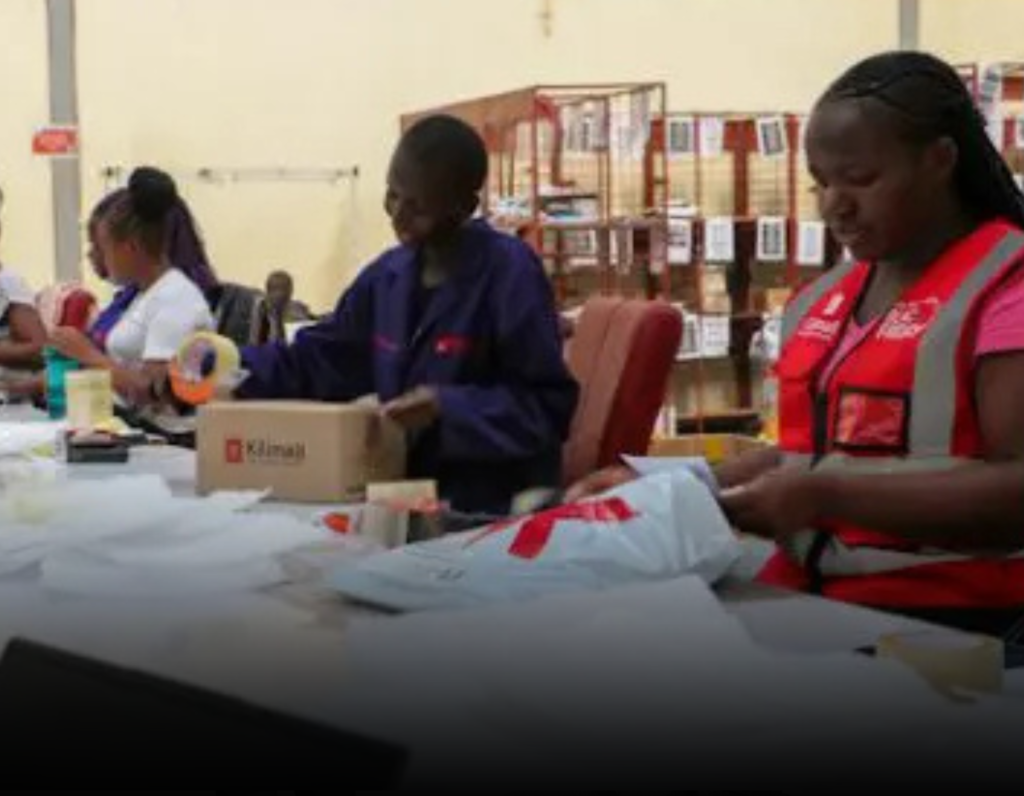
Chinese-made products are reshaping the face of online retail in Ghana and Somalia, empowering a new generation of digital entrepreneurs and deepening commercial ties between Africa and Beijing. From smartphones to handbags, wristwatches to household appliances, Chinese imports are increasingly featured in Ghanaian and Somali online stores, helping young business owners build livelihoods through social-media-driven e-commerce.
Across both countries’ capital and beyond, university graduates and tech-savvy youths are importing Chinese goods and selling them directly to consumers via TikTok, WhatsApp, and Instagram storefronts. For many, the move into online retail is a response to limited formal employment opportunities, with sellers such as Haydar Online and Side Online Market drawing customers from across the city thanks to competitive pricing, reliable delivery and the widespread appeal of Chinese-made products.
“I chose to do business instead of sitting at home,” said a young Mogadishu entrepreneur, highlighting how e-commerce has become a viable path to financial independence and self-employment.
The surge of Chinese products in Somali and Ghanaian online shops reflects broader changes in how trade and commerce are conducted in the Horn of Africa. Improved internet access, increasing smartphone penetration and familiarity with digital marketplaces have enabled Somali and Ghanaian youth to tap into global supply chains – often sourcing goods directly from Chinese manufacturers or wholesalers and delivering them to local buyers.
This trend is consistent with earlier patterns seen in Ghanaian and Somali e-commerce, where marketplaces specialising in Chinese goods helped expand consumer choice and broadened retail opportunities even before the recent youth-led boom.
The growing popularity of Chinese products in Ghana and Somalia comes amid expanding diplomatic and economic engagement among these countries. China and Somalia have maintained diplomatic relations since 1960, and in September 2024 the partnership was elevated to a Strategic Partnership, reinforcing commitments to joint development across trade, infrastructure, education and technology transfer.
On the other hand, Ghana and China established diplomatic relations in 1960, and since then the partnership has evolved through high-level exchanges, joint development initiatives and institutional collaborations.
Bilateral trade has grown in recent years, with China exporting machinery, electronics and consumer goods to Somalia and Ghana – while importing frozen fish, sesame, cashew nuts, cocoa and other African commodities.
Somali officials, including the Minister of Commerce and Industry, have highlighted that Chinese products are widely embraced in Somalia, reflecting strong market demand. At the same time, efforts are underway to expand cooperation under initiatives such as the Belt and Road Initiative (BRI) and to explore new avenues like digital connectivity and new energy partnerships.
Trade in goods like electronics and accessories is only one facet of Sino-African cooperation. China has a long history of involvement in Somalia and Ghana’s development, from infrastructure projects and humanitarian aid to capacity building and educational exchanges. Over the decades, China has supported water supply systems, hospitals and roads in Africa, and continues to provide scholarships, medical assistance and technical training.
These broader ties help create an environment where commerce – including digital and cross-border trade – can flourish, offering young Africans new platforms for innovation, business growth and integration into global markets.
While Ghanaian and Somali entrepreneurs celebrate the opportunities presented by Chinese imports and online retail, some local business owners have raised concerns about how cheap imports might affect domestic producers, echoing debates seen in other African markets about balancing imports with local industry development.
Nevertheless, the emergence of youth-led e-commerce in Somalia and Ghana underscores how international trade dynamics – particularly with China – are creating new economic pathways for a youthful population eager to innovate and drive change in the country’s recovering economy.
As the digital marketplace continues to evolve, Ghanaian and Somali online entrepreneurs are poised to play a more significant role in shaping future trade and economic growth across the continent.