

China’s top diplomat has reaffirmed the resilience and growing momentum of relations between China and African countries, describing the partnership as one that continues to thrive despite shifting global dynamics.
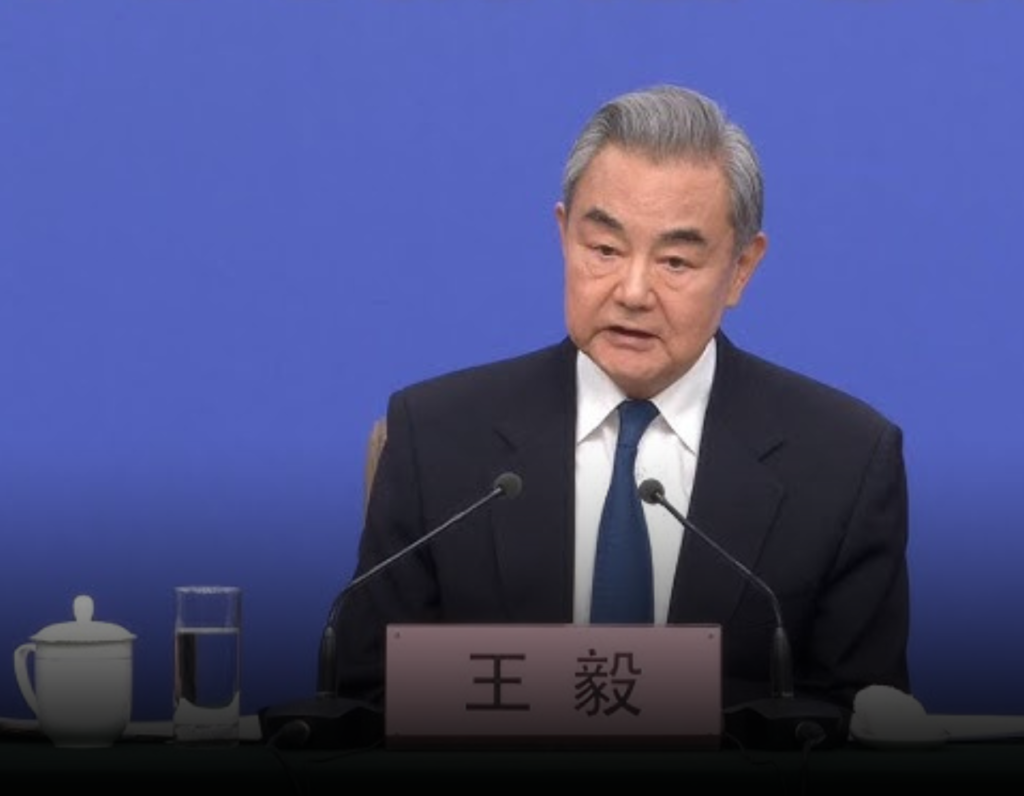
Speaking at a press conference on the sidelines of China’s annual parliamentary sessions in Beijing, Chinese Foreign Minister Wang Yi said the longstanding relationship between China and Africa remains robust and forward-looking. According to him, the partnership has “withstood the test of changing international circumstances” and continues to demonstrate strong vitality.
He also highlighted a unique diplomatic tradition that underscores the importance Beijing places on Africa: for more than three decades, China’s foreign minister has started each year with an official visit to the continent. The practice, maintained for 36 consecutive years, reflects what he described as China’s enduring commitment to Africa in its foreign policy priorities.
“It’s no exaggeration to say that the China-Africa friendship has been passed down from generation to generation, forged heart to heart, and built with sweat and blood,” Wang said while addressing journalists.
Over the past two decades, cooperation between China and African countries has expanded beyond diplomacy to include trade, infrastructure, industrial development and people-to-people exchanges. Central to this engagement is the Forum on China-Africa Cooperation (FOCAC), a multilateral platform established in 2000 that facilitates dialogue and practical cooperation between China and African states.
Through this framework and other bilateral initiatives, China has become Africa’s largest trading partner and a major investor in infrastructure, energy and manufacturing projects across the continent.
Infrastructure cooperation remains particularly visible. Chinese companies have helped build railways, highways, ports and power facilities in many African countries. Projects such as Kenya’s Standard Gauge Railway, industrial parks in Ethiopia and major port developments in West and Southern Africa have been cited by policymakers as examples of how infrastructure investment can support regional connectivity and economic growth.
Trade and market access have also become a growing focus. Beijing has pledged to expand opportunities for African exports, including plans to remove tariffs on goods from many African countries with which China maintains diplomatic relations, a move aimed at boosting trade and narrowing the continent’s trade imbalance.
Beyond infrastructure, China-Africa cooperation has broadened into technology, agriculture and digital connectivity. Initiatives such as the “Access to Satellite TV for 10,000 African Villages” project have aimed to reduce the digital divide by providing rural communities with access to broadcasting and information services.
Economic engagement is also reinforced by platforms like the China-Africa Economic and Trade Expo, which brings together governments and businesses from both sides to sign trade and investment agreements across sectors including manufacturing, tourism and aviation.
Analysts note that Africa’s priorities in the partnership are increasingly centered on industrialisation, value addition and sustainable development, reflecting the continent’s push for more balanced economic ties with external partners.
As China and African countries mark around seven decades of diplomatic engagement, leaders on both sides say the relationship is evolving toward deeper economic integration and broader cultural exchange.
For Beijing, Africa remains a strategic partner in the Global South, while many African governments view cooperation with China as an avenue to accelerate infrastructure development, expand trade opportunities and strengthen technological capacity.
With new initiatives under discussion and growing economic links, officials and analysts alike suggest that China-Africa cooperation is entering a new phase – one that aims to build on decades of diplomatic solidarity while addressing the economic aspirations of a rapidly transforming continent.China’s top diplomat has reaffirmed the resilience and growing momentum of relations between China and African countries, describing the partnership as one that continues to thrive despite shifting global dynamics.
Speaking at a press conference on the sidelines of China’s annual parliamentary sessions in Beijing, Chinese Foreign Minister Wang Yi said the longstanding relationship between China and Africa remains robust and forward-looking. According to him, the partnership has “withstood the test of changing international circumstances” and continues to demonstrate strong vitality.
He also highlighted a unique diplomatic tradition that underscores the importance Beijing places on Africa: for more than three decades, China’s foreign minister has started each year with an official visit to the continent. The practice, maintained for 36 consecutive years, reflects what he described as China’s enduring commitment to Africa in its foreign policy priorities.
“It’s no exaggeration to say that the China-Africa friendship has been passed down from generation to generation, forged heart to heart, and built with sweat and blood,” Wang said while addressing journalists.
Over the past two decades, cooperation between China and African countries has expanded beyond diplomacy to include trade, infrastructure, industrial development and people-to-people exchanges. Central to this engagement is the Forum on China-Africa Cooperation (FOCAC), a multilateral platform established in 2000 that facilitates dialogue and practical cooperation between China and African states.
Through this framework and other bilateral initiatives, China has become Africa’s largest trading partner and a major investor in infrastructure, energy and manufacturing projects across the continent.
Infrastructure cooperation remains particularly visible. Chinese companies have helped build railways, highways, ports and power facilities in many African countries. Projects such as Kenya’s Standard Gauge Railway, industrial parks in Ethiopia and major port developments in West and Southern Africa have been cited by policymakers as examples of how infrastructure investment can support regional connectivity and economic growth.
Trade and market access have also become a growing focus. Beijing has pledged to expand opportunities for African exports, including plans to remove tariffs on goods from many African countries with which China maintains diplomatic relations, a move aimed at boosting trade and narrowing the continent’s trade imbalance.
Beyond infrastructure, China-Africa cooperation has broadened into technology, agriculture and digital connectivity. Initiatives such as the “Access to Satellite TV for 10,000 African Villages” project have aimed to reduce the digital divide by providing rural communities with access to broadcasting and information services.
Economic engagement is also reinforced by platforms like the China-Africa Economic and Trade Expo, which brings together governments and businesses from both sides to sign trade and investment agreements across sectors including manufacturing, tourism and aviation.
Analysts note that Africa’s priorities in the partnership are increasingly centered on industrialisation, value addition and sustainable development, reflecting the continent’s push for more balanced economic ties with external partners.
As China and African countries mark around seven decades of diplomatic engagement, leaders on both sides say the relationship is evolving toward deeper economic integration and broader cultural exchange.
For Beijing, Africa remains a strategic partner in the Global South, while many African governments view cooperation with China as an avenue to accelerate infrastructure development, expand trade opportunities and strengthen technological capacity.
With new initiatives under discussion and growing economic links, officials and analysts alike suggest that China-Africa cooperation is entering a new phase – one that aims to build on decades of diplomatic solidarity while addressing the economic aspirations of a rapidly transforming continent.