

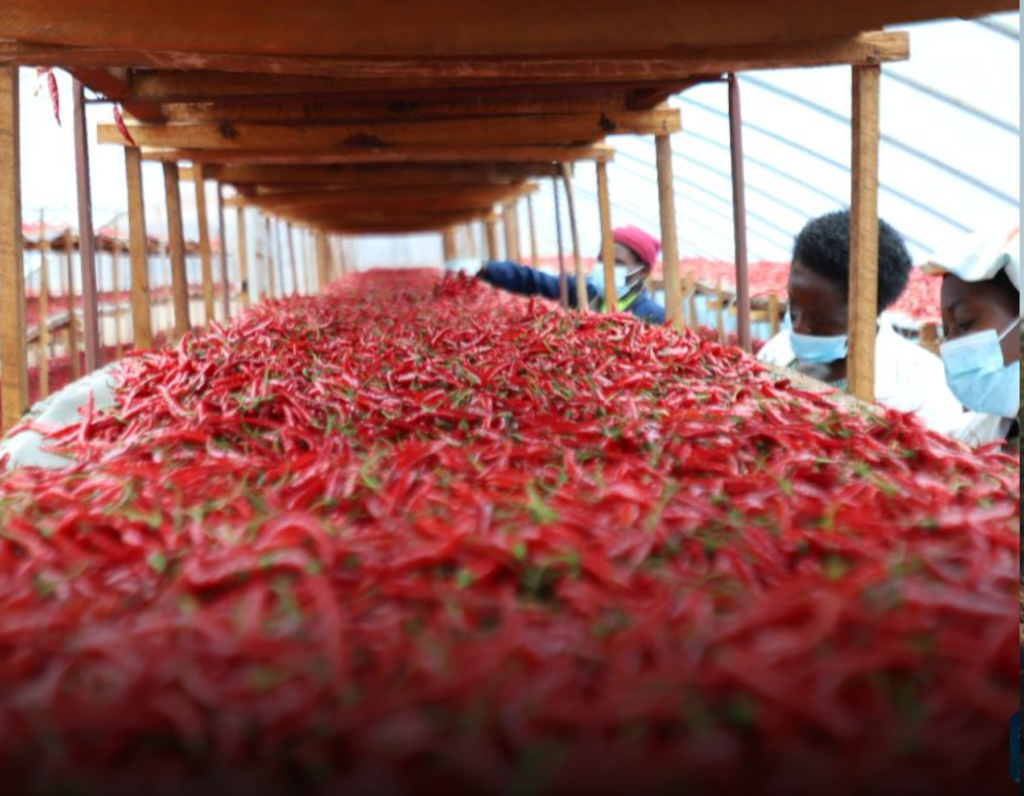
In the quiet farmlands of eastern Rwanda, a silent transformation is unfolding – one driven not by aid, but by access. China’s zero-tariff policy is reshaping the livelihoods of chili farmers, turning small-scale agriculture into a gateway to global trade.
In villages across Kayonza District, chili peppers have become more than just crops – they are now engines of income, stability, and dignity. Hundreds of farmers are benefiting from growing exports to China, supported by strong demand and improved market access.
At the center of this shift is Fisher Global, a Rwandan agribusiness that began exporting dried chili to China in 2022. What started modestly with just 15 hectares under cultivation, has expanded rapidly to about 300 hectares, reflecting rising demand and growing farmer participation.
“Exporting to China has been a great opportunity for us… it has really opened doors,” said general manager Herman Uwizeyimana, highlighting how access to a “huge and stable market” is enabling long-term investment and expansion.
Production has scaled accordingly. Exports have grown from a single container in 2022 to roughly 300 metric tons today, with ambitions to exceed 1,000 metric tons annually.
For farmers, the impact is immediate and deeply personal. Emmanuel Bihoyiki, a 28-year-old farmer, began with a single pot of chili plants. Today, he cultivates over two hectares – earning progressively higher incomes with each harvest.
“It has brought significant income… improving our livelihoods,” he said.
Another farmer, Deborah Muhawenimana, used her earnings to renovate her home and install solar power – clear evidence of how agricultural trade is translating into improved living standards.
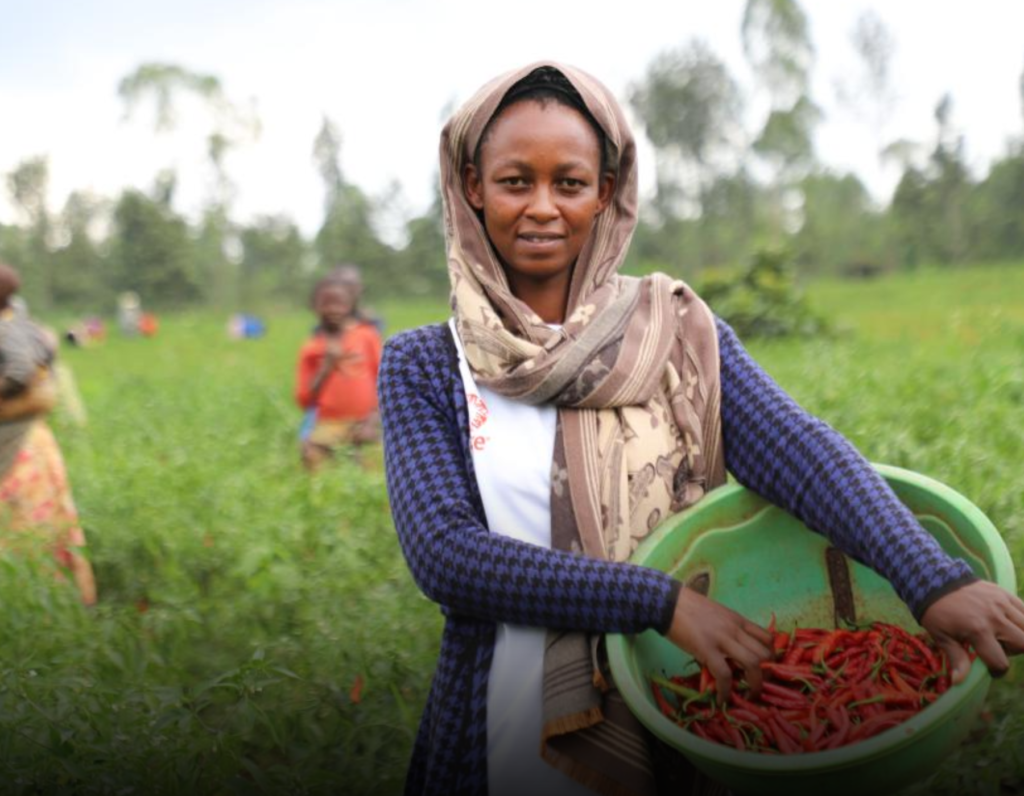
For many women, the chili value chain is also creating steady employment. Seasonal workers now earn daily wages that cover essentials and school fees, signaling a broader social impact beyond farming households.
China’s zero-tariff policy – set to take effect May 1, covering 53 African countries – is proving to be a decisive catalyst. By removing import duties and streamlining access, it offers African producers a rare advantage: predictability.
Farmers in Rwanda benefit not only from higher margins but also from structured market access. Through contract farming, companies like Fisher Global guarantee purchase agreements before planting, reducing uncertainty and encouraging expansion.
Industry stakeholders say the policy comes at a crucial time, especially as exporters face disruptions in traditional markets. It provides an alternative that is both stable and scalable.
Behind each shipment lies a carefully managed process – drying, grading, and packaging chili to meet strict quality standards for Chinese consumers. Only top-grade produce is exported, reinforcing Rwanda’s positioning as a supplier of high-quality, pesticide-free agricultural goods.
The model reflects a broader shift in African trade strategy: moving from raw production to structured value chains with quality control, branding, and processing capacity.
The chili trade is one chapter in a growing Rwanda–China relationship built on trade, infrastructure, and development cooperation.
China has supported Rwanda in sectors ranging from road construction and industrial parks to digital innovation and agricultural modernization. At the same time, Rwanda is diversifying its exports – expanding beyond traditional products like coffee and tea to include high-value horticulture such as chili and avocados.
This diversification aligns with Rwanda’s ambition to scale its export revenues and reduce dependence on a narrow set of commodities.
What makes Rwanda’s chili story compelling is not just export growth – but inclusion. Smallholder farmers, women workers, and rural communities are all participants in this emerging value chain.
And at its core lies a simple but powerful equation: access to markets equals opportunity.
As Uwizeyimana put it, “China is the number one market… very important to us,” a statement that reflects both present success and future ambition.
In a world where trade barriers often define limits, Rwanda’s chili farmers are proving the opposite – that when doors open, even the smallest farms can reach global heights.