

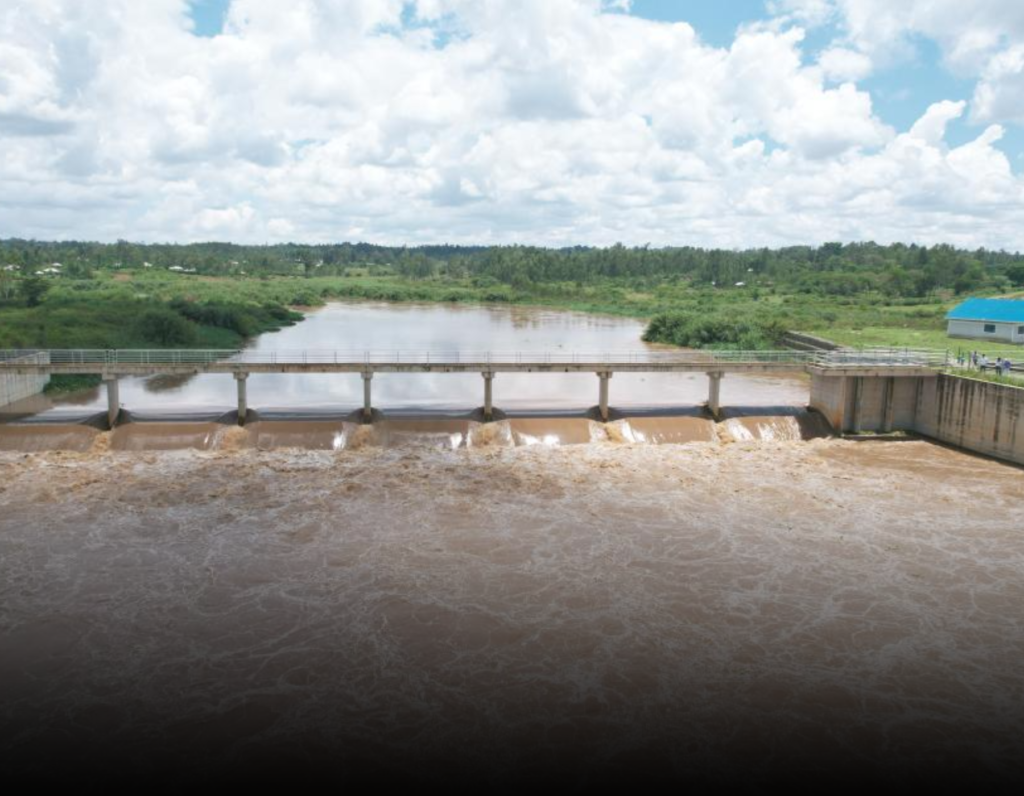
In the flood-prone plains of western Kenya, a quiet agricultural transformation is underway, powered not by fuel or pumps, but by gravity.
A major Chinese-built irrigation scheme along the Nzoia River is reshaping how thousands of Kenyan farmers cultivate their land, offering a more reliable and cost-effective alternative to rain-fed agriculture.
Completed in 2024, the Lower Nzoia Irrigation Project has introduced an extensive network of canals and drainage systems stretching across hundreds of kilometers. The system allows water to flow naturally from elevated channels into farms, eliminating the need for expensive pumping technologies and reducing farmers’ dependence on unpredictable rainfall.
For decades, farmers in Siaya County battled seasonal flooding and drought cycles that made consistent production nearly impossible. Today, the same landscape is turning into a year-round breadbasket for crops such as rice, maize, and vegetables.
According to project details, the infrastructure includes over 100 kilometers of irrigation canals and a vast network of drainage and dikes designed not only to supply water but also to control floods.
Local farmers say the impact has been immediate. One beneficiary noted in earlier reporting that with gravity-fed irrigation, “we can divert water from the canal to our farms,” enabling cultivation across all seasons. Another farmer highlighted reduced costs, saying the project spared him from relying on diesel-powered pumps – previously a major financial burden.
The project is part of a broader plan to expand irrigated land and boost Kenya’s agricultural output. Official projections indicate tens of thousands of acres will be brought under irrigation, with thousands of farmers expected to benefit directly.
Authorities estimate that expanded irrigation could generate billions of Kenyan shillings annually through increased production of both staple foods and high-value crops.
Beyond income gains, the initiative addresses a longstanding structural issue in Kenyan agriculture: heavy reliance on rainfall. With climate variability intensifying across East Africa, irrigation systems like Lower Nzoia are becoming central to national food security strategies.
The irrigation project reflects a broader and deepening partnership between China and Kenya, particularly under infrastructure and development frameworks.
Chinese companies such as Sinohydro, the project’s builder has been involved in multiple large-scale initiatives across Kenya. These include transport infrastructure like the Standard Gauge Railway, road networks, and energy projects, all aimed at enhancing connectivity and economic productivity.
In agriculture, cooperation has expanded to include technology transfer, training programs, and demonstration centers designed to improve yields and modernise farming practices. Analysts note that such projects are increasingly aligned with Africa’s adaptation needs in the face of climate change, where water management is critical.
Kenya’s experience with irrigation has been mixed historically. Earlier large-scale schemes often struggled with inefficiencies and sustainability challenges. However, the gravity-fed model – requiring less energy input and maintenance – may represent a more viable path forward.
As one of the largest irrigation developments in the country, the Lower Nzoia project is being closely watched as a potential blueprint for similar initiatives across Africa.
For farmers in western Kenya, however, the significance is more immediate: predictable harvests, reduced costs, and a renewed sense of stability.
What was once a flood-threatened region is steadily evolving into a productive agricultural hub – demonstrating how targeted infrastructure partnerships can translate into tangible, grassroots impact.