

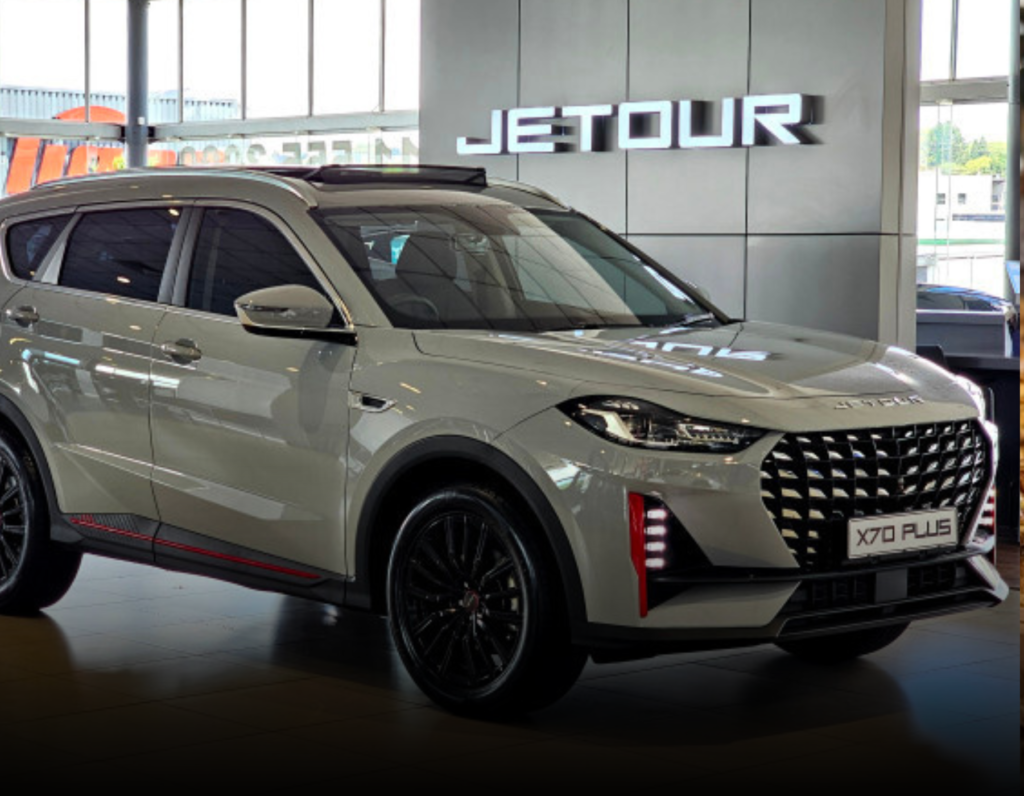
With competitive pricing, modern features, and growing consumer trust, these automakers are capturing an increasing share of sales – signalling a broader shift in Africa’s auto landscape.
Beyond the showroom, this surge reflects deepening China-Namibia ties in trade, infrastructure, and investment, pointing to a partnership that is accelerating on multiple fronts.
Chinese automotive brands are rapidly gaining ground in Namibia, signalling not only a shift in consumer preferences but also the deepening economic relationship between Windhoek and Beijing.
Recent market data shows that Chinese carmakers are no longer fringe players. In February alone, they accounted for over 12 percent of total vehicle sales in Namibia, reflecting steady month-on-month growth and a widening presence across both passenger and commercial segments.
Industry analysts point to the strong performance of brands such as Haval and Jetour, with the latter recording a sharp jump in sales volumes within a single month – an indicator of rising consumer confidence and expanding dealership networks.
Namibia’s automotive market, historically dominated by Japanese and European brands, is undergoing a structural shift. Chinese manufacturers are capitalising on a value proposition centered on affordability, modern technology, and improved design.
“Chinese car brands…are transforming Namibia’s automotive market with affordable prices and advanced tech,” one industry reports, highlighting how these vehicles are increasingly appealing to both private buyers and fleet operators.
The growth trajectory has been building over time. By late 2025, Chinese brands had already doubled their market share year-on-year to around 12 percent, underscoring sustained momentum rather than a short-term spike.
This expansion is expected to continue into 2026, supported by improving credit conditions and strong demand from sectors such as mining, agriculture, and logistics – key pillars of Namibia’s economy.
Namibia’s evolving auto market reflects a broader continental trend. Chinese automakers are increasingly targeting Africa as a growth frontier amid intensifying competition and regulatory pressures in Western markets.
Across the continent, companies like BYD, Chery, and Great Wall Motor are leveraging competitive pricing and flexible powertrain technologies – including hybrids to penetrate underdeveloped markets.
Southern Africa, in particular, is emerging as a strategic hub. Developments in neighboring South Africa – where Chinese firms are exploring local manufacturing partnerships are likely to influence supply chains and distribution networks feeding into Namibia.
The rise of Chinese vehicles in Namibia cannot be viewed in isolation. It is part of a wider web of bilateral cooperation spanning trade, energy, and infrastructure.
From May 2026, Namibia is set to benefit from 100 percent duty-free access to the Chinese market, a move expected to boost exports and further balance trade flows.
Chinese investment is also visible in Namibia’s renewable energy sector. The 50 MW Luderitz wind power project, developed through a joint venture involving a Chinese state-owned enterprise, highlights Beijing’s role in supporting Namibia’s energy transition.
In the defense sector, Namibia has received Chinese-built equipment, including patrol vessels and unmanned aerial systems, reflecting long-standing security cooperation between the two nations.
As Namibia’s vehicle market expands, Chinese automakers appear well-positioned to consolidate their foothold. Analysts suggest their continued growth will depend on after-sales service, financing options, and the ability to adapt to local conditions.
Yet the broader picture is clear: what began as a modest entry into Namibia’s auto market is evolving into a significant commercial presence – one that mirrors the deepening strategic partnership between China and Namibia.
With trade links strengthening and investment flows widening, the surge of Chinese cars on Namibian roads may be just the most visible sign of a relationship shifting into higher gear.