

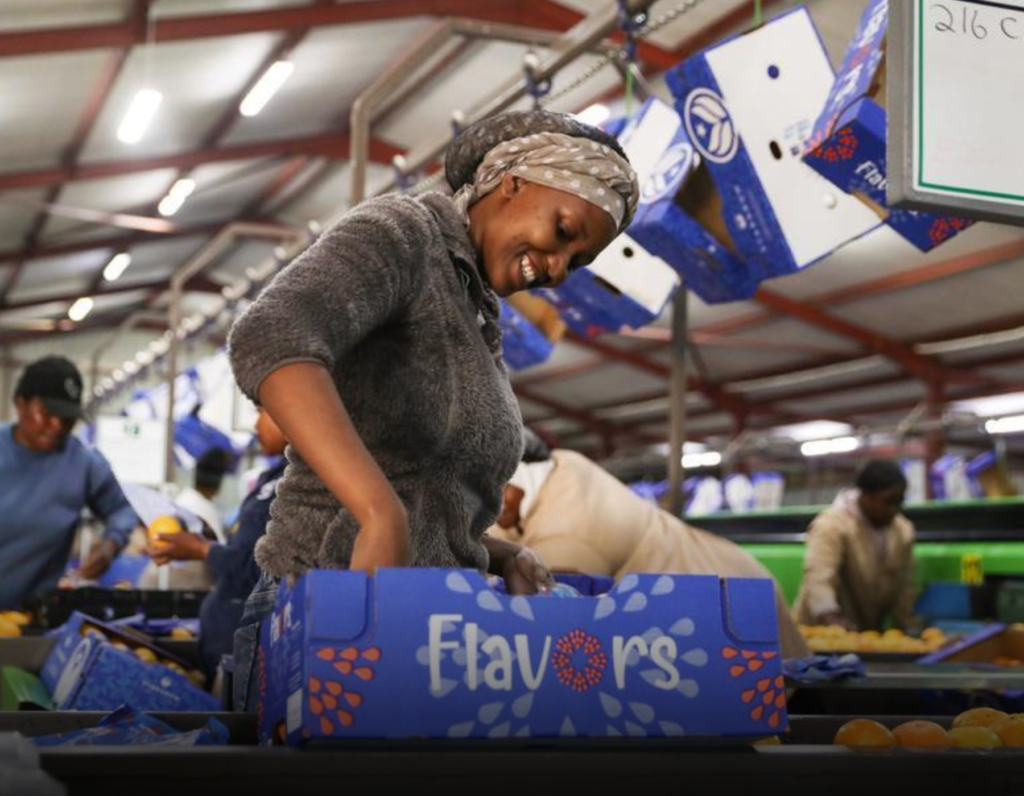
China’s sweeping zero-tariff policy for African exports is emerging as a powerful confidence booster for businesses across the continent, while also offering a stabilizing force in an increasingly fragmented global trading system.
In a recent interview, Boitshoko Ntshabele, CEO of the Citrus Growers Association of Southern Africa, described the initiative as a timely intervention for African economies navigating uncertainty.
“China’s zero-tariff treatment can be a very constructive component of Africa’s trade toolbox,” he said, noting its role in strengthening resilience during volatile global conditions.
The policy, which grants duty-free access to goods from 53 African countries, is expected to significantly expand market opportunities for exporters – particularly in agriculture, where demand from China continues to rise.
For South Africa’s citrus industry, the implications are immediate. With production on a strong upward trajectory, access to high-value markets like China is now essential to unlocking its full economic potential.
The sector already supports approximately 140,000 jobs at the farm level, and expanded exports could drive further employment, especially in rural communities heavily reliant on agriculture.
Ntshabele emphasized that improved access to China’s vast consumer base will not only increase export volumes but also deepen economic ties and create new pathways for inclusive growth.
Beyond individual industries, analysts say the zero-tariff policy carries broader global significance.
At a time marked by rising protectionism and shifting trade alliances, China’s move signals a commitment to open markets and inclusive trade. It is widely seen as a counterbalance to restrictive policies in other major economies, helping to diversify supply chains and reduce vulnerability to external shocks.
“Such policy measures could contribute to a more stable global trading system,” Ntshabele added, highlighting the role of reduced barriers in promoting fairer participation for developing economies.
Industry observers echo this view, noting that easier access to China’s market provides African exporters with a “reliable market” – one that encourages investment in production, logistics, and value addition.
The policy’s long-term impact may lie in its ability to reshape Africa’s export structure.
Experts argue that duty-free access, combined with initiatives such as improved customs “green channels” and participation in major Chinese trade expos, could accelerate the shift toward value-added production and industrialization.
Across the continent, early signs are emerging. From Ethiopia’s coffee exports to Kenya’s avocado oil processing and Ghana’s shea butter expansion, African businesses are increasingly aligning production with global market demands.
This transition is critical. While Africa has long been a supplier of raw commodities, the new trade environment offers incentives to process, brand, and scale products locally – capturing more value within domestic economies.
The zero-tariff initiative also reflects the broader evolution of China-Africa relations – from resource-driven engagement to diversified economic cooperation.
China has remained Africa’s largest trading partner for over a decade, with bilateral trade reaching $348 billion in 2025, underscoring the depth of the relationship.
Beyond trade, cooperation spans infrastructure, industrial parks, digital innovation, and agricultural modernization – creating the ecosystem needed to support export growth.
For African exporters, the message is increasingly clear: opportunity has arrived but so has competition.
The zero-tariff policy removes one of the biggest barriers to entry, but success will depend on quality standards, production capacity, and supply chain efficiency.
As Ntshabele concluded, the Chinese market holds immense promise. The challenge now lies in how effectively African economies position themselves to seize it.
In a world where trade routes are being redrawn, China’s zero-tariff policy is not just a gesture – it is a strategic opening. And for Africa, it may well define the next chapter of global economic integration.