
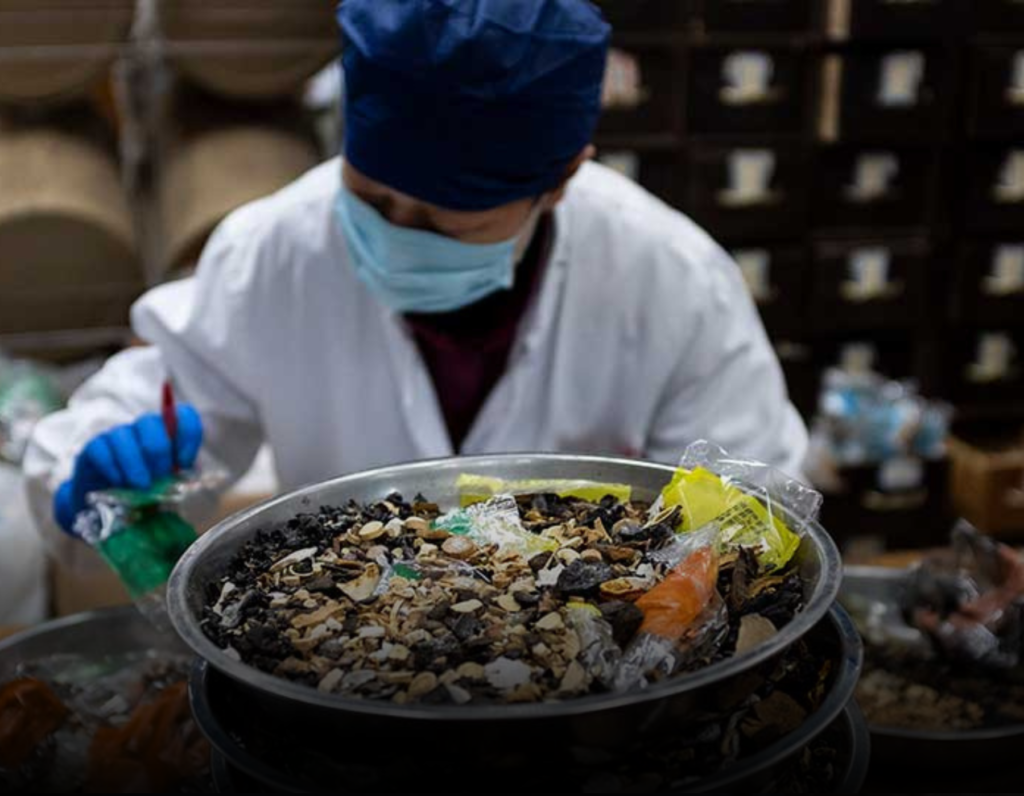
A new chapter in Africa–China health cooperation is unfolding as higher education standards for Traditional Chinese Medicine (TCM) are formally introduced across parts of the continent, marking a significant step toward institutionalising alternative medicine within Africa’s academic and healthcare systems.
The standards, developed through collaboration between African institutions and Chinese partners, aim to harmonise training, certification, and research in TCM. Stakeholders say the initiative will help ensure quality, safety, and professional credibility in the practice of traditional medicine, while expanding healthcare options across African countries.
Health experts note that TCM – an ancient system rooted in holistic healing practices such as herbal medicine, acupuncture, and therapeutic exercises has gained growing acceptance in Africa over the past decade. According to the World Health Organization, traditional medicine remains a primary source of healthcare for a significant proportion of populations in developing regions, underscoring the importance of regulating and modernising the sector.
The newly introduced standards are expected to support African universities in designing structured curricula, training practitioners, and strengthening research collaborations with Chinese institutions. Analysts suggest this aligns with broader global trends, where traditional and modern medicine are increasingly integrated to provide more inclusive and patient-centered care systems.
The development reflects the broader trajectory of health cooperation between China and African nations, which has expanded significantly under frameworks such as the Forum on China-Africa Cooperation. Over the years, China has deployed medical teams, built hospitals, and supported public health initiatives across the continent.
Recent collaborations have included training programs for healthcare professionals, joint research on infectious diseases, and support for health infrastructure development. Chinese medical teams have also played a visible role in combating diseases such as malaria and supporting pandemic response efforts, reinforcing trust and long-term cooperation.
In addition to clinical services, education and capacity building have become central pillars of this partnership. Scholarships, exchange programs, and joint academic initiatives have enabled African students to study medicine in China, while Chinese experts continue to provide training across African institutions.
The expansion of TCM education standards also reflects the evolving nature of Africa–China relations, which now extend well beyond traditional sectors like trade and infrastructure. Countries across Africa are increasingly engaging China in areas such as digital innovation, green development, and knowledge transfer, highlighting a shift toward more diversified and knowledge-driven cooperation.
China’s involvement in Africa’s infrastructure – ranging from transport networks to energy projects – has created a foundation for deeper collaboration in social sectors like health and education. Improved connectivity and institutional partnerships are enabling faster exchange of ideas, expertise, and technologies.
At the same time, cultural exchange continues to play a complementary role. The growing popularity of Chinese language programs, cultural festivals, and academic exchanges has helped build familiarity and trust between African and Chinese communities, creating a supportive environment for initiatives like TCM education.
Experts believe the introduction of standardised TCM education could open new pathways for integrating traditional and modern medical practices across Africa. By formalising training and encouraging research, the initiative aims to ensure that traditional medicine contributes effectively to national healthcare systems while maintaining scientific rigor.
As African countries continue to strengthen their health systems, the collaboration with China on traditional medicine education highlights a shared commitment to innovation, inclusivity, and sustainable development. It also reinforces a broader narrative – one where Africa-China partnerships are increasingly defined not just by infrastructure and trade, but by investments in people, knowledge, and long-term wellbeing.