

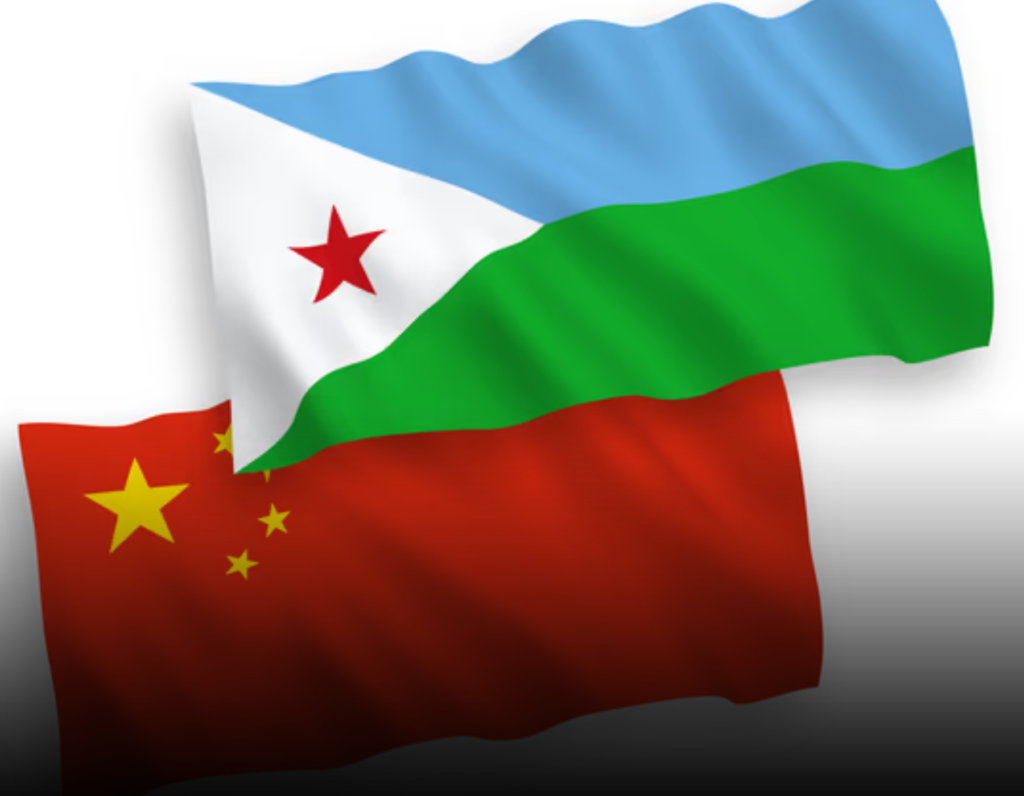
Djibouti is quietly rewriting the rules of regional trade and China is at the center of that transformation. The Djibouti International Free Trade Zone (DIFTZ), a flagship project of China-Africa cooperation, has posted what officials describe as “outstanding results” in early 2026. Behind the numbers lies a deeper story: the emergence of a new logistics and manufacturing corridor linking Africa to global markets.
According to recent official data, the free trade zone recorded strong growth across key indicators, including land utilisation, enterprise activity, and employment creation – signalling what authorities called a “robust start” to the year.
By March 2026, more than 500 global companies had established operations within the zone, representing a 22 percent increase year-on-year, while land utilisation climbed to roughly 70 percent.
The scale of growth is no accident. Djibouti sits at one of the world’s most critical maritime crossroads – linking the Red Sea to the Indian Ocean and has positioned itself as a gateway to East Africa’s hinterland, particularly Ethiopia’s vast market.
The free trade zone, launched in 2018 as a joint initiative involving Chinese partners, is designed to become the largest of its kind on the continent, with integrated clusters spanning logistics, manufacturing, and trade services.
Today, it is rapidly evolving into what analysts describe as a “regional entry point for global capital,” driven by infrastructure, policy incentives, and connectivity.
At the core of this transformation is China’s deepening economic engagement. Chinese enterprises account for a significant share of investment within the zone, occupying more than a third of long-term leased land.
Major firms across sectors – from heavy equipment manufacturing to new energy vehicles – have established a presence, reinforcing the zone’s industrial capacity and technological base.
This reflects a broader pattern. Across East Africa, China’s approach has centered on building infrastructure, integrating logistics systems, and embedding trade networks – what some analysts describe as a form of “connectivity-driven influence” shaping regional economic flows.
The success of the DIFTZ is rooted in a wider China-Djibouti partnership that extends far beyond a single project.
Chinese-backed investments have transformed Djibouti’s economic landscape over the past decade, spanning ports, railways, and industrial zones. The Addis Ababa-Djibouti railway, built with Chinese financing and expertise, has dramatically reduced transit times for goods moving between landlocked Ethiopia and global markets.
Meanwhile, port expansions, logistics corridors, and customs integration projects have strengthened Djibouti’s role as a regional hub, handling the majority of Ethiopia’s trade flows.
The free trade zone itself is part of a multi-billion-dollar development strategy led by a consortium including Chinese state-owned enterprises, aimed at positioning Djibouti as a central node in the Belt and Road Initiative.
Beyond infrastructure and trade volumes, the human impact is becoming increasingly visible. The zone has generated thousands of direct and indirect jobs, contributing to income growth and easing pressure on Djibouti’s labor market.
Officials say the next phase will focus on expanding industrial capacity, improving the business environment, and strengthening integration with regional economies – particularly within the Horn of Africa.
What is unfolding in Djibouti is more than a success story – it is a blueprint. A small nation, strategically located, leveraging partnerships to punch above its weight. A global power, investing not just in projects, but in systems that reshape trade routes and supply chains.
Together, China and Djibouti are building something larger than infrastructure. They are constructing a new architecture of commerce – one where Africa is not on the margins of global trade, but firmly at its crossroads.