

Zambia has commended Chinese mining companies for playing a growing role in modernizing the country’s mining industry through advanced technologies, skills development, and increased industrial investment – further deepening one of Africa’s most significant resource partnerships.
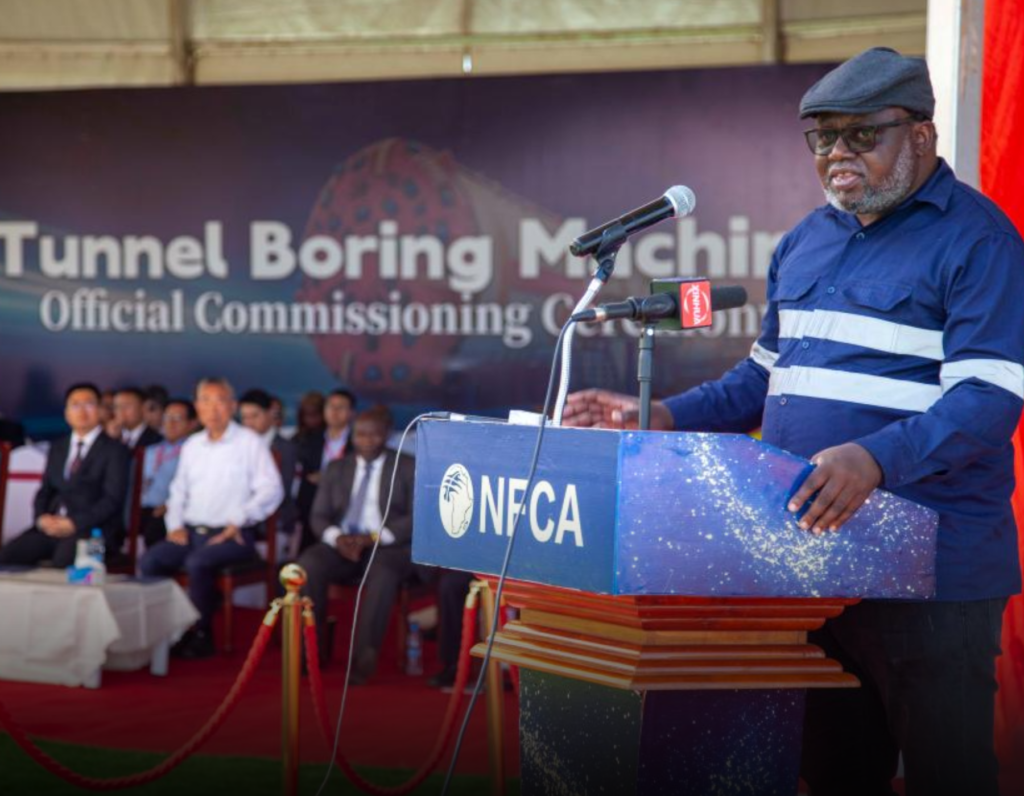
Speaking during engagements with Chinese enterprises operating in Zambia, Minister of Mines and Minerals Development Paul Kabuswe said Chinese firms have become key contributors to the transformation of Zambia’s mining sector, particularly through the introduction of modern equipment, digital systems, and improved extraction technologies.
The minister noted that the integration of advanced mining technologies is helping improve operational efficiency, workplace safety, and productivity across several mining projects.
Zambia, Africa’s second-largest copper producer, is accelerating efforts to expand output and position itself as a critical supplier in the global energy transition economy, where copper demand is rising sharply due to electric vehicles, renewable energy systems, and digital infrastructure.
Chinese mining firms have become increasingly important to that strategy.
According to Kabuswe, Chinese enterprises are contributing not only capital but also technical expertise and innovation that are strengthening Zambia’s long-term mining competitiveness.
Several Chinese-backed mining operations in Zambia have introduced automated systems, intelligent mining technologies, and modern processing techniques aimed at increasing efficiency while reducing operational risks.
Industry analysts say these technologies are becoming increasingly essential as African mining sectors seek to improve sustainability, reduce waste, and maximize mineral value chains.
The Zambian government has repeatedly emphasized that the future of mining cooperation should move beyond raw extraction toward local value addition, manufacturing, and skills development.

Chinese firms operating in Zambia have expanded investments in processing facilities, engineering services, and workforce training programs, helping create employment opportunities and technical knowledge transfer.
At Chambishi and other major mining zones, Chinese enterprises have established industrial parks and smelting facilities that support broader industrial activity linked to copper production.
The Zambia-China Economic and Trade Cooperation Zone, launched with Chinese support, remains one of the most prominent examples of industrial cooperation between China and Africa, attracting investments in mining, manufacturing, and construction materials.
China and Zambia share one of Africa’s oldest diplomatic and economic partnerships, dating back to the construction of the Tanzania-Zambia Railway Authority (TAZARA) in the 1970s – a landmark infrastructure project widely viewed as a symbol of China-Africa solidarity.
Today, the relationship has expanded significantly across mining, infrastructure, agriculture, energy, telecommunications, and trade.
China remains one of Zambia’s largest foreign investors and a major export destination for Zambian copper. Chinese companies are also involved in road construction, airport modernization, hydropower development, and digital infrastructure projects across the country.
Copper’s strategic importance is rapidly growing as countries worldwide shift toward clean energy systems.
The International Energy Agency projects that demand for critical minerals such as copper could increase dramatically over the next decade due to expanding electric vehicle production and renewable energy infrastructure.
For Zambia, this presents both an opportunity and a challenge: increasing production while ensuring sustainable and inclusive growth.
Government officials say partnerships with technologically advanced firms will be essential if Zambia is to achieve its target of producing 3 million metric tonnes of copper annually in the coming years.
While Chinese investments have helped revitalize parts of Zambia’s mining sector, discussions around environmental standards, labor conditions, and local participation continue to shape public debate.
Zambian authorities have stressed the importance of responsible mining practices and stronger collaboration between investors and local communities.
Kabuswe emphasized that partnerships must ultimately contribute to national development goals, including employment creation, infrastructure improvement, and industrial diversification.
Analysts note that the next phase of Zambia-China mining cooperation will likely focus not only on production growth, but also on how effectively investments support downstream industries and long-term economic resilience.
As global demand for critical minerals accelerates, Zambia’s mining sector is entering a period of renewed strategic importance.
Chinese enterprises, equipped with capital and advanced technologies, are becoming central players in that transition. But for Zambia, success will depend on ensuring that technological modernization also translates into broader economic transformation.
The country’s ambition is no longer simply to mine more copper – it is to build a mining industry that is smarter, more competitive, and more deeply connected to national development.