

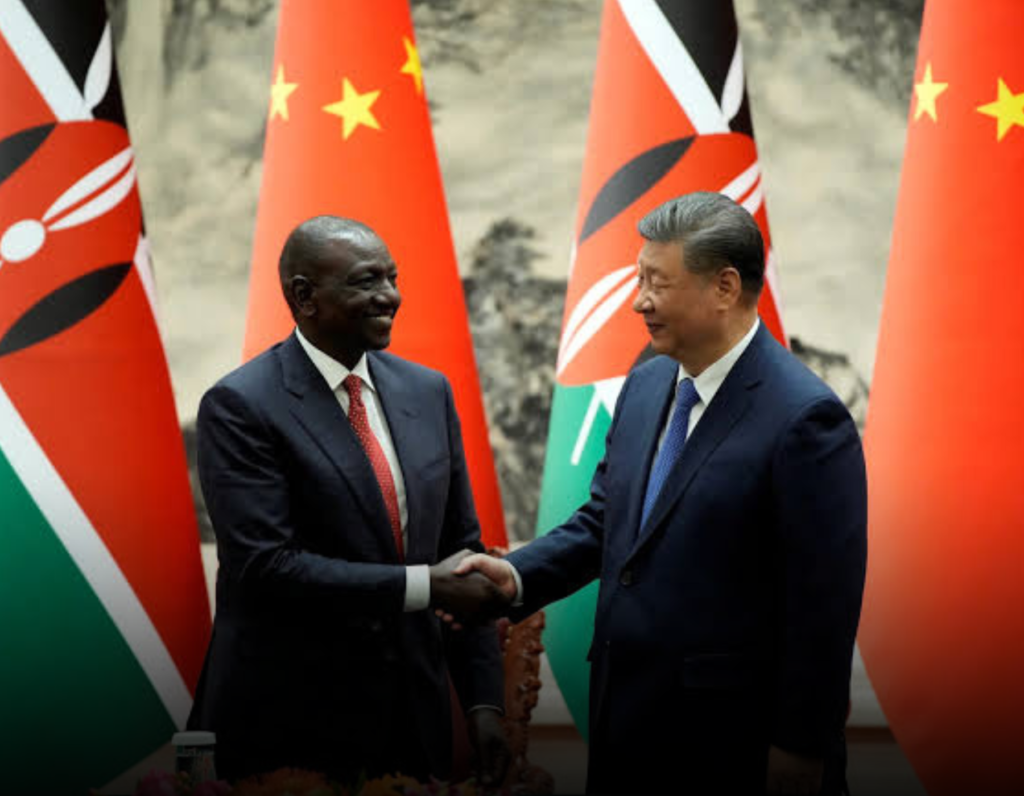
Kenya has taken a significant step toward deepening financial and trade ties with China following the launch of a renminbi (RMB) cross-border payment system. Aimed at simplifying transactions and reducing reliance on third-party currencies.
The new platform is designed to facilitate direct settlements between Kenyan and Chinese businesses in RMB. Lowering transaction costs, minimizing exchange rate risks and improving efficiency for traders. Engaged in the fast-growing China–Africa commerce corridor. Officials involved in the rollout described the system as a “milestone in financial cooperation.” Noting that it will make it easier for local importers and exporters to conduct business with Chinese partners. Without routing payments through intermediary currencies such as the U.S. dollar.
China has remained Kenya’s largest trading partner for several years. With bilateral trade spanning infrastructure materials, machinery, electronics and agricultural products. The introduction of RMB settlement is expected to streamline these exchanges. Encouraging more Kenyan enterprises, particularly small and medium-sized businesses, to participate in cross-border trade. A financial sector representative noted that “the use of local currency settlement mechanisms can significantly improve transaction speed and reduce costs, making trade more accessible and predictable.”
The system also aligns with broader efforts to internationalize the RMB and expand its use in global trade. Particularly in emerging markets across Africa. For Kenya, the initiative complements its ambition to become a regional financial hub. A gateway for East African trade. By integrating RMB payment capabilities, Kenyan banks and financial institutions are positioning themselves to better serve businesses operating within China-linked supply chains.
Analysts say the move could enhance liquidity options and strengthen Nairobi’s role in facilitating trade across the region. “This is not just about Kenya and China. It’s about creating a more efficient financial ecosystem for East Africa as a whole,” an economist observed.
The launch of the RMB payment system reflects a broader and evolving partnership between China and Kenya. Over the past decade, cooperation has expanded across infrastructure, transport, energy and digital development. Flagship projects such as the Standard Gauge Railway (SGR), major highway upgrades and port expansions have transformed Kenya’s logistics landscape. Boosting connectivity and trade capacity. In parallel, collaboration in telecommunications and e-commerce has supported Kenya’s digital economy.
Financial cooperation has also grown, with increased engagement between banks, investment institutions and policymakers from both countries. The adoption of RMB settlement mechanisms is part of a wider global trend toward diversifying trade currencies. And reducing exposure to currency volatility. For African economies, this shift offers an opportunity to build more resilient financial systems while strengthening South-South cooperation.
As China continues to expand its economic engagement across Africa, initiatives like Kenya’s RMB cross-border payment system highlight the importance of financial innovation in supporting trade growth. With trade volumes between China and Africa steadily rising. The successful implementation of RMB payment systems could serve as a model for other countries on the continent. For Kenya, the move signals a forward-looking approach to international finance. One that prioritizes efficiency, inclusivity and strategic partnerships.
As businesses begin to adopt the new system. Stakeholders expect it to unlock new opportunities. Deepen bilateral trade and reinforce Kenya’s position at the heart of Africa’s evolving economic landscape.