

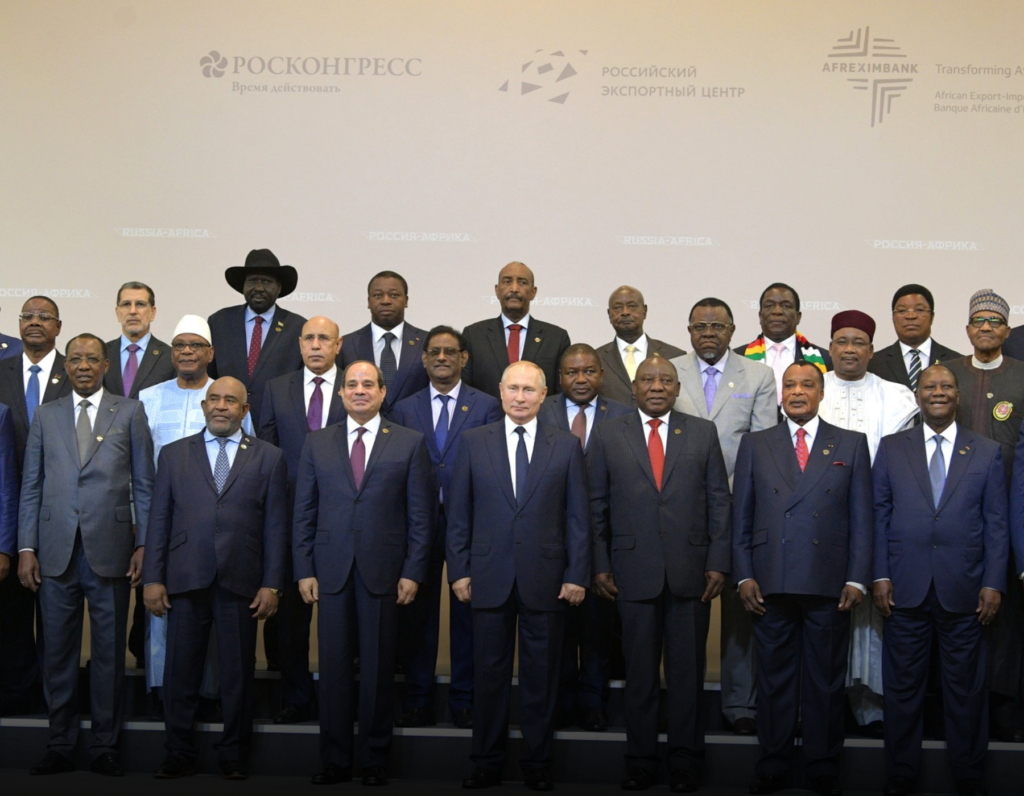
At the third Russia–Africa Summit in Moscow, Vladimir Putin is promising expanded food supplies, technology transfer and infrastructure cooperation while challenging Western influence. African leaders, meanwhile, are pressing for trade, investment and industrial development. The test will be whether the diplomatic momentum produces measurable gains and whether contentious security issues receive the same attention as economic opportunities.
Russia is using its latest summit with African leaders to pitch a broader economic partnership built around grain and fertiliser supplies, technology transfer, infrastructure and industrial cooperation, as Moscow seeks to strengthen its influence across the continent.
Speaking at the third Russia–Africa Summit in Moscow, Russian President Vladimir Putin presented his country as an alternative to Western powers, accusing former colonial powers of exploiting African resources and using debt to constrain development.
He also called for a stronger African voice in decision-making at the International Monetary Fund and World Bank and said Russia was prepared to increase grain and fertiliser supplies to African countries.
The summit, running from October 28 to 29, has brought together delegations from 48 African countries, including 22 heads of state, according to reports on the gathering. Its agenda spans trade, investment, food security, technology, infrastructure and defence cooperation.
But the economic offers—and the interests behind them—are central to understanding what Moscow wants from the continent and what African governments hope to gain.
From diplomatic solidarity to economic returns
For Russia, the summit is an opportunity to turn longstanding political relationships into deeper commercial ties at a time when Western sanctions over its war against Ukraine continue to shape its international economic relationships.
For African governments, the attraction lies in the possibility of diversifying trading partners, securing essential commodities, attracting investment and gaining access to technology and industrial expertise.
Kenya has placed economic opportunity at the centre of its engagement. President William Ruto’s government is seeking greater access to Russian markets for tea, coffee, flowers, fresh produce and value-added goods, while pursuing investment in agro-processing, manufacturing, energy, infrastructure and digital technology.
These priorities reflect a wider challenge for African economies: diplomatic access does not automatically translate into export growth. Businesses still need commercially viable transport routes, reliable payment channels, compliance with import standards and buyers willing to purchase their products at competitive prices.
For countries seeking industrial transformation, the bigger prize is not simply exporting more raw commodities. It is attracting investment that enables local processing, technology transfer, skills development and the creation of jobs.
Egypt looks to energy and food security
Egypt is also using the summit to advance cooperation in energy, food security, trade and industrial development.
Cairo’s priorities include securing wheat and fertiliser supplies, expanding investment and strengthening cooperation in conventional and nuclear energy. The Russian-built El Dabaa nuclear power plant remains a prominent example of the strategic relationship between the two countries.
Egypt is also promoting the Suez Canal Economic Zone as a potential gateway for Russian investment into African and other markets.
The challenge is to translate these strategic projects and discussions into wider economic benefits, including competitive industries, stronger supply chains and employment. Major infrastructure investments can support development, but their long-term value depends on their costs, financing arrangements and contribution to domestic productive capacity.
Sovereignty and security remain part of the relationship
Russia’s engagement with Africa is not confined to trade. Moscow has also expanded its security relationships, particularly in parts of the Sahel where military-led governments have broken with longstanding Western partners.
Burkina Faso’s prime minister praised cooperation with Russia at the summit, describing it as transparent and respectful of African cultures, according to summit reporting. The remarks reflect the political importance some governments attach to sovereignty and the freedom to choose their international partners.
Yet security cooperation also raises difficult questions about accountability and the protection of African citizens.
Ahead of the summit, Amnesty International urged African leaders to confront allegations of deceptive and coercive recruitment of Africans into Russia’s military forces for the war against Ukraine. Ghana has also raised concerns over citizens who travelled to Russia and ended up fighting in the conflict.
These concerns place an important question before the summit: whether the language of mutual respect and sovereignty will be accompanied by concrete steps to protect African nationals and address recruitment practices that governments and families have raised as a serious concern.
The trade gap and the implementation test
Despite the renewed diplomatic engagement, Russia’s economic relationship with Africa remains smaller than the continent’s trade relationships with major partners such as China and the European Union. Al Jazeera’s summit explainer reported that Russia–Africa trade had exceeded $28 billion, while noting that the relationship is concentrated in a limited number of countries and sectors.
That gap helps explain why Moscow is emphasising agriculture, fertilisers, energy, nuclear power, technology and infrastructure. It also highlights the distance between political ambition and commercial scale.
For African governments, the priority should be to turn summit discussions into specific, measurable commitments: export contracts, investment decisions, industrial partnerships, training programmes and financing terms that can withstand public scrutiny.
The summit’s final declaration and proposed Russia–Africa partnership plan for 2027–2029 will offer a clearer indication of the areas both sides intend to prioritise. But declarations alone will not establish whether the relationship is delivering.
The decisive measures will be what happens after the delegations return home: whether African exports increase, investment reaches productive sectors, local businesses gain access to markets, and promised cooperation results in jobs and technology transfer.
Russia is making a renewed case for a larger role in Africa. African governments have an opportunity to engage Moscow while preserving the freedom to work with other partners.
The ultimate measure of the summit will not be the warmth of the speeches or the number of leaders in attendance. It will be whether the agreements that emerge serve African countries’ economic priorities, protect their citizens and produce results that can be measured.