

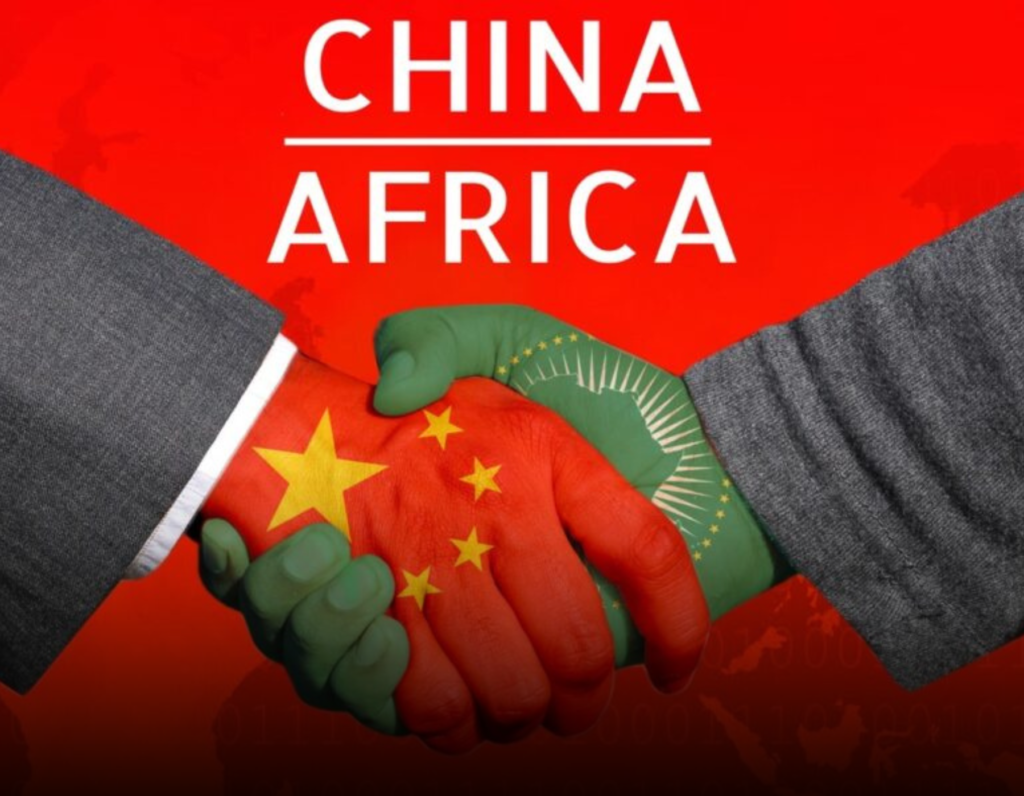
A new university alliance involving 13 Chinese institutions and more than 20 African institutions from 13 countries aims to deepen research, teaching and innovation cooperation, but its long-term value will depend on what the partnerships deliver.
China–Africa academic cooperation is entering a new phase with the Jiangsu–Africa University Cooperation Alliance seeking to strengthen research collaboration, skills exchange and innovation between universities in China and across the African continent.
The alliance brought together university leaders and institutional partners for its inaugural summit, hosted by the University of Johannesburg in South Africa on 23 October 2026.
In a statement published after the event, the University of Johannesburg said the alliance includes 13 universities from China’s Jiangsu Province and more than 20 African institutions from 13 countries.
The initiative was jointly established by the University of Johannesburg and Nanjing Tech University under the guidance of the Jiangsu Provincial Department of Education.
Its stated objectives include expanding academic exchange, strengthening institutional partnerships and supporting collaboration in research, teaching, learning and innovation.
The summit comes as China and African countries seek to broaden cooperation beyond traditional areas such as infrastructure, trade and resource development to include education, science and technology.
From university agreements to practical cooperation
University partnerships can create opportunities for students and researchers to share expertise, develop joint projects and access facilities that may not be readily available at their home institutions.
They can also support collaborative work on challenges that affect both China and African countries, including climate change, public health, energy systems, industrial development and technology.
Addressing the summit, University of Johannesburg Vice-Chancellor and Principal Professor Letlhokwa Mpedi said the alliance created opportunities for African institutions to partner with Chinese universities and exchange ideas and skills.
Professor Jian Juncheng, president of Nanjing Tech University and co-chair of the alliance, also emphasised the importance of sustained mechanisms for educational cooperation and sharing academic resources.
The summit included discussions on the impact of China–Africa partnerships and the role of universities in advancing research, teaching, learning and innovation.
However, the announcement of a university alliance is only the beginning of the process. Its value will ultimately depend on whether the institutions develop funded research programmes, meaningful student and staff exchanges, joint publications and practical innovations.
Research collaboration and technology transfer
One of the central opportunities for African universities is to use international partnerships to strengthen their research capacity.
Joint projects can expose researchers to new methods, equipment and technical expertise. They can also provide opportunities for doctoral training, collaborative publications and engagement with industry.
For partnerships involving engineering, clean energy and manufacturing, the potential extends beyond academic exchanges.
Universities could collaborate on renewable-energy systems, battery technologies, materials science, agricultural innovation and industrial processes that address African development priorities.
But these outcomes require more than institutional declarations. They depend on research funding, clearly defined responsibilities, access to facilities, long-term academic relationships and the ability to translate findings into practical applications.
The distribution of those benefits also matters. African institutions need meaningful roles in setting research priorities, leading projects, supervising students and determining how research findings are used.
Who owns the research and its benefits?
As China–Africa university partnerships expand, questions about research governance and intellectual property deserve greater attention.
Joint research can produce scientific publications, patents, prototypes, commercial products and other forms of intellectual property. Agreements need to establish how these outputs will be managed, who will own them and how benefits will be shared.
The same applies to research funding. Transparency about budgets, project selection and institutional responsibilities can help participating universities assess whether partnerships are delivering value.
African universities also need to ensure that collaboration strengthens local capacity rather than creating arrangements that depend indefinitely on external expertise or equipment.
This does not mean that partnerships with Chinese universities necessarily produce unequal outcomes. Rather, it highlights issues that should be addressed in the design and implementation of any international research partnership.
Connecting universities with industry
A further test will be whether the alliance can connect academic research with businesses, public institutions and communities.
Universities can contribute to industrial development by helping companies solve technical problems, training skilled workers and developing technologies suited to local conditions.
For example, collaboration in energy research could support work on solar systems, storage, grid management and energy efficiency. Agricultural research could focus on improving productivity, food processing and climate resilience.
To produce measurable economic benefits, however, research institutions need mechanisms for working with industry, protecting intellectual property and supporting the development of promising technologies.
The alliance’s long-term contribution will therefore depend partly on whether its members can move from academic exchange towards practical projects with clear objectives, funding and implementation plans.
Measuring the value of China–Africa academic partnerships
The inaugural summit provides a platform for universities to strengthen their relationships and identify opportunities for collaboration. The next step is to establish how progress will be measured.
Useful indicators could include the number and value of jointly funded research projects, student and staff exchanges, co-authored publications, doctoral training opportunities, patents and technologies developed through collaboration.
Other measures could examine whether partnerships strengthen African research facilities, support local businesses, create employment or help address national development priorities.
The institutions involved have not yet published a consolidated set of targets and results for the alliance in the announcement reviewed by Sino-Africa Insider. Such information would help establish a baseline against which future progress can be assessed.
The alliance is therefore an important institutional development, but its eventual contribution cannot be measured by membership numbers or summit attendance alone.
For African universities, the opportunity is to use the partnership to strengthen research capacity, develop skills and increase their role in international scientific collaboration.
For Chinese institutions, it offers a platform for sustained academic engagement and joint work on shared challenges.
Whether those ambitions translate into lasting benefits will depend on the quality of the research, the resources committed and the extent to which participating institutions share responsibility for producing and applying new knowledge.