

In southern Chad, access to water was once measured in hours of walking, seasonal uncertainty, and the health risks that came with unsafe sources. Today, in parts of Mandoul and Salamat provinces, that reality is changing as a China-supported rural water supply initiative expands access to clean drinking water for hundreds of thousands of residents.
For decades, communities across these regions relied on distant and unreliable water points, particularly during the dry season when temperatures regularly exceed 40°C. Families often dedicated part of each day simply to collecting water.
That burden has begun to ease through a China-aided water infrastructure project implemented with support from Chinese engineering teams and local authorities. Construction activities accelerated in late 2024, focusing on some of Chad’s most water-stressed communities.
According to project data released on-site, the initiative has already delivered more than 500 hand-pump wells, 57 centralized water supply stations, and over 100 public sanitation facilities across the target areas. Engineers involved in implementation said the wells were designed following detailed hydrogeological studies to ensure both water quality and long-term supply reliability.
In Madan district near Koumra, residents describe the transformation in practical terms rather than statistics.
Robgue Ozias, a local resident, recalled years when households sent family members to walk approximately four kilometres every day to collect water.
“Our ancestors endured this hardship generation after generation,” he said, reflecting on a routine that shaped daily life for decades.
Now, water collection points sit only short distances from homes.
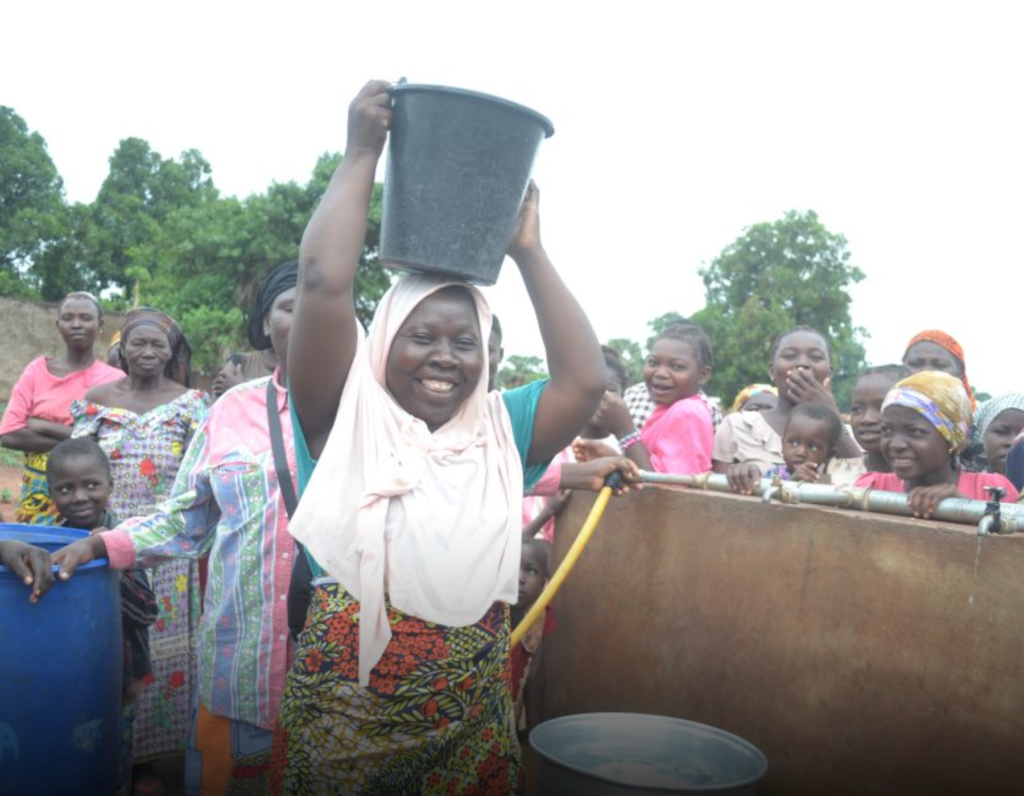
At newly installed stations, women and children queue with containers while water flows directly into buckets and basins – a routine residents say has returned time to households and reduced exposure to contaminated sources.
Technical teams working on the project noted that some locations required unusually complex drilling operations. In Salamat Province’s Aboudeia area, earlier attempts over nearly two decades reportedly failed because of difficult rocky terrain and limited groundwater access. Engineers said months of exploration and drilling eventually produced sustainable flow levels capable of serving surrounding communities.
The infrastructure includes a hybrid operating model designed to improve reliability. Water stations combine solar power with backup generators, allowing systems to continue functioning during evenings and periods of reduced sunlight.
Community leaders say the benefits are extending beyond convenience.
Mrangue Madjingain, a traditional leader in Madan, said access to stable water supplies is helping reduce illness linked to unsafe water and enabling households to spend more time on productive activities rather than water collection.
The gains are also being felt in agriculture and livestock management. Farmers and herders report shorter travel distances for watering animals and improved conditions during dry months.
Chad’s Minister of Water and Energy, Passalet Kanabe Marcelin, described the initiative as evidence of practical development cooperation and said the project supports implementation of the country’s national drinking water and sanitation priorities, especially in underserved rural communities. Authorities estimate that more than 600,000 people could ultimately benefit.
The project also reflects broader momentum in China–Chad relations, which have increasingly expanded beyond infrastructure into energy, agriculture, health and public services. Since the restoration of diplomatic relations in 2006, China has supported multiple development initiatives in Chad, including medical cooperation, transport infrastructure and technical assistance programs. Water access has emerged as a growing area of collaboration as both countries emphasize rural development and public welfare.
As climate pressures and population growth continue to challenge water security across the Sahel, projects of this scale are increasingly becoming part of a larger conversation: not only about infrastructure delivery, but about how international partnerships translate into everyday improvements for communities.
In southern Chad, that conversation now begins with something simple – turning on a tap much closer to home.