
A single shipment can signal a shift. And in January 2026, that shift became unmistakable.
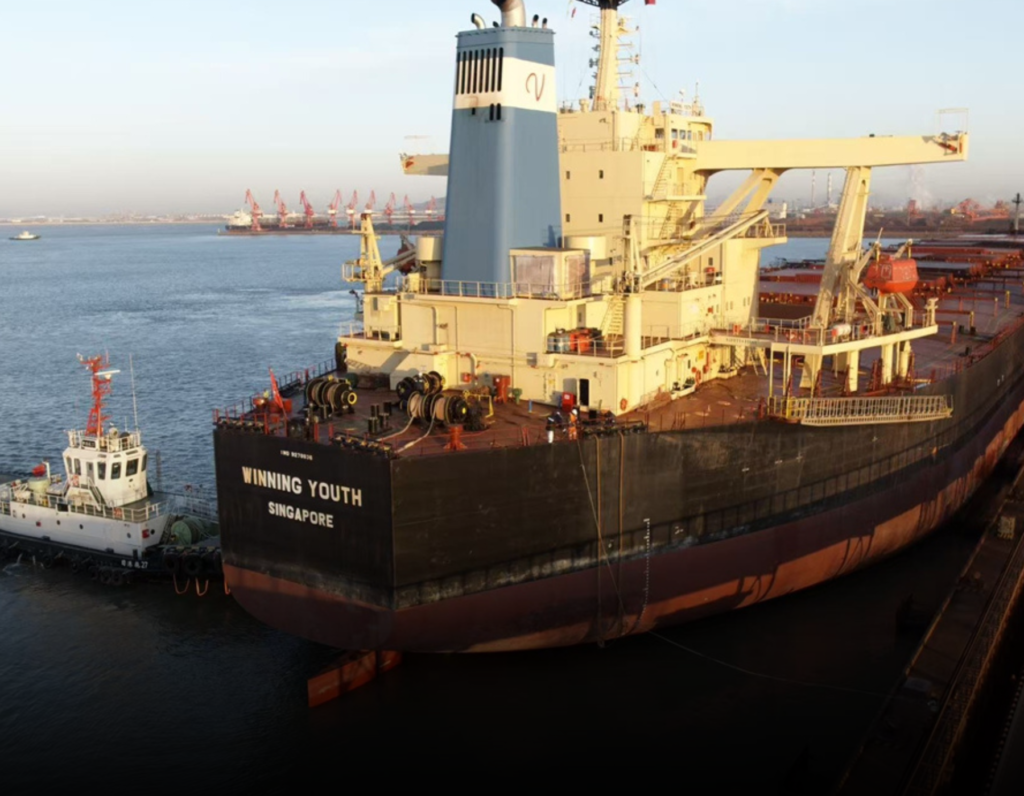
China has received its first 200,000-tonne shipment of high-grade iron ore from Guinea’s Simandou project – widely regarded as the largest untapped iron ore deposit in the world. The cargo, which departed Guinea in late 2025, arrived at Majishan Port in Zhejiang Province after a 46-day voyage, marking the operational debut of one of Africa’s most ambitious mining developments.
The Simandou project has long been described as a “sleeping giant.” With an estimated over 2 billion tonnes of high-grade ore, it stands among the most significant undeveloped iron ore resources globally.
After decades of delays linked to infrastructure challenges and ownership disputes, the project is now moving into production – unlocking what analysts see as a transformative opportunity for Guinea and the wider African mining sector.
The first shipment itself is symbolic. It represents the beginning of large-scale exports that could reposition Guinea as a major global supplier of iron ore, alongside traditional giants like Australia and Brazil.
The country currently sources roughly 80% of its iron ore imports from Australia and Brazil. The arrival of Simandou ore signals a deliberate effort to diversify supply chains and reduce dependence on a narrow group of exporters.
The ore itself is of particularly high quality, with iron content around 65%, making it more efficient for steel production and aligned with global efforts to produce lower-emission “green steel.”
As one analysis noted, the project represents a “watershed moment” in global commodity markets, reflecting a broader strategy of securing resources through overseas investment and infrastructure development.
Simandou is not just a mine – it is a full-scale industrial ecosystem.
The project required the construction of a 600+ kilometer railway and a deep-water port to transport ore from Guinea’s interior to international markets.
Valued at over $20 billion, it is considered Africa’s largest mining infrastructure project, with the potential to produce up to 120 million tonnes annually at full capacity.
Chinese companies play a central role in this development. A Chinese-led consortium, alongside global partners and the Guinean government, holds significant stakes in the project – highlighting the scale of China’s investment in Africa’s resource sector.
For Guinea, the implications are profound. Mining already accounts for a dominant share of the country’s exports, and Simandou is expected to significantly boost national revenue, employment, and infrastructure development.
Officials have linked the project to long-term national strategies aimed at industrialisation and economic diversification, positioning it as a cornerstone of Guinea’s future growth.
The shipment also reflects the depth of China-Guinea relations, which extend beyond mining into infrastructure, energy, and trade.
China is already a major partner in Guinea’s bauxite sector – where the country ranks as the world’s largest supplier and has supported key infrastructure projects that enable resource extraction and export.
Through initiatives aligned with the Belt and Road framework, Chinese investment has helped finance railways, ports, and industrial facilities – laying the foundation for projects like Simandou to become operational realities.
The arrival of Simandou ore in China is more than a logistical milestone – it is a signal of changing dynamics in global resource flows.
It introduces a new major supplier into the iron ore market, strengthens Africa’s role in global industrial supply chains and reflects a broader shift toward diversified, strategically secured resources.
For China and Guinea, it marks the beginning of a new phase – one defined by scale, ambition, and mutual economic interest.