
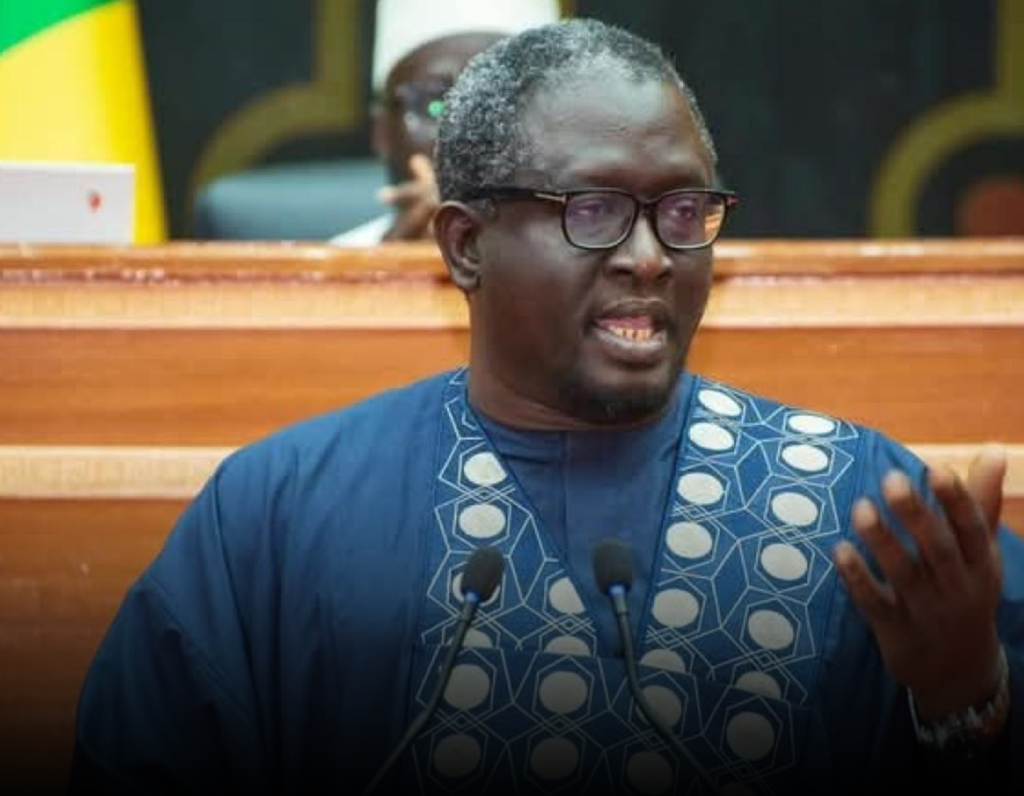
A Senegalese lawmaker has highlighted China’s people-centered development approach as a valuable reference point for African countries seeking inclusive growth and long-term economic transformation.
Speaking after a recent visit to China, Ayib Daffé, a member of Senegal’s National Assembly and secretary-general of the ruling PASTEF party, said the country’s development trajectory offers insights into governance, planning, and innovation that African nations can adapt to their own contexts.
Daffé emphasised that China’s progress demonstrates the importance of strategic planning and disciplined implementation. Reflecting on the country’s development journey, he noted that what many call China’s economic miracle is rooted in “determination, organisation, and hard work,” as well as policies that prioritise improving people’s livelihoods.
“People often talk about an economic miracle, but when you go there in person, you realize it is above all a matter of determination, organisation, and hard work,” he said.
China’s development philosophy increasingly focuses on inclusive and sustainable growth, emphasising investments in human capital, education, and innovation alongside infrastructure development. Analysts say this shift reflects a broader strategy to build a modern economy driven by knowledge, talent, and technological progress.
For African countries facing similar development challenges – ranging from infrastructure gaps to youth unemployment – such an approach may offer practical lessons. Daffé argued that cooperation with China can support African industrialisation and economic diversification if countries effectively harness these opportunities.
Experts have also stressed that Africa should draw inspiration from China’s experience without attempting to replicate it wholesale. Africa can build its energy future without retracing the footprints of fossil infrastructure, like in the case of China, said Professor Ivan Cardillo in a recent webinar, hosted by the Africa–China Centre for Policy and Advisory (ACCPA) and the Institute of Chinese Law.
The remarks come amid expanding bilateral relations between China and Senegal across multiple sectors including infrastructure, trade, agriculture, and governance cooperation.
Economic ties between the two countries have grown steadily since diplomatic relations were restored in 2005. China has become one of Senegal’s leading economic partners, supplying machinery, construction equipment, and technology while importing commodities such as agricultural products and minerals.
Chinese companies have also played a significant role in Senegal’s infrastructure development, supporting projects such as highways, urban expansion initiatives around Dakar, and the development of new urban centers like Diamniadio. These projects are often accompanied by training programs aimed at strengthening local technical skills and workforce capacity.
Beyond economic cooperation, the two countries maintain collaboration in areas such as defense, education, and parliamentary exchanges. Senegal has reaffirmed its support for the one-China principle and has expressed interest in strengthening cooperation under the Belt and Road Initiative and other global initiatives proposed by Beijing.
China-Senegal engagement also takes place within the broader framework of the Forum on China-Africa Cooperation, a platform established in 2000 to coordinate political dialogue and development cooperation between China and African countries.
The 2021 ministerial conference of the forum was hosted in Dakar, reflecting Senegal’s growing role in facilitating China-Africa dialogue. Action plans developed through the forum outline cooperation priorities ranging from infrastructure and digital development to health and green growth.
China has also pledged substantial financial support for African development initiatives under the framework, with programs aimed at boosting trade, infrastructure connectivity, and technology partnerships across the continent.
For policymakers like Daffé, the key takeaway from China’s experience lies in the combination of long-term planning, strong institutions, and a focus on improving people’s livelihoods.
As African economies seek pathways to modernisation and industrial growth, China’s development story – particularly its emphasis on human development and strategic policy direction – continues to attract attention among political leaders and development experts across the continent.
With expanding bilateral cooperation and growing policy dialogue, the exchange of development experiences between China and African nations such as Senegal is likely to remain an important component of South–South cooperation in the years ahead.