

In moments of crisis, partnerships are tested not by words, but by action. In Guinea-Bissau’s Bafata Region, that truth has once again come into focus.
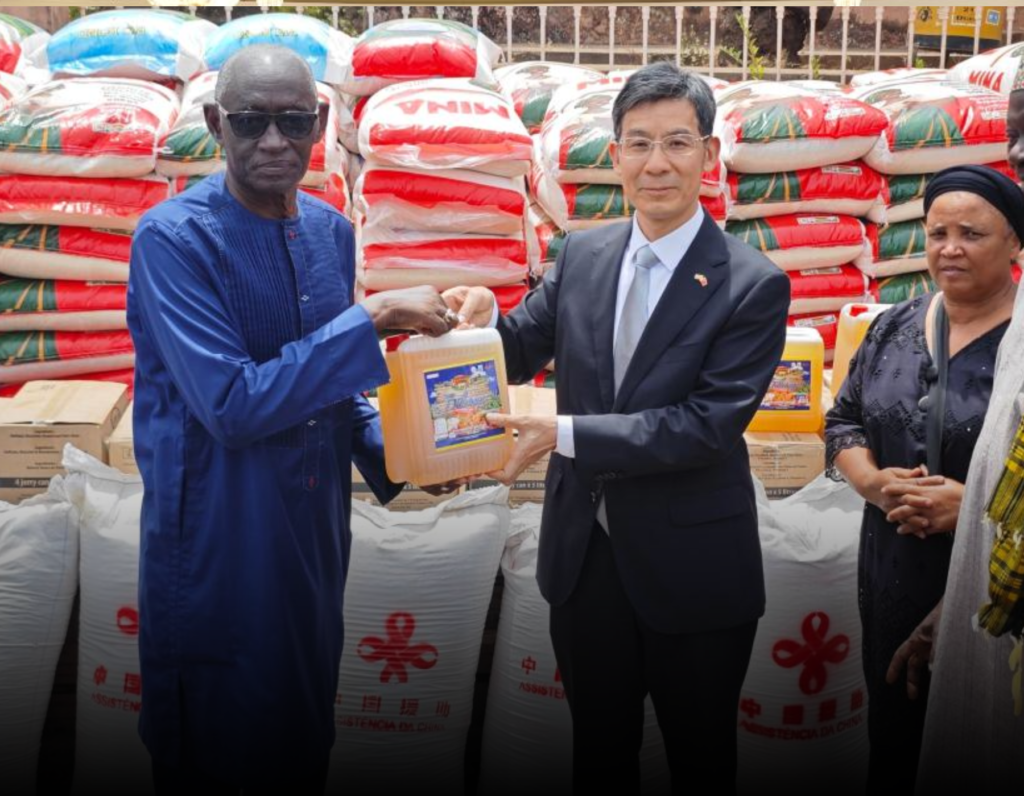
Following a devastating fire earlier this year, the Chinese Embassy in Guinea-Bissau has stepped in with humanitarian assistance aimed at helping affected families rebuild their lives. The donation ceremony, held in Bafata, brought together Chinese Ambassador Yang Renhuo and regional authorities to deliver urgently needed supplies to victims.
The fire, which broke out in February at a temporary fuel sales point, caused significant casualties and property damage, leaving many injured and displaced.
Speaking at the ceremony, Ambassador Yang emphasised the depth of bilateral ties, noting that China and Guinea-Bissau have “long maintained friendly cooperative relations.”
He added that the aid was intended to “help the affected people ease their difficulties and overcome the impact of the disaster as soon as possible,” underscoring China’s commitment to timely humanitarian response.
Local authorities welcomed the support. Bafata Region Governor Mustafa Cassama described the donated materials as meeting the “urgent needs” of victims, adding that the assistance would help families stabilise their living conditions and begin the process of recovery.
The relief effort reflects a broader China-Guinea-Bissau partnership that extends well beyond emergency assistance.
Over the years, China has supported development initiatives across infrastructure, agriculture, education, and public services in the West African nation. Recent projects include improvements to educational facilities and capacity-building programs aimed at strengthening local institutions.
Bafata itself has been identified as an important area of cooperation, highlighting how engagement between the two countries often extends beyond capital cities into regional communities.
This approach aligns with China’s wider engagement across Africa – combining infrastructure investment with social development and humanitarian support.
While large-scale projects often define headlines, smaller interventions like this donation reveal another dimension of international cooperation: people-centered diplomacy.
In Guinea-Bissau, where vulnerability to economic and environmental shocks remains high, such assistance plays a critical role in bridging immediate gaps – providing relief where it is most urgently needed.
Analysts note that humanitarian gestures, though modest in scale, carry significant symbolic weight. They reinforce trust, strengthen bilateral goodwill, and demonstrate responsiveness to local challenges.
As Guinea-Bissau continues its recovery from the Bafata fire, the focus will shift toward rebuilding livelihoods and strengthening resilience against future crises.
For China, the intervention reflects a consistent message: partnership is not limited to times of stability – it extends to moments of hardship.
And in Bafata, where lives were disrupted and communities shaken, that partnership has translated into something tangible – support, solidarity, and a pathway forward.