

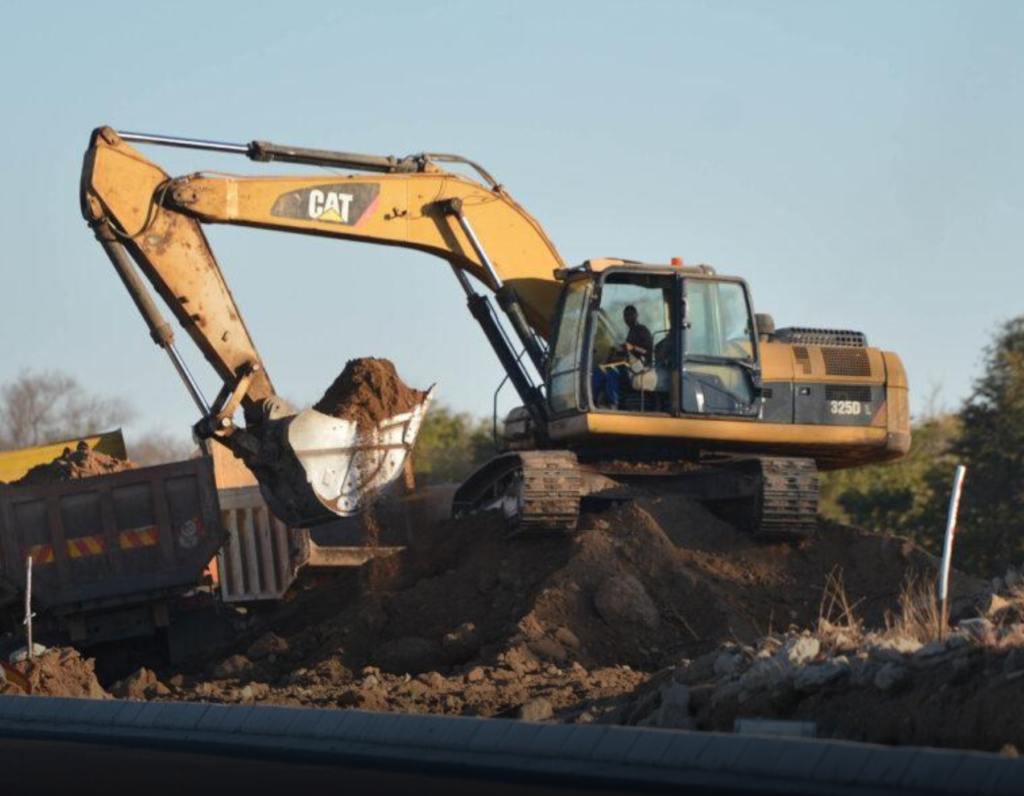
Angola has taken another step toward strengthening its transport infrastructure, with a key road project constructed by a Chinese firm – officially breaking ground in the rapidly developing Icolo e Bengo Province.
The project, known as Section 4-B of the Luanda Ring Road, will connect Muxima and Zango, forming part of a broader effort to modernize Angola’s urban and peri-urban road network.
Led by China Railway 20th Bureau Group Corporation, the initiative reflects the deepening role of Chinese enterprises in Africa’s infrastructure transformation.
Spanning approximately 12 kilometers, the road will feature rigid concrete pavement and a seven-meter-wide carriageway – designed to withstand heavy use and seasonal weather conditions.
For local communities, the project is more than a construction milestone – it is a long-awaited solution. Residents have endured years of difficult travel along a dirt road that becomes dusty in dry months and dangerously muddy during rains, often disrupting mobility and posing safety risks.
“This is a major livelihood project,” said local administrator Francisco Tchipilica, emphasizing its potential to improve daily life and economic activity.
Once completed, the road is expected to ease congestion in nearby municipalities, particularly Cacuaco, while enhancing traffic flow and regional connectivity.
The project comes at a pivotal time for Icolo e Bengo, a province officially established in 2024 to support Angola’s decentralization and economic diversification agenda.
Positioned as a future hub for agriculture and industry, the province is rapidly gaining strategic importance, especially with major developments such as the new international airport and expanding industrial zones.
Infrastructure upgrades like the Luanda Ring Road are therefore essential – not just for transport, but for unlocking investment, improving logistics, and connecting communities to markets and services.
Chinese companies have become central players in Angola’s infrastructure landscape, delivering roads, bridges, railways, and energy projects over the past two decades.
Governor Auzílio Jacob acknowledged that CR20 has built a strong reputation in the country, with projects “recognized for their quality and reliability.”
The company has pledged to adhere strictly to Angolan standards while ensuring construction safety and timely delivery.
Beyond this project, China’s involvement in Angola extends to large-scale national initiatives, including highway networks, industrial development, and logistics corridors aimed at boosting regional trade.
The road project underscores the enduring economic partnership between China and Angola – one rooted in infrastructure-led development.
China remains Angola’s largest trading partner and a major investor, particularly in sectors such as oil, construction, and manufacturing. Cooperation has increasingly expanded into diversification efforts, aligning with Angola’s goal to reduce reliance on oil revenues and build a more resilient economy.
Recent projects, including industrial facilities and transport systems, highlight a shared focus on job creation, skills transfer, and long-term economic sustainability.
As Angola continues to reshape its economic landscape, projects like the Luanda Ring Road serve as critical building blocks – connecting not just cities, but opportunities.
In Icolo e Bengo, where transformation is underway, this road represents more than infrastructure. It is a pathway toward safer travel, stronger local economies, and a more integrated future – powered by a partnership that continues to evolve with purpose.