

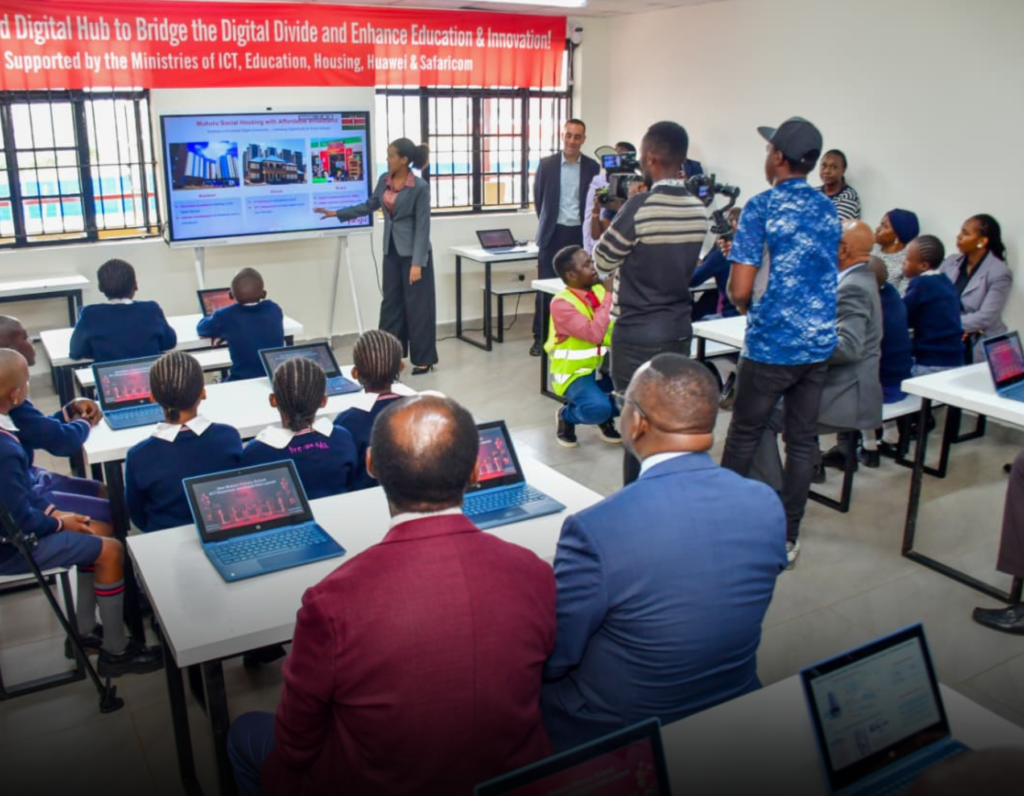
Kenya has taken a bold step toward closing its digital divide with the launch of a Huawei-supported smart classroom in Nairobi – an initiative that reflects the growing intersection of education, technology, and Sino-African cooperation.
Unveiled during the Connected Africa Summit 2026, the Mukuru Digital Classroom is designed to bring modern learning tools to underserved communities, particularly in informal settlements where access to digital infrastructure has long remained limited.
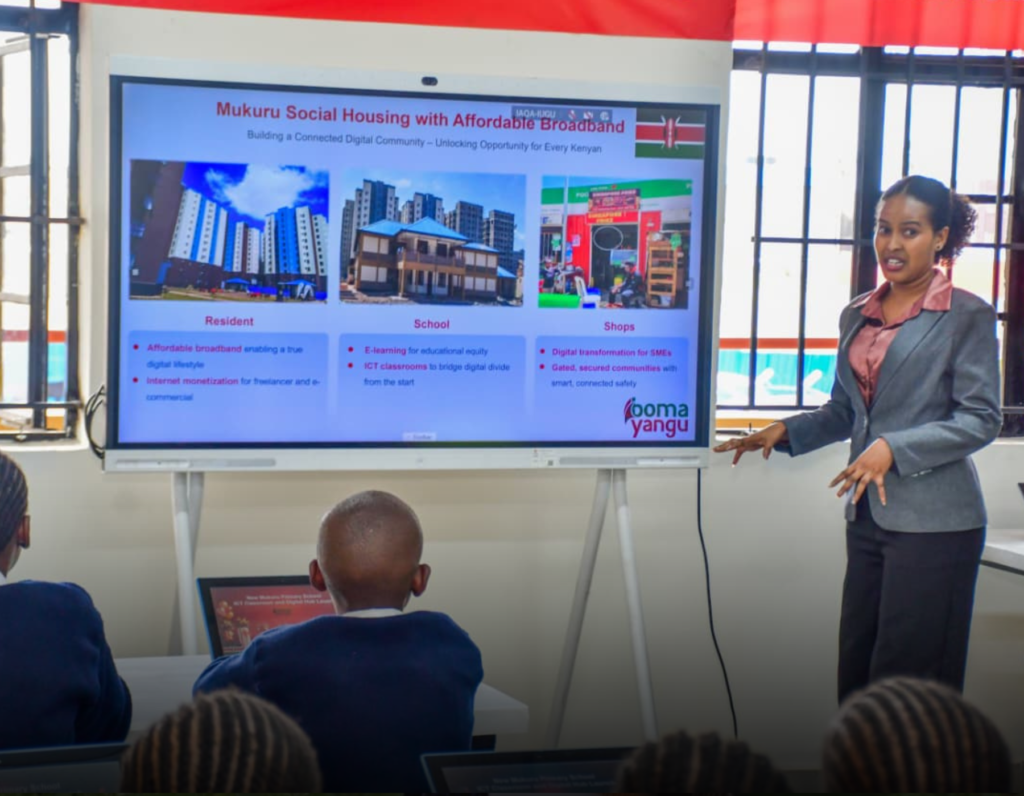
Located within the Mukuru affordable housing complex, the facility represents a public-private partnership involving the Kenyan government, Huawei, and telecom giant Safaricom.
Equipped with 20 new laptops, high-speed fiber connectivity, WiFi 7 access points, CCTV systems, and Huawei’s IdeaHub smart screen, the classroom offers a fully integrated digital learning environment.
The smart screen has already transformed traditional teaching methods into an interactive experience, enabling multimedia instruction, collaboration, and early exposure to skills such as coding.
“This aligns with our focus on expanding connectivity… to unlock jobs for young people,” said Cabinet Secretary for ICT, William Kabogo Gitau, linking the initiative to Kenya’s broader ambition of building a knowledge-based economy.
The project is not just about infrastructure – it is about access. By placing advanced technology directly within low-income communities, Kenya is tackling the “last-mile” challenge of connectivity.
Huawei Kenya’s ICT manager, Freshina Morogo, emphasized that such initiatives lay “the foundation for market-ready skills from an early age,” reinforcing the role of digital literacy in shaping future employment opportunities.
The Mukuru classroom also forms part of a broader national push to integrate digital tools into education, with plans to scale similar models across thousands of schools nationwide.
What sets the Mukuru project apart is its ecosystem approach. The classroom is embedded within a larger housing development, extending connectivity benefits to surrounding households and creating a community-wide digital hub.
Affordable fiber packages and reliable internet access are expected to support not only students, but also entrepreneurs, remote workers, and small businesses within the settlement.
This model reflects a broader shift in African urban development – where digital infrastructure is becoming as essential as roads and electricity.
The initiative highlights the expanding role of China in Kenya’s digital transformation journey. Through companies like Huawei, China has supported multiple ICT projects in the country, including school connectivity programs, digital training platforms, and mobile learning units.
Earlier initiatives such as the DigiSchool Connectivity Project have already connected dozens of Kenyan schools to high-speed internet, improving access to online education for thousands of students.
Beyond education, China-Kenya cooperation spans infrastructure, transport, and energy – most notably through projects like the Standard Gauge Railway and ongoing smart city initiatives.
As Africa positions itself within the global digital economy, Kenya’s approach signals a clear strategy: start early, build inclusively, and scale sustainably.
The Mukuru Digital Classroom is more than a pilot project – it is a glimpse into a future where geography no longer defines access to opportunity.
In the words echoed at the launch, digital transformation must begin at the foundation. And in Mukuru, that foundation is now firmly connected.