Doctors from China’s 21st medical mission to Chad handed over a new consignment of medicines and equipment to the Chad-China Friendship Hospital in N’Djamena on Tuesday. A donation local officials say marks less a routine handout than a turning point toward deeper, longer-term health cooperation between the two countries.
Hospital Director Oumar Hamdan Iguemir told attendees at the handover ceremony that the supplies would help address shortages in emergency care, secure essential medicines through Chad’s peak malaria season and support the long-term treatment of patients. He framed the donation as evidence of a broader shift already underway in China-Chad health cooperation. Moving, in his words, from straightforward material assistance toward joint capacity building and paving the way for what he described as broader, more institutionalized collaboration between the two countries’ health systems.
Song Zhifeng, head of the Chinese medical team from Jiangxi Province, said the specific contents of the donation; antimalarials, broad-spectrum antibiotics, surgical instruments, oxygen concentrators and acupuncture needles used in traditional Chinese medicine. These were chosen deliberately, based on an assessment of local clinical demand rather than a standardized aid package. The inclusion of TCM equipment reflects a pattern now visible across several of China’s African medical missions. Acupuncture and other traditional techniques have increasingly been folded into mainstream clinical care rather than offered as a separate specialty.
Jiangxi Province has dispatched Chinese medical teams to Chad continuously since 1978, sending 21 batches and more than 240 medical professionals over that span. Collectively, those teams now treat close to 20,000 patients a year, according to figures cited by the current mission. A level of sustained clinical presence that predates Chad and China’s own diplomatic relationship reaching its current, uninterrupted form by nearly three decades.
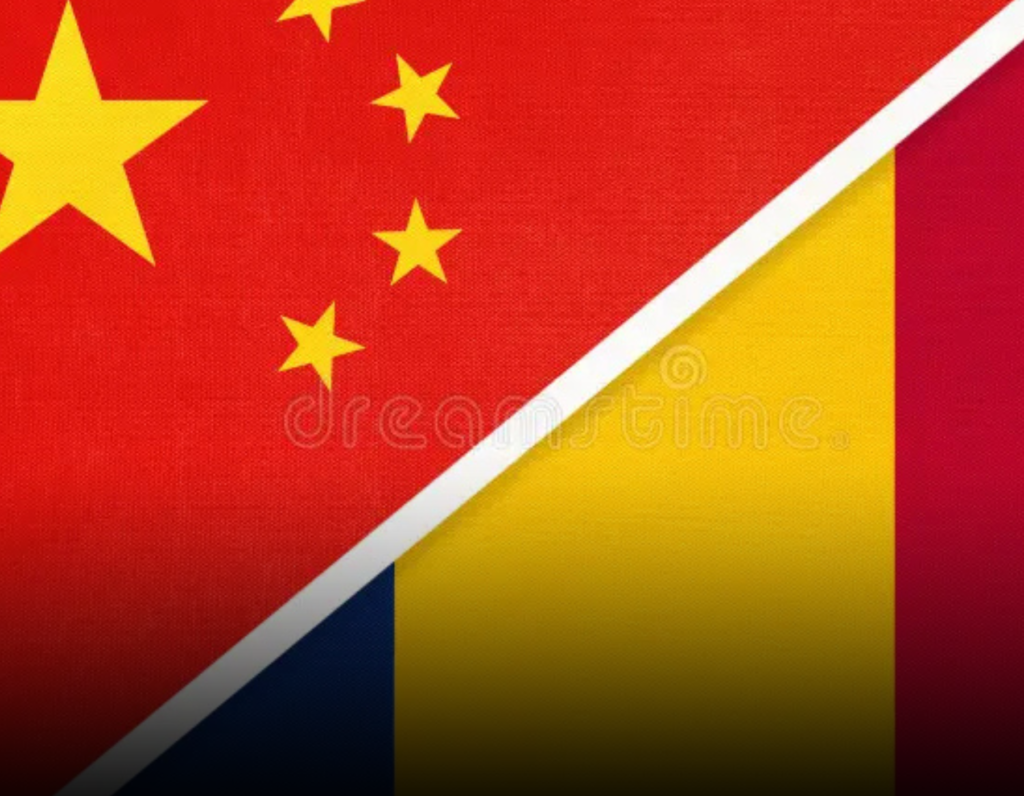
That continuity stands in contrast to the volatile diplomatic history behind it. Chad and China first established ties in 1972, only for Chad to sever them in 1997 in favor of recognizing Taiwan. Drawn by a Taiwanese aid package worth roughly $125 million earmarked for roads and water infrastructure. Relations swung back to Beijing in August 2006, in a switch widely described at the time as diplomatically timed to maximize embarrassment for Taipei. Chad’s ambassador informed Taiwan’s envoy of the change just hours before Taiwan’s own foreign minister was due to attend an inauguration ceremony in N’Djamena. China moved quickly afterward to secure oil exploration rights, with CNPC entering Chad’s energy sector by 2007 and eventually building the country’s first oil refinery, completed in 2011.
The medical partnership represented by the Chad-China Friendship Hospital has functioned as one of the most consistent elements of bilateral cooperation. Largely insulated from the diplomatic swings and resource-sector friction that have periodically shaped the wider relationship. It follows a broader pattern visible elsewhere on the continent this year, where Chinese provincial health authorities have taken responsibility for sustained medical missions in specific African countries. Hunan Province’s decades-long missions to Rwanda and Sierra Leone, and Jiangsu Province’s six-decade partnership with Tanzania, both recently marked by new training centers and clinical milestones of their own.
For Chad, Tuesday’s donation adds concrete supplies to that pattern at a moment officials describe as transitional. One where, per Iguemir’s framing, the relationship’s next phase is meant to look less like periodic aid shipments and more like durable, jointly built medical capacity. Whether that institutionalization proceeds as smoothly as hospital officials hope will likely depend on the same broader dynamic shaping much of China’s African engagement this year: converting long-running, high-volume partnerships into arrangements both sides describe, with increasing insistence, as genuinely mutual.