
China’s decision to grant zero-tariff treatment to products from eligible African countries presents Ghana with an opportunity to expand exports and attract manufacturing investment, but the benefits will depend on whether local businesses can meet Chinese market requirements and supply goods at the scale buyers need.
Chinese Ambassador to Ghana Cong Song has identified cocoa products, cashew nuts, shea butter, textiles and handicrafts among Ghanaian products that could benefit from improved access to China’s vast consumer market.
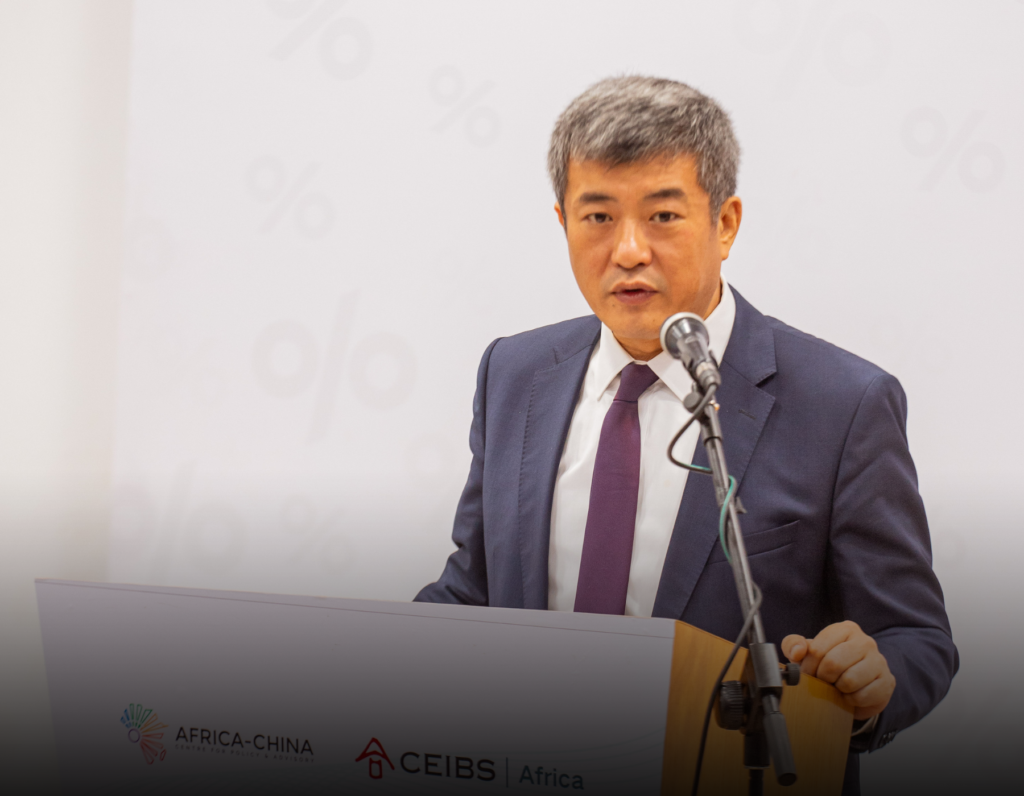
Speaking at the China–Ghana Zero Tariff Forum on October 15, the ambassador acknowledged that translating the policy into commercial gains would require more than removing import duties.
“We are fully aware that it is not easy to translate good policies from paper to implementation,” he said, calling for greater attention to export potential, institutional bottlenecks and the alignment between Ghana’s domestic supply capacity and Chinese market standards.
His remarks highlight a central challenge for Ghana: securing preferential access to a major market is one thing; building the production capacity, export infrastructure and business relationships needed to take advantage of it is another.
China announced that it would implement zero-tariff treatment on all products from 53 African countries with which it maintains diplomatic relations, effective May 1, 2026. The measure was announced by Chinese President Xi Jinping in February and forms part of Beijing’s broader effort to deepen economic relations with African countries.
For Ghana, the opportunity extends beyond exporting more raw commodities. If businesses can process agricultural products locally and meet the requirements of Chinese buyers, the policy could support higher-value exports, manufacturing investment and employment.
Whether those outcomes materialise will depend on how effectively Ghanaian businesses and public institutions respond.
Cocoa, cashew and shea among potential beneficiaries
Ambassador Cong said the policy would reduce the cost of entering the Chinese market by removing applicable import tariffs on covered products.
He cited Ghanaian cocoa as an example, saying it had previously faced tariffs ranging from 8% to 22%. Under the zero-tariff treatment, he said, eligible cocoa products could enter China without those duties.
The change could improve the price competitiveness of Ghanaian products, although the actual benefit will depend on the product classification, applicable rules of origin, logistics costs, buyer demand and the extent to which exporters pass tariff savings on to customers.
Ghana has an established position in global cocoa production, but increasing exports of processed cocoa products could offer a route to capturing more value domestically. Products such as cocoa powder, cocoa butter, chocolate and other cocoa-based goods could create opportunities beyond the traditional export of raw beans, provided producers can meet demand and regulatory requirements.
Cashew and shea products also offer possibilities for value addition. Processing these commodities locally could create opportunities for businesses to move beyond raw or minimally processed exports into products with greater commercial value.
Textiles and handicrafts could benefit as well, particularly where exporters can demonstrate consistent quality, distinctive designs and reliable delivery.
However, tariff reductions alone cannot guarantee increased sales. Ghanaian exporters will still need to understand Chinese consumer preferences, identify distributors, meet applicable food safety and product standards, and manage shipping, packaging and payment arrangements.
The ambassador’s call to identify priority export products suggests that Ghana needs a targeted strategy rather than assuming every eligible product will immediately find a market.
China sees zero tariffs as an investment incentive
Beyond expanding trade, Beijing expects the policy to encourage companies to invest in African production and processing.
Ambassador Cong argued that improved access to the Chinese market could make it more commercially attractive to establish factories in Africa, process agricultural products locally and export finished or semi-finished goods to China.
He said such investment could bring capital, technology, equipment and managerial expertise, while supporting farmers, small businesses and industrial supply chains.
For Ghana, this is potentially one of the most significant aspects of the policy.
A rise in exports of unprocessed commodities could generate additional foreign exchange, but investment in local processing could also support industrial skills, create jobs and increase the share of export earnings retained within the country.
For example, investment in cocoa processing could strengthen links between farmers, processors, packaging companies, logistics operators and exporters. Similar opportunities could emerge in cashew processing and shea-based products.
Chinese investment could contribute to this transition, but Ghana would need to assess individual projects on their merits. The quality of the outcome would depend on whether investment creates sustainable local employment, develops domestic suppliers, transfers skills and supports commercially viable production.
The policy could also attract investors from other countries if Ghana becomes a more competitive production base for goods destined for China.
Nevertheless, the ambassador’s remarks describe the investment potential of the initiative; they do not establish that particular new factories or investment commitments have already materialised as a result of the policy.
A growing trade relationship, but the export challenge remains
Ambassador Cong said China–Africa trade reached a record US$348 billion in 2025, representing a 17.7% increase over the previous year.
He also reported that, by the end of September 2026, China’s imports from Africa had increased by 23.3% year on year, while its exports to Africa had risen by 23.9%.
The figures, as presented by the ambassador, point to the expanding scale of the economic relationship. They also raise an important question for African economies: how much of that growth can be translated into stronger domestic production and more diversified exports?
For Ghana, the policy’s success should not be measured solely by the value of goods traded with China. It should also be assessed by whether more Ghanaian firms enter the market, whether exports become more diversified, whether processing expands and whether new employment is created.
Ambassador Cong said African products including Ethiopian coffee, Kenyan avocados, South African wine and Egyptian oranges were increasingly reaching Chinese consumers.
These examples illustrate the range of agricultural and specialty goods that can find opportunities in China. They do not, on their own, establish the likely scale of demand for Ghanaian products, which will depend on their competitiveness and market positioning.
Ghana will need to identify where it has a realistic advantage, build relationships with Chinese buyers and ensure that exporters can meet orders consistently.
The barriers between tariff-free access and actual sales
The ambassador’s strongest message may have been his acknowledgement that implementation remains a major task.
He called for collaboration to identify products with export potential, examine institutional bottlenecks and assess whether Ghana’s supply capacity aligns with Chinese market standards.
These concerns point to several practical requirements.
First, exporters need reliable information about the Chinese market, including product requirements, applicable standards, customs procedures and potential buyers.
Second, Ghanaian producers must be able to deliver the required quantity and quality consistently. A business that secures an order but cannot meet delivery schedules or maintain product specifications may struggle to build a lasting commercial relationship.
Third, exporters need access to finance, storage, processing facilities, packaging, testing and certification services. For agricultural products, these can be decisive factors in determining whether a shipment meets the destination market’s requirements.
Finally, businesses need to understand the full cost of exporting. Removing tariffs does not eliminate freight charges, insurance, domestic transport, financing costs or non-tariff requirements.
For Ghanaian small and medium-sized enterprises, these constraints could determine whether the policy creates a meaningful commercial opportunity or remains largely theoretical.
The ambassador’s call for closer engagement with business organisations, policymakers and trade institutions suggests that the next phase must focus on implementation rather than promotion alone.
Can Ghana turn market access into industrial development?
The zero-tariff initiative arrives as Ghana pursues a broader economic transformation agenda, including efforts to strengthen domestic production and expand value addition.
The opportunity is to use improved access to China to support those objectives rather than simply increase the volume of raw materials leaving the country.
Government agencies, exporters and industry associations could work together to identify a shortlist of products with strong export potential, establish the requirements for entering the Chinese market and connect Ghanaian suppliers with credible buyers.
For selected products, the process could involve mapping production capacity, improving quality assurance, supporting certification, facilitating trade finance and helping businesses participate in international trade fairs and buyer missions.
The government could also use discussions with Chinese investors to explore commercially viable processing and manufacturing projects that create links with local farmers and small businesses.
Such an approach would allow Ghana to focus its resources on products where the country has a realistic prospect of securing repeat orders and expanding its market share.
It would also help distinguish between a product that is legally eligible for zero-tariff treatment and one that is commercially ready to compete in China.
Beijing calls for a favourable investment environment
Ambassador Cong also linked the initiative to the wider political and economic relationship between Ghana and China.
He referred to a recent meeting between Chinese Vice-President Han Zheng and President John Dramani Mahama on the sidelines of the United Nations General Assembly, during which Han encouraged Ghana to maintain a favourable business environment for Chinese enterprises and make effective use of the zero-tariff policy.
The ambassador said 2026 was the first year of China’s 15th Five-Year Plan and an important year for Ghana’s 24-Hour Economy initiative.
He called for the two countries to use the opportunities created by their economic cooperation to manage uncertainty in the global trading environment.
The remarks place the zero-tariff policy within a wider agenda of bilateral engagement, investment and economic cooperation.
For Ghana, however, a favourable investment environment must be accompanied by clear national priorities. The most valuable projects will be those that complement the country’s industrial objectives, create productive employment and help domestic firms become more competitive.
The real test begins now
China’s zero-tariff initiative offers Ghana an opportunity to broaden its export base and deepen its economic relationship with one of the world’s largest markets.
But the decisive work will take place after the announcement: identifying commercially viable products, meeting standards, securing buyers, financing production and ensuring that exporters can fulfil orders consistently.
Ambassador Cong’s acknowledgement of these implementation challenges is significant because it shifts the conversation from the existence of a trade preference to the practical conditions needed to use it.
For Ghanaian businesses, the immediate priority is to determine which products can compete in China and what investments are required to get them there.
For the government, it is to coordinate the institutions responsible for trade promotion, production, standards, financing and export development.
And for Chinese investors, the opportunity is to help build commercially sustainable supply chains that connect Ghanaian production with Chinese demand.
The policy has removed an important tariff barrier for eligible products. Whether it leads to more factories, higher-value exports and additional jobs in Ghana will depend on the ability of businesses and policymakers to turn that opening into lasting commercial relationships.
China has opened a door to its market. Ghana’s next challenge is to ensure that its businesses are ready to enter.
China Opens Zero-Tariff Door to Ghanaian Goods, but Export Bottlenecks Remain
Chinese Ambassador Cong Song says Ghanaian cocoa, cashew, shea butter, textiles and handicrafts could gain a competitive edge in China, but calls for urgent action to address supply constraints, institutional barriers and market standards.
ACCRA, Ghana, October 16, 2026 — China’s decision to grant zero-tariff treatment to products from eligible African countries presents Ghana with an opportunity to expand exports and attract manufacturing investment, but the benefits will depend on whether local businesses can meet Chinese market requirements and supply goods at the scale buyers need.
Chinese Ambassador to Ghana Cong Song has identified cocoa products, cashew nuts, shea butter, textiles and handicrafts among Ghanaian products that could benefit from improved access to China’s vast consumer market.
Speaking at the China–Ghana Zero Tariff Forum, the ambassador acknowledged that translating the policy into commercial gains would require more than removing import duties.
“We are fully aware that it is not easy to translate good policies from paper to implementation,” he said, calling for greater attention to export potential, institutional bottlenecks and the alignment between Ghana’s domestic supply capacity and Chinese market standards.
His remarks highlight a central challenge for Ghana: securing preferential access to a major market is one thing; building the production capacity, export infrastructure and business relationships needed to take advantage of it is another.
China announced that it would implement zero-tariff treatment on all products from 53 African countries with which it maintains diplomatic relations, effective May 1, 2026. The measure was announced by Chinese President Xi Jinping in February and forms part of Beijing’s broader effort to deepen economic relations with African countries.
For Ghana, the opportunity extends beyond exporting more raw commodities. If businesses can process agricultural products locally and meet the requirements of Chinese buyers, the policy could support higher-value exports, manufacturing investment and employment.
Whether those outcomes materialise will depend on how effectively Ghanaian businesses and public institutions respond.
Cocoa, cashew and shea among potential beneficiaries
Ambassador Cong said the policy would reduce the cost of entering the Chinese market by removing applicable import tariffs on covered products.
He cited Ghanaian cocoa as an example, saying it had previously faced tariffs ranging from 8% to 22%. Under the zero-tariff treatment, he said, eligible cocoa products could enter China without those duties.
The change could improve the price competitiveness of Ghanaian products, although the actual benefit will depend on the product classification, applicable rules of origin, logistics costs, buyer demand and the extent to which exporters pass tariff savings on to customers.
Ghana has an established position in global cocoa production, but increasing exports of processed cocoa products could offer a route to capturing more value domestically. Products such as cocoa powder, cocoa butter, chocolate and other cocoa-based goods could create opportunities beyond the traditional export of raw beans, provided producers can meet demand and regulatory requirements.
Cashew and shea products also offer possibilities for value addition. Processing these commodities locally could create opportunities for businesses to move beyond raw or minimally processed exports into products with greater commercial value.
Textiles and handicrafts could benefit as well, particularly where exporters can demonstrate consistent quality, distinctive designs and reliable delivery.
However, tariff reductions alone cannot guarantee increased sales. Ghanaian exporters will still need to understand Chinese consumer preferences, identify distributors, meet applicable food safety and product standards, and manage shipping, packaging and payment arrangements.
The ambassador’s call to identify priority export products suggests that Ghana needs a targeted strategy rather than assuming every eligible product will immediately find a market.
China sees zero tariffs as an investment incentive
Beyond expanding trade, Beijing expects the policy to encourage companies to invest in African production and processing.
Ambassador Cong argued that improved access to the Chinese market could make it more commercially attractive to establish factories in Africa, process agricultural products locally and export finished or semi-finished goods to China.
He said such investment could bring capital, technology, equipment and managerial expertise, while supporting farmers, small businesses and industrial supply chains.
For Ghana, this is potentially one of the most significant aspects of the policy.
A rise in exports of unprocessed commodities could generate additional foreign exchange, but investment in local processing could also support industrial skills, create jobs and increase the share of export earnings retained within the country.
For example, investment in cocoa processing could strengthen links between farmers, processors, packaging companies, logistics operators and exporters. Similar opportunities could emerge in cashew processing and shea-based products.
Chinese investment could contribute to this transition, but Ghana would need to assess individual projects on their merits. The quality of the outcome would depend on whether investment creates sustainable local employment, develops domestic suppliers, transfers skills and supports commercially viable production.
The policy could also attract investors from other countries if Ghana becomes a more competitive production base for goods destined for China.
Nevertheless, the ambassador’s remarks describe the investment potential of the initiative; they do not establish that particular new factories or investment commitments have already materialised as a result of the policy.
A growing trade relationship, but the export challenge remains
Ambassador Cong said China–Africa trade reached a record US$348 billion in 2025, representing a 17.7% increase over the previous year.
He also reported that, by the end of September 2026, China’s imports from Africa had increased by 23.3% year on year, while its exports to Africa had risen by 23.9%.
The figures, as presented by the ambassador, point to the expanding scale of the economic relationship. They also raise an important question for African economies: how much of that growth can be translated into stronger domestic production and more diversified exports?
For Ghana, the policy’s success should not be measured solely by the value of goods traded with China. It should also be assessed by whether more Ghanaian firms enter the market, whether exports become more diversified, whether processing expands and whether new employment is created.
Ambassador Cong said African products including Ethiopian coffee, Kenyan avocados, South African wine and Egyptian oranges were increasingly reaching Chinese consumers.
These examples illustrate the range of agricultural and specialty goods that can find opportunities in China. They do not, on their own, establish the likely scale of demand for Ghanaian products, which will depend on their competitiveness and market positioning.
Ghana will need to identify where it has a realistic advantage, build relationships with Chinese buyers and ensure that exporters can meet orders consistently.
The barriers between tariff-free access and actual sales
The ambassador’s strongest message may have been his acknowledgement that implementation remains a major task.
He called for collaboration to identify products with export potential, examine institutional bottlenecks and assess whether Ghana’s supply capacity aligns with Chinese market standards.
These concerns point to several practical requirements.
First, exporters need reliable information about the Chinese market, including product requirements, applicable standards, customs procedures and potential buyers.
Second, Ghanaian producers must be able to deliver the required quantity and quality consistently. A business that secures an order but cannot meet delivery schedules or maintain product specifications may struggle to build a lasting commercial relationship.
Third, exporters need access to finance, storage, processing facilities, packaging, testing and certification services. For agricultural products, these can be decisive factors in determining whether a shipment meets the destination market’s requirements.
Finally, businesses need to understand the full cost of exporting. Removing tariffs does not eliminate freight charges, insurance, domestic transport, financing costs or non-tariff requirements.
For Ghanaian small and medium-sized enterprises, these constraints could determine whether the policy creates a meaningful commercial opportunity or remains largely theoretical.
The ambassador’s call for closer engagement with business organisations, policymakers and trade institutions suggests that the next phase must focus on implementation rather than promotion alone.
Can Ghana turn market access into industrial development?
The zero-tariff initiative arrives as Ghana pursues a broader economic transformation agenda, including efforts to strengthen domestic production and expand value addition.
The opportunity is to use improved access to China to support those objectives rather than simply increase the volume of raw materials leaving the country.
Government agencies, exporters and industry associations could work together to identify a shortlist of products with strong export potential, establish the requirements for entering the Chinese market and connect Ghanaian suppliers with credible buyers.
For selected products, the process could involve mapping production capacity, improving quality assurance, supporting certification, facilitating trade finance and helping businesses participate in international trade fairs and buyer missions.
The government could also use discussions with Chinese investors to explore commercially viable processing and manufacturing projects that create links with local farmers and small businesses.
Such an approach would allow Ghana to focus its resources on products where the country has a realistic prospect of securing repeat orders and expanding its market share.
It would also help distinguish between a product that is legally eligible for zero-tariff treatment and one that is commercially ready to compete in China.
Beijing calls for a favourable investment environment
Ambassador Cong also linked the initiative to the wider political and economic relationship between Ghana and China.
He referred to a recent meeting between Chinese Vice-President Han Zheng and President John Dramani Mahama on the sidelines of the United Nations General Assembly, during which Han encouraged Ghana to maintain a favourable business environment for Chinese enterprises and make effective use of the zero-tariff policy.
The ambassador said 2026 was the first year of China’s 15th Five-Year Plan and an important year for Ghana’s 24-Hour Economy initiative.
He called for the two countries to use the opportunities created by their economic cooperation to manage uncertainty in the global trading environment.
The remarks place the zero-tariff policy within a wider agenda of bilateral engagement, investment and economic cooperation.
For Ghana, however, a favourable investment environment must be accompanied by clear national priorities. The most valuable projects will be those that complement the country’s industrial objectives, create productive employment and help domestic firms become more competitive.
The real test begins now
China’s zero-tariff initiative offers Ghana an opportunity to broaden its export base and deepen its economic relationship with one of the world’s largest markets.
But the decisive work will take place after the announcement: identifying commercially viable products, meeting standards, securing buyers, financing production and ensuring that exporters can fulfil orders consistently.
Ambassador Cong’s acknowledgement of these implementation challenges is significant because it shifts the conversation from the existence of a trade preference to the practical conditions needed to use it.
For Ghanaian businesses, the immediate priority is to determine which products can compete in China and what investments are required to get them there.
For the government, it is to coordinate the institutions responsible for trade promotion, production, standards, financing and export development.
And for Chinese investors, the opportunity is to help build commercially sustainable supply chains that connect Ghanaian production with Chinese demand.
The policy has removed an important tariff barrier for eligible products. Whether it leads to more factories, higher-value exports and additional jobs in Ghana will depend on the ability of businesses and policymakers to turn that opening into lasting commercial relationships.
[/ihc-hide-content]