

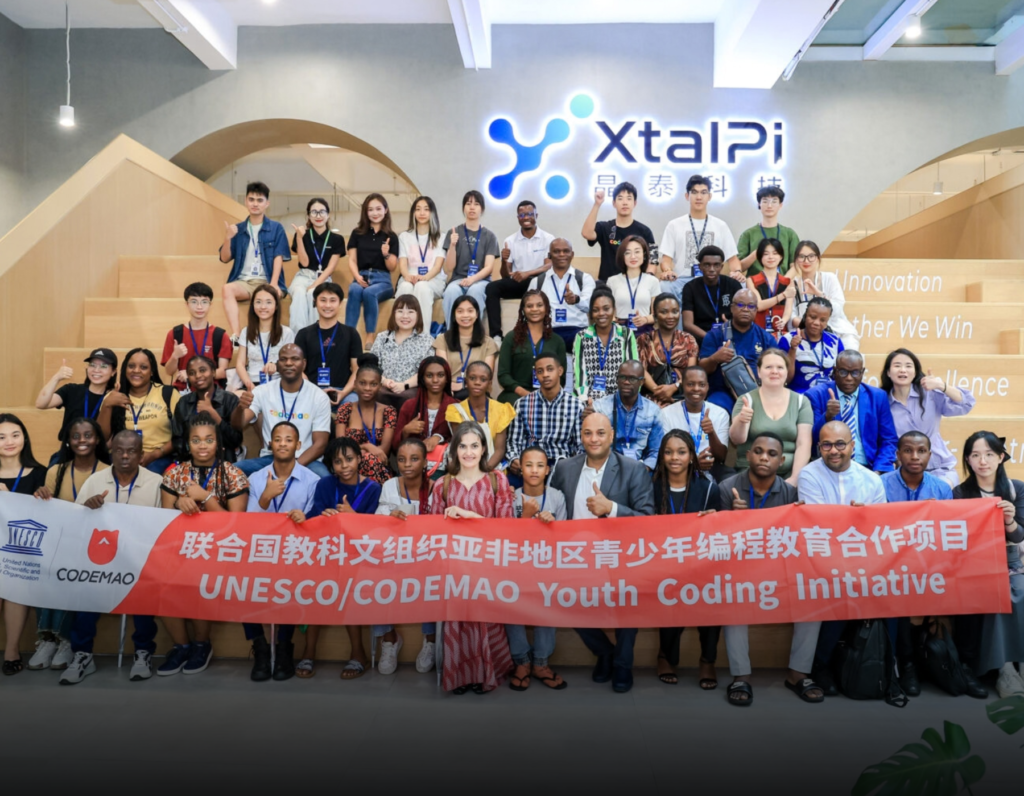
A partnership between the United Nations Educational, Scientific and Cultural Organization (UNESCO) and Chinese coding education platform Codemao is expanding access to artificial intelligence (AI) and coding education in African schools, with Kenya emerging as a key beneficiary.
Since 2025, 20 schools across Kenya’s Kiambu, Nairobi, Kajiado and Machakos counties have joined the UNESCO–Codemao Youth Coding Initiative, reaching more than 1,200 students. The programme uses a train-the-trainer approach, equipping teachers with digital skills that they can subsequently pass on to colleagues and learners. Coding clubs have also been established in participating schools to encourage students to learn collaboratively.
Mary Nyasimi, a national programme specialist at UNESCO’s Regional Office for Eastern Africa, said AI and digital technologies are transforming teaching and learning across the continent. The initiative is therefore intended not only to introduce students to emerging technologies but also to strengthen the capacity of educators to prepare young people for an increasingly digital economy.
The programme has also created opportunities for Kenyan teachers and students to gain first-hand exposure to China’s technology ecosystem. In July 2026, a Kenyan delegation travelled to Shenzhen for the UNESCO–Codemao Youth Coding Exchange Programme, visiting technology companies and participating in AI-focused learning activities.
For Augustine Nzuki, a teacher from Tala Township Primary School in Machakos County, the exchange turned classroom concepts into practical experience.
“I saw practically what robots and drones are, gaining hands-on knowledge of AI and coding,” Nzuki said.
He plans to share the knowledge gained in China with 20 neighbouring schools, extending the programme’s impact beyond participating institutions.
UNESCO and Codemao launched the Youth Coding Initiative in 2021 to improve coding and AI skills among young people and teachers in Africa and Asia. The first phase involved Kenya, Namibia, the Republic of Congo and Thailand, with more than 200 teachers completing international coding training. Women represented 45 percent of those participants.
The initiative entered a second phase in 2025, running through 2030, with a stronger focus on expanding access, particularly in underserved communities. UNESCO’s project records show that Africa accounts for 85 percent of the programme’s geographical focus.
The collaboration adds another dimension to growing China-Kenya cooperation in technology and education. Beyond coding initiatives, Kenyan students and educators have increasingly participated in China-based technology competitions, exchanges and digital-skills programmes.
For Africa, partnerships of this kind could help address the continent’s digital skills gap by moving young people from simply consuming technology to understanding, creating and applying it. For China and African partners, they also provide a platform for deeper South-South cooperation in education, innovation and human-capital development.