
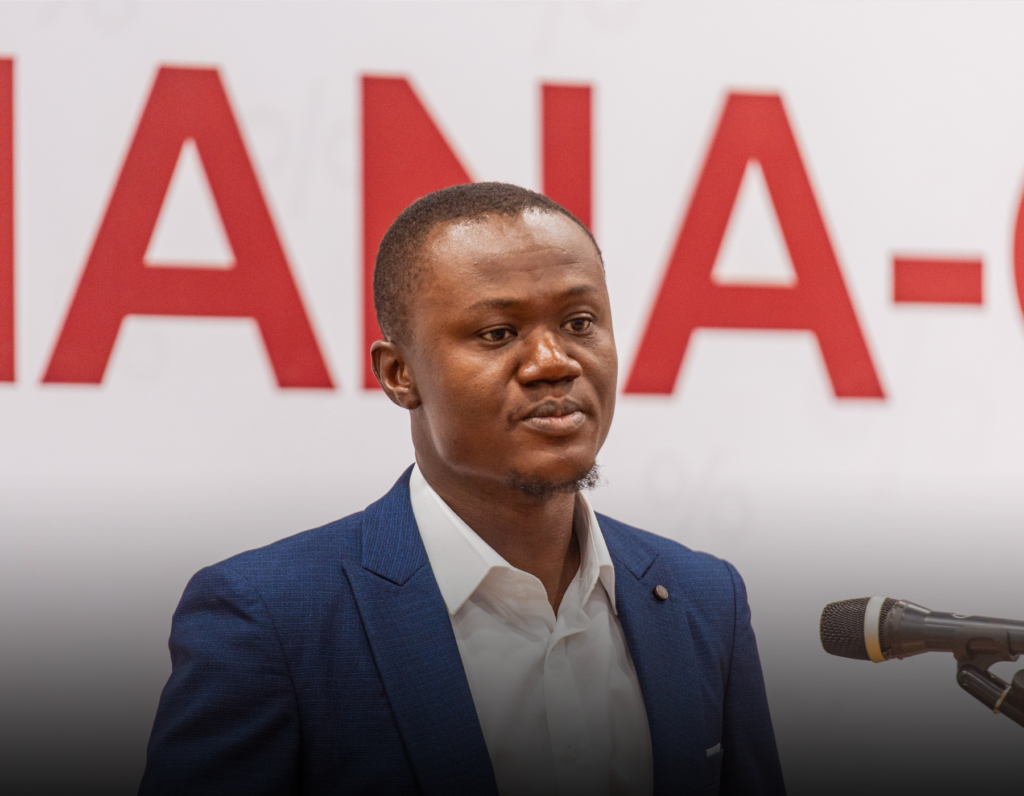
Ghanaian businesses must move beyond celebrating China’s zero-tariff policy and invest in the partnerships, financing, certification and supply-chain capabilities needed to compete in the Chinese market, Paul Frimpong, Executive Director of the Africa-China Centre for Policy and Advisory (ACCPA), has said.
Speaking at the maiden edition of the Ghana–China Zero Tariff Forum, Mr Frimpong cautioned that removing tariffs does not automatically guarantee export success, stressing that businesses must prepare strategically to take advantage of the opportunities available.
He illustrated the challenge with two hypothetical Ghanaian companies producing high-quality goods for export to China. While both receive news of the zero-tariff policy, one becomes excited and immediately begins preparing to export without adequate planning. Six months later, it has still not shipped a single product.
The second company, however, uses the opportunity to identify reliable Chinese business partners, secure support from a financial institution and understand the relevant product standards and certification requirements.
Mr Frimpong said the example demonstrated why Ghanaian businesses must approach the policy with careful preparation rather than assume that duty-free access alone would open the Chinese market.
“China has done its part by opening the door. What happens next really is up to all of us,” he said.
From market access to market success
Mr Frimpong said Ghana needed to help businesses move from having access to the Chinese market to achieving sustainable commercial success within it.
He stressed the importance of understanding the systems and channels through which Ghanaian products could enter China, including the requirements for product standardisation, financing and supply-chain management.
For exporters, these issues can determine whether a product that is eligible for preferential tariff treatment can actually reach buyers competitively and consistently.
The zero-tariff policy is intended to lower the tariff barriers facing eligible African exports to China. However, exporters must still address practical requirements such as product quality, applicable regulatory approvals, logistics, financing and the ability to fulfil orders.
Mr Frimpong’s message was that businesses should use the policy as a starting point for developing export strategies, not as a guarantee of immediate sales.
Six-month programme to build export capacity
As part of efforts to address these challenges, the forum also highlighted plans for a six-month programme focused on China–Africa supply chains and zero-tariff export management.
The programme is expected to build the capacity of importers and exporters, trade managers and advisers, supply-chain and procurement professionals, and regulatory officers.
According to the presentation at the forum, the training will cover comparative advantages in sectors such as agribusiness and extractives, tariff systems, China’s zero-tariff framework, value addition, manufacturing models, certification, sourcing, logistics and business models.
It will also include cross-cultural negotiation and an immersion component in China, intended to give participating professionals practical exposure to the Chinese business environment.
The initiative is designed to go beyond classroom instruction by encouraging engagement with experts and practitioners from regulatory institutions, banks, investment organisations and trade-related businesses.
Organisers are seeking experts, advisers and coaches from these sectors to contribute to the programme and help participants understand the practical requirements for doing business across the China–Africa trade corridor.
The programme could provide a structured route for Ghanaian businesses to improve their export readiness, particularly if the training is linked to real products, prospective buyers and the specific requirements exporters must meet.
Industrialisation must create jobs
The forum also highlighted the need to ensure that efforts to attract investment and expand manufacturing contribute to employment and industrial development in Africa.
In remarks delivered during the event, a representative of SEAPS Africa said the continent’s industrialisation ambitions must be balanced with the need for job-based growth.
The speaker argued that investors introducing production systems should consider the balance between automation and employment opportunities for local people.
The point is significant as African countries seek to attract manufacturing investment while addressing unemployment and developing domestic industrial capabilities.
For Ghana, the potential benefits of the zero-tariff policy could extend beyond increased exports if improved access to China encourages investment in local processing and manufacturing.
Such investment could support employment, technical skills development and stronger links between producers, processors and exporters.
However, these outcomes will depend on the type of investment secured, the capacity of local businesses to participate in supply chains and the extent to which production creates sustainable economic opportunities.
Collaboration needed to unlock the opportunity
The maiden forum brought together stakeholders from business, academia, banking and trade-related institutions to discuss how Ghana could respond to the opportunities created by China’s zero-tariff initiative.
Among the participants acknowledged at the event were Dr Jaber Muhammad, a senior lecturer at the University of Ghana Business School, and Abu Quason, Acting Managing Director of Potential Bank Limited, identified as a strategic partner for the forum.
The organisers called for greater collaboration across the business and trade ecosystem to identify viable export products, improve understanding of the policy and strengthen private-sector participation.
Such coordination will be important in addressing the gap between Ghanaian businesses’ export ambitions and their practical ability to supply the Chinese market.
Businesses will need access to reliable market information, financing, technical support and prospective buyers. Public institutions and industry organisations, meanwhile, can help exporters understand regulatory requirements and identify products with realistic commercial potential.
The challenge ahead
China’s zero-tariff initiative has created an opening for eligible African products, but Ghana’s ability to benefit will depend on how effectively businesses prepare for the opportunity.
Mr Frimpong’s central message was that export success requires a combination of market knowledge, reliable partnerships, financing, certification and sound supply-chain management.
The proposed six-month capacity-building programme is one effort to address those needs by equipping trade professionals with practical knowledge of China–Africa commerce.
Ultimately, the measure of success will not be the number of businesses that express interest in exporting to China, but the number that can meet market requirements, secure buyers and sustain profitable exports.
For Ghanaian businesses seeking to enter China, the message from the maiden forum was clear: the tariff door may be open, but preparation will determine who can walk through it successfully.
[/ihc-hide-content]