

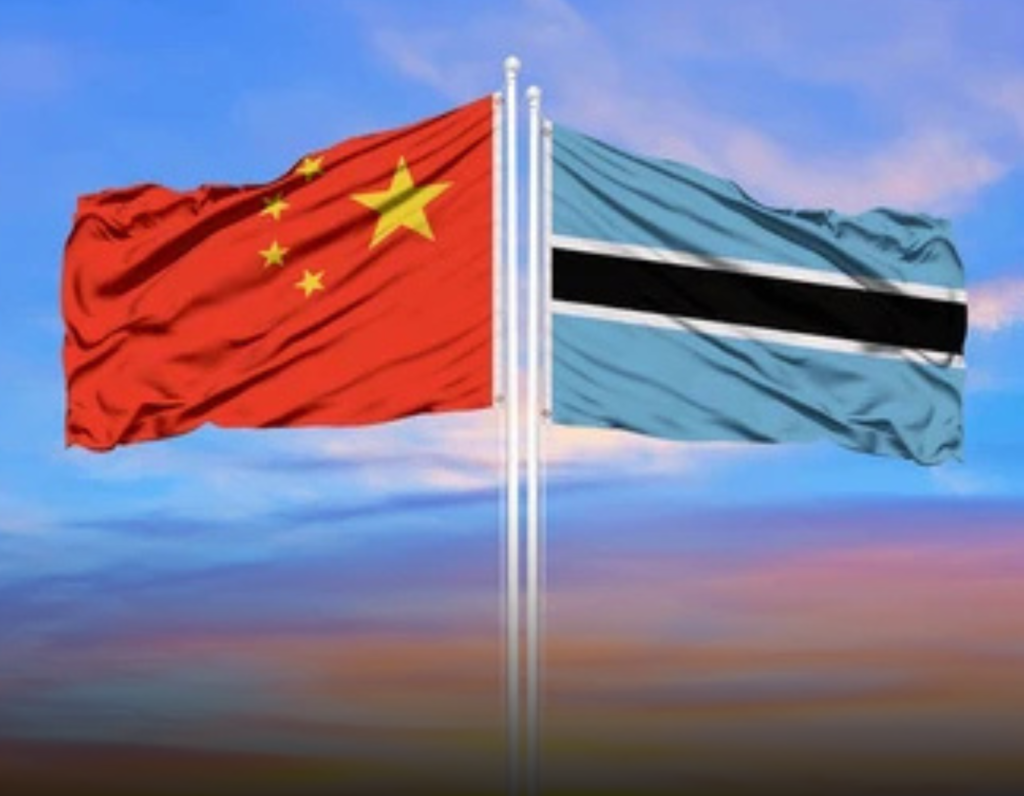
Botswana is positioning itself to capitalize on China’s expanded zero-tariff policy, with government officials describing the initiative as a major opportunity to diversify exports, stimulate local industries, and create jobs in the Southern African country.
The policy, which officially took effect on May 1, grants tariff-free access to qualifying products from 53 African countries that maintain diplomatic ties with Beijing. Botswana’s Ministry of Trade and Entrepreneurship says the development could significantly improve the country’s access to one of the world’s largest consumer markets.
In a statement released Tuesday, the ministry said the removal of import duties means Botswana-origin products can now enter China without additional tariff costs, making exports more competitive and potentially lowering barriers for local producers seeking international expansion.
Officials identified several sectors expected to benefit from the arrangement, including beef and livestock products, horticulture, processed foods, leather goods, textiles, and locally made arts and crafts.
The Botswana Unified Revenue Service (BURS) has already begun adapting customs systems to facilitate smoother exports to China. Authorities say efforts are underway to accelerate documentation processes, streamline export channels, and issue rules-of-origin certificates required for China-bound goods.
The ministry has encouraged farmers, manufacturers, and entrepreneurs to take advantage of the new trade window, particularly at a time when Botswana is seeking to reduce its long-standing dependence on diamond exports.
Analysts say the timing of the zero-tariff policy is especially significant for Botswana, whose economy has recently faced pressure from weakening global diamond demand and broader international economic uncertainty. Expanding agricultural and manufacturing exports is increasingly viewed as central to the country’s economic diversification strategy.
Botswana’s Trade and Entrepreneurship Minister Tiroeaone Ntsima previously described China’s tariff-free initiative as an opportunity to broaden Botswana’s export portfolio beyond traditional mineral exports. According to him, sectors such as beef, horticulture, leather products, and processed agricultural goods are expected to play a greater role in the country’s economic future.
A recently signed beef export protocol between Botswana and China is also expected to strengthen bilateral agricultural trade. The agreement grants Botswana’s beef industry easier access to the Chinese market, potentially opening new revenue streams for local livestock producers.
Business leaders in Botswana have welcomed the policy as a rare opening for small and medium-sized exporters to access Asian markets. Mmantlha Sankoloba, chief executive officer of the Botswana Exporters and Manufacturers Association, said duty-free access could improve competitiveness by reducing landed costs for Botswana-made products in China.
She also highlighted growing interest in niche exports such as morula oil, baobab-based wellness products, indigenous foods, textiles, and sustainable crafts that could appeal to China’s expanding middle-class consumer market.
Despite the optimism, industry stakeholders acknowledge several challenges remain, including high logistics costs, limited direct shipping routes, language barriers, and compliance with Chinese certification standards. Botswana’s landlocked geography continues to complicate export logistics, particularly for smaller businesses seeking entry into Asian supply chains.
To address those gaps, local trade bodies are reportedly pushing for deeper Botswana-China cooperation in areas such as trade promotion, e-commerce partnerships, export training, and market intelligence. Discussions are also underway around a potential Botswana-China Export Growth Strategy linked to the Forum on China-Africa Cooperation (FOCAC).
China and Botswana have steadily expanded bilateral ties over the years beyond trade alone. Cooperation between the two countries now spans infrastructure development, healthcare, education, energy, agriculture, and cultural exchanges. Beijing has also supported several development projects in Botswana through grants, technical assistance, and investment partnerships.
The zero-tariff arrangement forms part of China’s broader effort to deepen economic engagement with Africa and support industrialization and export growth across the continent. Similar optimism has recently emerged in countries such as Kenya, Namibia, Tanzania, and Nigeria, where businesses are also seeking to leverage improved access to the Chinese market.
For Botswana, however, the stakes may be particularly high. As the country works to reposition its economy for long-term resilience, officials increasingly see expanded trade with China not simply as a commercial opportunity, but as part of a wider economic transformation strategy aimed at building a more diversified and sustainable export base.