

China and South Africa are deepening people-to-people ties through a growing focus on youth engagement, cultural exchange, and leadership dialogue – signaling a broader effort to strengthen long-term cooperation between the two strategic partners.
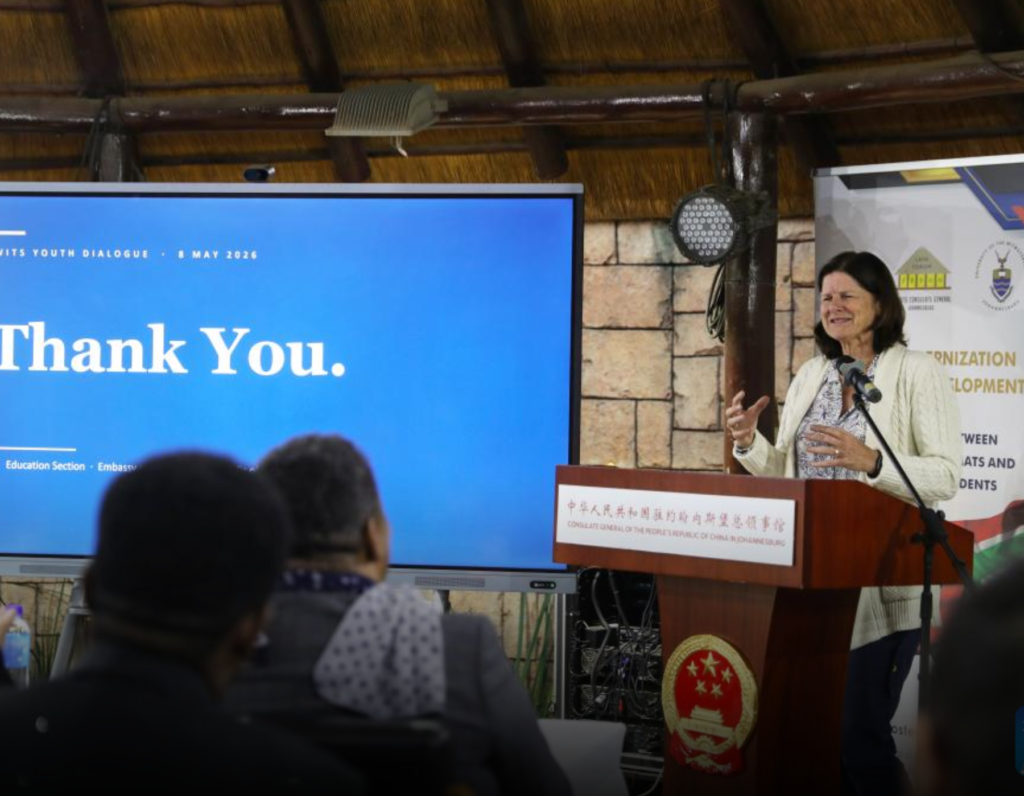
A recent China-South Africa youth dialogue held in Pretoria brought together young leaders, students, diplomats, and professionals from both countries to discuss cooperation in education, innovation, entrepreneurship, and cultural understanding.
Hosted at the Chinese Embassy in South Africa, the event highlighted the increasing role of youth diplomacy in shaping the future of China-Africa relations. Participants exchanged perspectives on development, technology, social progress, and the opportunities emerging from expanding bilateral cooperation.
Organizers described the dialogue as part of a broader effort to strengthen mutual understanding between younger generations in both countries.
The discussions focused on promoting innovation, skills development, educational collaboration, and stronger interpersonal connections between Chinese and South African youth.
Observers say such initiatives are becoming increasingly important as China and South Africa expand cooperation beyond traditional diplomacy and trade into areas such as digital technology, creative industries, research, and entrepreneurship.
Young participants also explored how cultural exchange and educational partnerships can help address global challenges while building stronger international cooperation frameworks.
China and South Africa maintain one of Africa’s most significant diplomatic and economic partnerships. South Africa is China’s largest trading partner on the continent, while China remains a major investor across sectors including infrastructure, energy, manufacturing, telecommunications, and renewable energy.
The two countries are also key members of BRICS, alongside Brazil, Russia, India, and other emerging economies, where cooperation increasingly centers on Global South development, economic reform, and multilateral governance.
In recent years, bilateral relations have expanded through student exchange programs, vocational training initiatives, and technology partnerships aimed at equipping young people with future-ready skills.
Educational collaboration has become particularly important. South African universities continue to strengthen partnerships with Chinese institutions through scholarship programs, language training, research cooperation, and academic exchange initiatives.
Youth dialogue between the two nations is taking place against the backdrop of rapid technological transformation globally.
Chinese companies such as Huawei and other technology firms have expanded digital training and ICT development programs in South Africa, helping support skills development in areas such as artificial intelligence, cloud computing, and telecommunications.
Analysts say youth-focused cooperation is increasingly viewed as essential to ensuring Africa’s participation in the digital economy.
For many young South Africans, engagement with China represents not only educational opportunity, but also exposure to innovation ecosystems, entrepreneurship models, and emerging industries shaping the future global economy.
Beyond economics, the dialogue also reinforced the importance of cultural understanding in sustaining international partnerships.
Chinese language programs, cultural festivals, film exchanges, and academic collaborations have become important tools for strengthening people-to-people relations between both countries.
Participants emphasized that genuine cooperation must extend beyond governments and businesses to include direct engagement between societies – particularly among younger generations who will shape future policy and economic landscapes.
The event reflects a wider trend across China-Africa relations, where youth engagement is increasingly being integrated into diplomatic and development strategies.
Through platforms such as the Forum on China-Africa Cooperation (FOCAC), both sides have prioritized educational exchange, vocational training, and youth entrepreneurship as pillars of long-term cooperation.
Analysts note that while infrastructure and trade remain central to China-Africa relations, the next phase of engagement will likely depend heavily on knowledge-sharing, innovation, and human capital development.
As global alliances evolve and emerging economies seek stronger cooperation frameworks, youth engagement is becoming a strategic tool for building trust, collaboration, and shared vision across borders.