

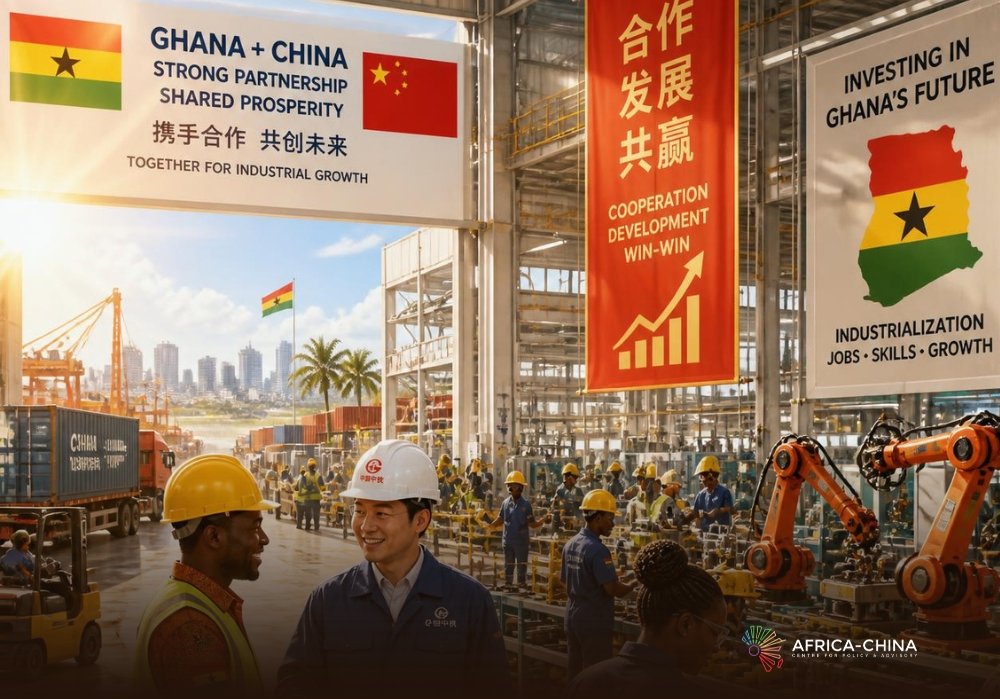
Beyond Exports Lies Investment
China’s zero-tariff policy has largely been discussed as an opportunity for Ghana to expand exports to one of the world’s largest consumer markets. While this is significant, the more strategic question is whether it can also attract manufacturing investment. If Ghana positions itself as a competitive production base, manufacturers may choose to process and produce goods locally for export to China rather than simply purchasing Ghanaian raw materials. This would shift the conversation from trade expansion to industrial transformation. Trade preferences do more than stimulate exports; they can influence where firms locate production. For Ghana, the real opportunity is to convert improved market access into new factories, stronger value chains, better-paying jobs and a more competitive industrial economy.
Why Manufacturers Follow Markets
A simple principle often shapes global investment decisions: companies invest where they can efficiently serve profitable markets. Preferential market access reduces trade costs and can make one production location more attractive than another. As a result, manufacturers frequently establish or expand factories in countries that enjoy favourable access to large export destinations. This pattern has been evident across industries such as garments, agro-processing, food manufacturing and consumer products.
China’s zero-tariff policy could strengthen Ghana’s attractiveness as a manufacturing location, provided the country offers a competitive business environment. Rather than viewing the initiative solely as an opportunity to export existing products, Ghana should see it as an investment signal that can encourage firms to manufacture locally, integrate into regional and global value chains, and export higher-value products to the Chinese market.
Ghana’s Investment Case: Strong Foundations, Untapped Potential
Ghana already possesses several advantages that could position it as an attractive manufacturing destination. Its long-standing political stability, relatively predictable business environment and strategic location along the Atlantic coast provide a solid foundation for export-oriented investment. The ports of Tema and Takoradi serve as important gateways for regional and international trade, while the country’s relatively developed financial sector and English-speaking business environment make it easier for foreign investors to establish and operate businesses.
The country’s manufacturing base, though still developing, offers a platform upon which further industrial expansion can be built. More importantly, Ghana hosts the Secretariat of the African Continental Free Trade Area (AfCFTA), reinforcing its ambition to become a regional trade and investment hub. Through AfCFTA, manufacturers located in Ghana can access a rapidly integrating African market, while China’s zero-tariff initiative provides preferential access to one of the world’s largest consumer markets.
This combination of access to both African and Chinese markets presents a compelling value proposition. For investors seeking efficient production locations and diversified export destinations, Ghana has the potential to become a strategic gateway linking two of the world’s most dynamic markets.
Why Investors Are Still Hesitating
Despite these advantages, Ghana has yet to attract manufacturing investment at the scale needed to transform its industrial base. The reasons lie less in market access than in the domestic business environment. High electricity tariffs and the cost of industrial utilities continue to raise production costs, while access to affordable finance remains a major constraint for both domestic and foreign investors. Regulatory uncertainty, lengthy administrative procedures and customs inefficiencies can also increase the time and cost of establishing and operating manufacturing businesses.
Practical challenges extend beyond regulation. Acquiring land for industrial projects can be complex, while transport and logistics costs reduce overall competitiveness. In some sectors, shortages of skilled technical and industrial labour make it difficult for firms to expand production efficiently. Equally important is the limited development of domestic supplier networks, forcing many manufacturers to rely heavily on imported inputs rather than sourcing components and services locally.
These structural weaknesses ultimately influence investment decisions more than tariff preferences alone. While China’s zero-tariff policy improves access to a major export market, it cannot offset an uncompetitive production environment. Investors compare countries on the total cost and ease of doing business, not simply on tariff advantages. In the end, factories follow competitiveness, and Ghana’s ability to attract manufacturing investment will depend on strengthening the fundamentals that enable firms to produce efficiently, reliably and at scale.
Industrial Parks Must Become Export Platforms
Industrial Parks, Special Economic Zones and Free Zones will play a decisive role if Ghana is to translate market access into manufacturing investment. However, their purpose should extend beyond attracting individual factories. They should be developed as integrated export platforms where manufacturers, suppliers, logistics providers and support services operate within connected industrial ecosystems. Such an approach can significantly reduce production costs, improve efficiency and strengthen competitiveness.
Priority should be given to developing clusters in agro-processing, food manufacturing, pharmaceuticals, textiles and light engineering—sectors where Ghana already possesses resource advantages or growing industrial capabilities. Concentrating related firms within the same locations encourages collaboration, improves access to specialised services and creates economies of scale. It also attracts supporting industries such as packaging, warehousing, transport, maintenance and business services, making production more efficient and resilient.
Well-planned industrial clusters can therefore become powerful engines of export-led growth. By reducing logistics costs, shortening supply chains and improving coordination among producers, Ghana can position its industrial zones not merely as places to manufacture goods, but as competitive production and export hubs serving both African and international markets.
The Ghana–China Manufacturing Partnership
Ghana’s manufacturing partnership with China should not be viewed simply as an opportunity to relocate production or assemble imported components. The greater objective should be to build domestic industrial capabilities that endure long after individual investment projects are completed. This requires encouraging joint ventures between Ghanaian and Chinese firms that promote technology transfer, skills development and managerial expertise while strengthening local supplier networks.
Chinese investment can also support machinery upgrading, improve production efficiency and introduce internationally recognised manufacturing standards. However, the long-term value of these investments will depend on how effectively Ghanaian firms are integrated into supply chains and how much knowledge is transferred to local workers and businesses. Investment should therefore create opportunities for domestic enterprises to grow alongside foreign manufacturers rather than remain peripheral participants.
Ultimately, Ghana should prioritise manufacturing partnerships that deepen industrial capacity, expand local value addition and increase the competitiveness of Ghanaian businesses. Success should be measured not only by the number of factories established, but by the strength of the industries and capabilities they help to build.
What Government Should Prioritise
Realising the investment potential of China’s zero-tariff initiative will require deliberate policy choices. Government should begin by identifying priority manufacturing sectors where Ghana possesses clear comparative advantages and strong export potential. Industrial investors should benefit from faster approval processes, while efforts to reduce production costs—particularly energy and financing—must be accelerated.
Expanding industrial parks and Free Zones with strong transport links to Tema and Takoradi ports would improve export efficiency. Simplifying customs procedures and strengthening trade facilitation will further enhance competitiveness. Equally important is investing in technical and vocational education to develop the skilled workforce modern manufacturing requires. Incentives should encourage Ghanaian–Chinese joint ventures that promote technology transfer and local supplier development. Finally, Ghana must market itself more aggressively as an export-oriented manufacturing destination serving both African and Chinese markets.
Conclusion
China’s zero-tariff policy offers Ghana an opportunity that extends well beyond expanding exports of primary commodities. Its greatest potential lies in attracting investment that transforms raw materials into higher-value manufactured products within the country. Whether this opportunity is realised will depend on Ghana’s ability to build a competitive industrial environment that attracts long-term investors. The countries that benefit most from preferential trade are often those that become production hubs, not simply suppliers of raw materials. For Ghana, the real opportunity is to transform market access into manufacturing investment, industrial jobs and long-term economic competitiveness.
Author: Paul Frimpong, Founder & Executive Director, Africa-China Centre for Policy & Advisory (ACCPA) / paulf@africachinacentre.org