

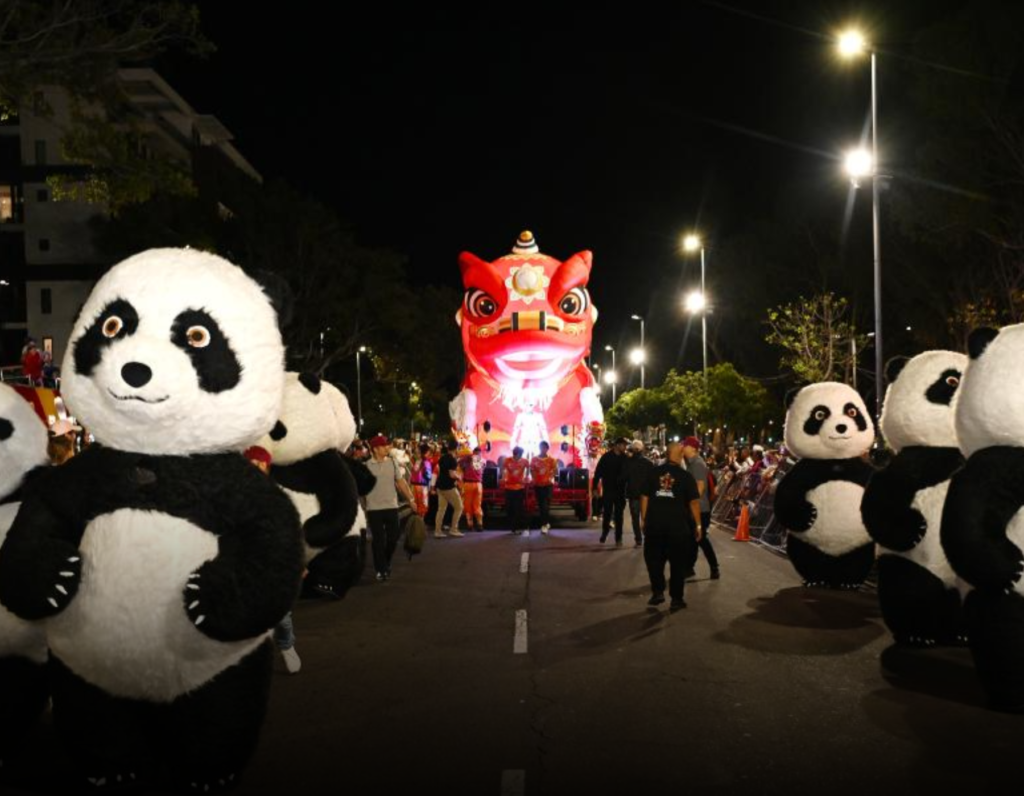
On the vibrant streets of Cape Town, where music, movement, and color converge, a new cultural rhythm joined the parade – one that travelled thousands of miles yet felt right at home.
At the 2026 Cape Town Carnival, Chinese cultural elements emerged as one of the standout highlights, captivating audiences and reinforcing the growing cultural ties between China and South Africa. The annual event, held on March 21, brought together around 1,500 performers in a celebration of diversity under the theme “Follow Your Heart.”
Chinese performers took part with elaborate floats and coordinated formations, blending traditional artistry with the dynamic spirit of the carnival. Their performances featured iconic elements such as dragon and lion dances – centuries-old traditions symbolising strength, prosperity, and good fortune.
Spectators were drawn to the precision, color, and storytelling embedded in these performances, with many describing them as a highlight of the evening’s parade. The inclusion of Chinese cultural displays added an international dimension to an event already known for celebrating South Africa’s diversity.
The Cape Town Carnival itself has evolved into one of the country’s most significant cultural festivals, combining community participation with global influences – an approach that reflects the broader multicultural identity of modern South Africa.
The presence of Chinese cultural groups at the carnival is not an isolated occurrence. It reflects a growing pattern of cultural exchange between the two nations.
Earlier in 2026, Cape Town hosted a Chinese New Year temple fair that drew thousands of local participants, showcasing traditional food, calligraphy, and performances. One local participant described such events as opportunities to “understand each other through music, culture, food, and arts.”
These interactions highlight a deeper shift, where cultural diplomacy is becoming a central pillar of China-South Africa relations.
While cultural events like the carnival build social bridges, they are supported by a broader bilateral relationship grounded in trade, investment, and political cooperation.
China remains South Africa’s largest trading partner, with collaboration spanning infrastructure, manufacturing, energy, and technology. Both countries are also key members of BRICS, working together to promote multilateralism and the interests of emerging economies.
People-to-people exchanges – through education, tourism, and cultural programs – are increasingly complementing these economic ties, creating a more holistic partnership.
Carnivals, by nature, are about expression. In Cape Town, they carry deeper meaning – rooted in history, resilience, and community identity. Events like the Kaapse Klopse festival, for instance, have long served as platforms for cultural pride and storytelling in South Africa.
The inclusion of Chinese cultural elements within this context signals something significant: a blending of traditions that does not erase identity, but enriches it.
As global connections deepen, cultural exchange is becoming one of the most powerful tools of diplomacy – subtle, human, and enduring.
At the Cape Town Carnival 2026, that truth was on full display. Through dance, music, and shared celebration, China and South Africa demonstrated that partnership is not only built in boardrooms and trade agreements – but also in moments of joy, creativity, and cultural expression.