
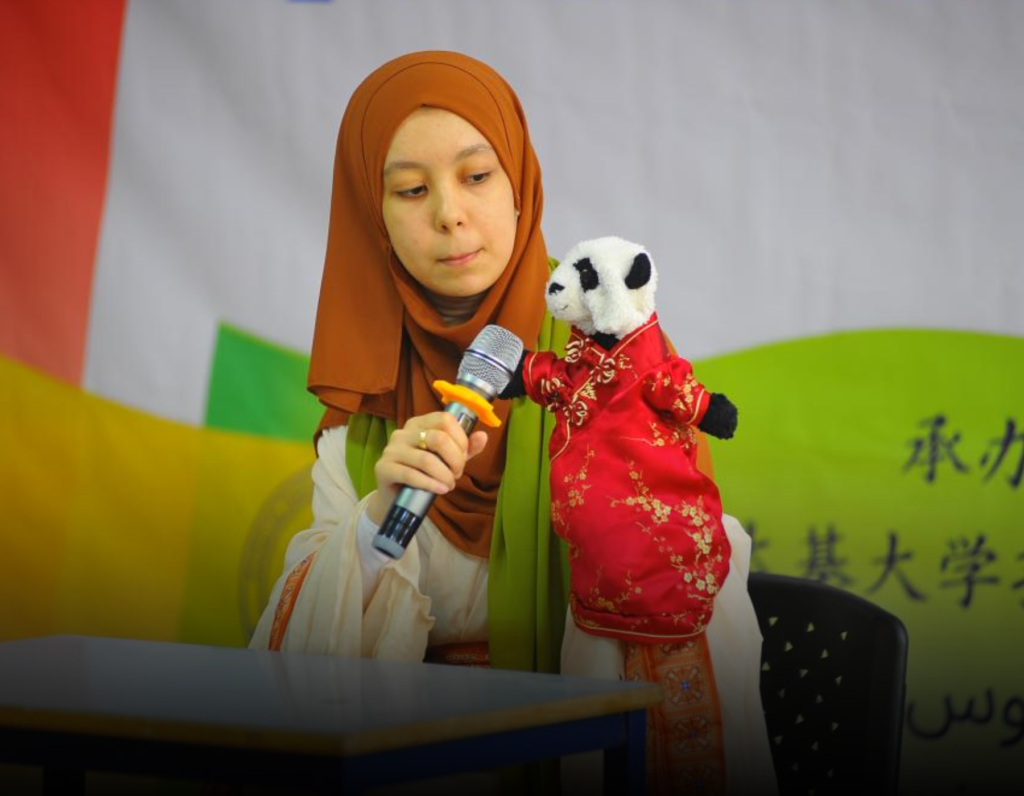
Tunisia has hosted a Chinese language proficiency competition in the capital Tunis, underscoring the growing interest among Tunisian youth in Mandarin studies and the expanding cultural and educational partnership between Tunisia and China.
The event, held under the global “Chinese Bridge” language competition framework, brought together Tunisian university students showcasing their Mandarin speaking abilities, cultural knowledge, and understanding of Chinese society through speeches, performances, and cultural presentations.
Organizers described the competition as more than a language contest, emphasizing its role in strengthening mutual understanding and people-to-people connections between China and Tunisia.
Participants demonstrated Chinese language proficiency through storytelling, cultural discussions, and artistic performances inspired by Chinese traditions and contemporary life.
The competition reflected a steady rise in interest in Mandarin education across Tunisia, where more students are viewing Chinese language skills as valuable for academic exchange, career opportunities, tourism, and international business.
Chinese Ambassador to Tunisia Wan Li highlighted the importance of cultural and educational exchange in strengthening bilateral relations, noting that language learning creates stronger bridges between societies and future generations.
For many students, participation represented not only academic achievement but also a chance to engage more deeply with Chinese culture, philosophy, and global development trends.
China and Tunisia have steadily expanded cooperation in education, culture, infrastructure, healthcare, and trade over recent years.
Academic partnerships between Tunisian and Chinese institutions have grown through scholarships, student exchange programs, and language-learning initiatives supported by Confucius Institutes and bilateral educational agreements.
The Confucius Institute at the Higher Institute of Languages of Tunis has become a key center for Chinese language instruction and cultural exchange in the country, attracting increasing numbers of Tunisian students interested in studying Mandarin and pursuing opportunities linked to China’s growing global economic presence.
Observers say Tunisia’s growing engagement with Chinese language education reflects a broader trend across Africa, where Mandarin is increasingly viewed as a strategic skill in evolving labor markets shaped by expanding China-Africa trade and investment.
The “Chinese Bridge” competition is part of a wider global initiative promoting cultural diplomacy through education and youth engagement.
Across Africa, China has increasingly invested in language training, arts exchange, vocational education, and scholarship programs as part of broader people-to-people cooperation under the Forum on China-Africa Cooperation (FOCAC).
Analysts note that these initiatives complement economic partnerships by strengthening social understanding and long-term interpersonal connections between African and Chinese communities.
In Tunisia, cultural exchange programs have also included Chinese film screenings, traditional music performances, tourism cooperation, and academic forums aimed at broadening intercultural dialogue.
China has become an increasingly important economic partner for Tunisia, with bilateral cooperation spanning infrastructure, renewable energy, health, digital technology, and trade.
Chinese companies have shown growing interest in Tunisia’s transport, logistics, and manufacturing sectors, while Tunisian businesses continue exploring opportunities in the Chinese market.
Tourism and aviation cooperation between both countries have also expanded gradually in recent years, supported by stronger diplomatic engagement and cultural interaction.
Observers say educational exchange is helping prepare a younger generation capable of navigating these expanding economic and diplomatic ties.
At the Tunis competition, students represented more than language learners – they symbolized a new generation shaping the future of China-Tunisia relations through cultural curiosity, communication, and global awareness.
Educational experts argue that language competitions and exchange programs help foster confidence, cross-cultural understanding, and international collaboration skills increasingly needed in a connected world.
For many participants, Mandarin represents not simply a foreign language, but access to broader academic, professional, and cultural opportunities.
While trade agreements and infrastructure projects often dominate headlines, events like the Tunis language competition reveal another dimension of China-Africa relations – one built through education, culture, and shared learning experiences.