

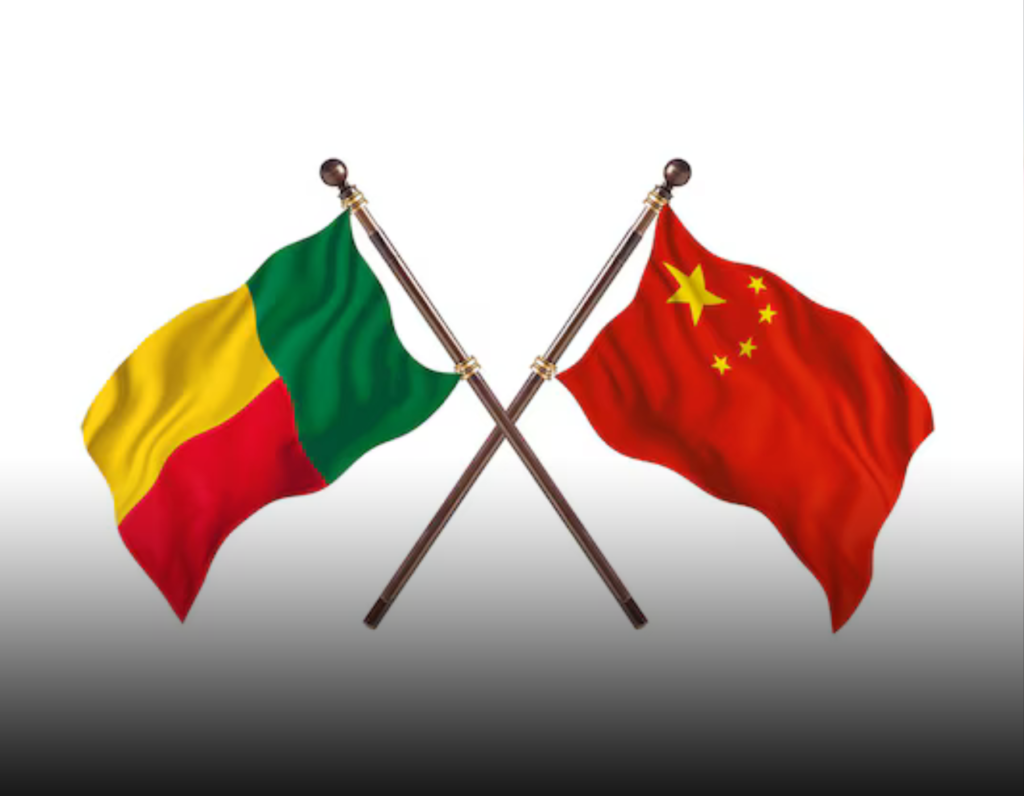
China is supporting Benin in a new initiative aimed at preserving the West African nation’s historical audiovisual archives, reinforcing growing cooperation between the two countries in culture, technology, and heritage preservation.
The support project, launched in Cotonou, focuses on the digitization and restoration of Benin’s historical audiovisual materials to help safeguard decades of national memory stored in aging analog formats.
Under the initiative, China has delivered specialized digital restoration equipment, intelligent software systems, and technical support designed to modernize Benin’s archival preservation capacity. The package also includes an initial batch of 300 minutes of restored audiovisual archives that have already undergone high-quality digitization and recovery processes.
The project is being implemented in partnership with Benin’s national broadcasting authorities and is expected to help protect valuable historical recordings documenting the country’s political, cultural, and social evolution.
Chinese engineers involved in the initiative will work directly with Beninese technicians to digitize an additional 500 minutes of archival footage while also providing technical training to strengthen local expertise.
According to project representatives, the collaboration goes beyond equipment donation. Three online training sessions are also planned to ensure that Beninese specialists can independently operate, maintain, and expand the preservation systems in the future.
Kounde Ogouchina, acting director-general of Benin’s national broadcasting service, emphasized the cultural importance of the initiative, describing archives as carriers of “the memory, culture, and entire history of a country.”
For Benin, where portions of historical audiovisual material remain vulnerable to deterioration due to outdated storage systems, digitization is increasingly seen as critical to preserving national identity and historical continuity.
While China and Benin have long cooperated in infrastructure, trade, and development financing, cultural and technological collaboration is becoming a more visible component of bilateral relations.
Diplomatic relations between the two countries were reestablished in 1972, and cooperation has steadily expanded over the decades under the framework of the One China policy.
In recent years, China has supported projects in Benin spanning road infrastructure, healthcare, agriculture, telecommunications, and education. The two countries have also increased engagement in media cooperation, digital communication, and cultural exchange initiatives.
Analysts say the audiovisual archive project reflects a broader evolution in China-Africa relations, where collaboration increasingly extends beyond physical infrastructure into knowledge preservation, digital transformation, and cultural diplomacy.
Across Africa, many national archives face significant preservation challenges due to aging media formats, limited digitization infrastructure, and climate-related deterioration risks.
Experts warn that without modernization efforts, large portions of Africa’s audiovisual history – including independence-era recordings, oral histories, and cultural documentation – could be permanently lost.
The Benin initiative aligns with wider continental efforts to digitize archives and strengthen cultural preservation through technology-driven partnerships.
UNESCO and other international cultural organizations have repeatedly emphasized the importance of protecting audiovisual heritage as part of preserving global cultural diversity.
Observers note that one of the project’s most important aspects is its emphasis on technical training and local capacity building.
Rather than limiting cooperation to equipment delivery alone, the initiative seeks to equip Beninese professionals with the knowledge required to sustain and expand digital preservation efforts independently over time.
This approach mirrors a broader shift in many China-Africa partnerships toward skills transfer, technical cooperation, and institutional development.
For years, China’s engagement in Africa has largely been associated with highways, railways, ports, and industrial development. Increasingly, however, softer dimensions of cooperation -education, culture, language, media, and heritage preservation – are becoming part of the relationship.
As African countries accelerate digital transformation, archival preservation is emerging as both a cultural and technological priority.
For Benin, the partnership offers an opportunity to modernize historical preservation systems while safeguarding irreplaceable national records.
For China, it reinforces a broader diplomatic strategy centered on long-term people-to-people engagement and cultural cooperation across Africa.