

History, when rooted in shared struggle, often becomes the strongest foundation for future cooperation. For China and Namibia, that history continues to shape a partnership that has endured beyond independence and is now evolving into a modern model of South-South collaboration.
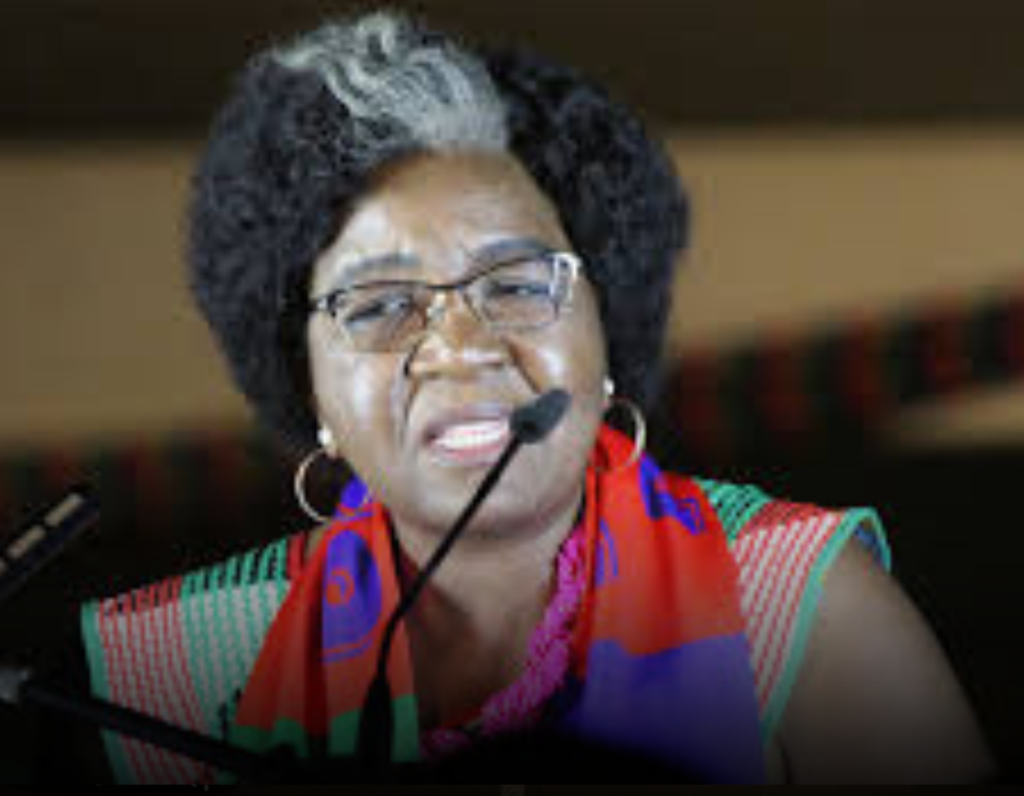
As Namibia marked its 36th Independence Day, senior figures from the ruling South West Africa People’s Organization (SWAPO) reflected on the enduring role China has played in the country’s journey. In an interview, SWAPO Secretary General Sophia Shaningwa emphasised that China’s support dates back to the liberation struggle, describing it as “concrete, consistent and rooted in shared anti-imperialist principles.”
China’s engagement with Namibia began long before formal diplomatic ties were established. During the struggle against apartheid and colonial rule, Beijing provided political and material support to SWAPO – recognised by the United Nations in 1973 as the legitimate representative of the Namibian people.
Shaningwa noted that what set China apart was its approach: support that was “not merely rhetorical,” but grounded in respect for sovereignty and equality.
That early solidarity has since evolved into a comprehensive partnership. Diplomatic relations were formally established in 1990, immediately after Namibia gained independence, laying the groundwork for cooperation across multiple sectors.
Political ties remain a cornerstone of the relationship. The long-standing connection between China’s Communist Party and SWAPO continues to reinforce bilateral engagement, with both sides frequently exchanging governance experience and policy perspectives.
Analysts note that these party-to-party relations – common across Southern Africa – have helped sustain strong diplomatic alignment and mutual support on global issues.
This alignment is also reflected in Namibia’s consistent support for China on key sovereignty matters, reinforcing a relationship built on mutual respect and shared positions in international forums.
Beyond politics, China-Namibia relations have expanded significantly into economic and development cooperation.
China has become a major investor in Namibia’s mining sector, particularly uranium, with Chinese firms involved in some of the country’s largest operations, including the Husab mine – one of the world’s biggest uranium projects.
Infrastructure, agriculture, and technology have also emerged as key areas of collaboration, supported by development financing and technical assistance. Over the years, dozens of Chinese-backed projects have contributed to Namibia’s economic growth and capacity building.
In addition, cooperation extends into space technology, with the two countries jointly operating a satellite tracking station in Swakopmund – highlighting the breadth of engagement beyond traditional sectors.
As Namibia looks beyond independence toward long-term prosperity, leaders see the partnership with China as a critical enabler.
Shaningwa stated that the relationship is grounded not only in history but in shared development goals – positioning it as a model of South–South cooperation built on equality and mutual benefit.
This vision aligns with China’s broader engagement across Africa, where partnerships are increasingly focused on industrialisation, infrastructure, and human capital development.
What distinguishes China-Namibia relations is their continuity. From liberation support in the 1960s to strategic cooperation in the 21st century, the partnership has evolved without losing its foundational principles. It is a relationship shaped by history, sustained by trust, and driven by a shared pursuit of development.