

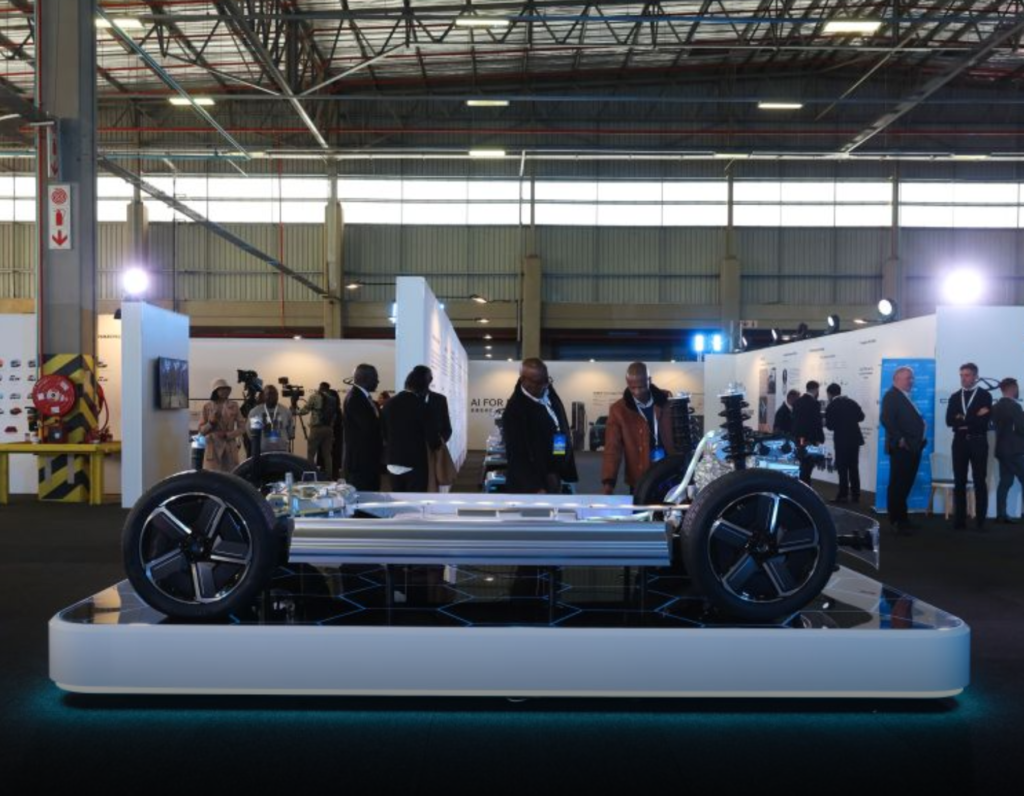
Chinese automaker Chery has officially launched its first vehicle manufacturing facility in South Africa, marking a significant milestone in the company’s Africa strategy and deepening industrial cooperation between China and the continent’s most developed automotive market.
The new plant, inaugurated in partnership with a local South African assembly operator, will begin by producing selected Chery models for the domestic market before expanding output for regional exports across Africa. The facility is expected to strengthen local production capacity, reduce import dependency, and position South Africa as a key hub in Chery’s continental growth strategy.
Company representatives said the investment reflects long-term confidence in Africa’s automotive demand, particularly as rising urbanization, infrastructure expansion, and a growing middle class continue to drive vehicle consumption across key markets.
Chery noted that the South African plant is part of a broader plan to establish a stronger manufacturing and distribution footprint across Africa, with future expansion possibilities being explored in North and West Africa. The automaker emphasized that localized production will improve supply chain efficiency, shorten delivery timelines, and make its vehicles more accessible to African consumers.
South African officials welcomed the investment, highlighting its potential to create jobs, support skills development, and contribute to the country’s industrialization agenda. The automotive sector remains one of South Africa’s most important manufacturing industries, accounting for a significant share of exports and employment.
The launch comes at a time when China–South Africa economic relations continue to deepen. China remains South Africa’s largest trading partner, with bilateral trade spanning minerals, machinery, electronics, renewable energy equipment, and manufactured goods. South African exports to China are heavily driven by raw materials such as platinum, iron ore, and manganese, while imports from China include vehicles, electronics, and industrial machinery.
Beyond trade, cooperation between the two countries has expanded into infrastructure development, renewable energy, mining technology, and industrial capacity building. Under the Forum on China-Africa Cooperation (FOCAC) framework, both countries have committed to strengthening manufacturing linkages and promoting industrial localization across strategic sectors.
The automotive sector has become a key pillar of this cooperation. Several Chinese automakers, including BYD, Great Wall Motors, and BAIC, have already increased their presence in Africa through assembly plants, distribution networks, and dealership expansion. Chery’s entry into local manufacturing in South Africa further intensifies competition while also signaling growing confidence in the region’s long-term automotive demand.
Industry analysts note that Africa’s vehicle market remains under-penetrated compared to global averages, creating room for sustained growth. Rising demand for affordable passenger vehicles, SUVs, and light commercial vehicles is expected to drive continued investment from Asian manufacturers, particularly as trade frameworks improve and regional integration under the African Continental Free Trade Area (AfCFTA) expands.
Chery’s expansion also aligns with China’s broader push to internationalize its manufacturing base while supporting partner countries in developing industrial ecosystems. By establishing local production facilities, Chinese firms are increasingly moving from export-led models toward embedded manufacturing strategies in African markets.
As production begins, the South African plant is expected to serve as both a supply hub and a strategic entry point into wider African markets, reinforcing South Africa’s role as a continental gateway for automotive manufacturing and trade.
The development marks not just a corporate milestone, but a broader shift in China-Africa economic relations – from resource exchange toward industrial cooperation and shared production value chains.